Can solar leasing programs be adopted in Singapore?
The Energy Studies Institute says the outlook for residential PV systems is less optimistic in Singapore since more than 80% of Singaporeans reside in high-rise buildings.
Buildings present a unique opportunity to mitigate climate change and also enhance sustainable development. According to a 2007 United Nations Environment Programme report, the buildings sector, globally, is responsible for 30-40 percent of worldwide energy consumption and up to 40 percent of all greenhouse gas emissions. In Singapore, air-conditioning alone comprises 40-50 percent of our buildings' electricity consumption.
While the buildings sector holds the dubious honour of being the largest contributor to anthropogenic GHG emissions, the good news is that it also has the greatest capacity to reduce these emissions. Significantly, the Intergovernmental Panel on Climate Change has suggested that sizable reductions in emissions from the buildings sector can be made at zero cost or at relatively low levels of investment.
The outlook for residential PV systems is less optimistic in Singapore since more than 80 percent of Singaporeans reside in high-rise buildings, which lack roof space that can be privately utilised. Despite these circumstances, there is still room for solar PVs in the city-state. Ground-mounted plants and residential PV systems are not the only means to harness solar energy. Innovative programmes can be implemented to overcome the space constraints in the Republic.
Rooftop leasing
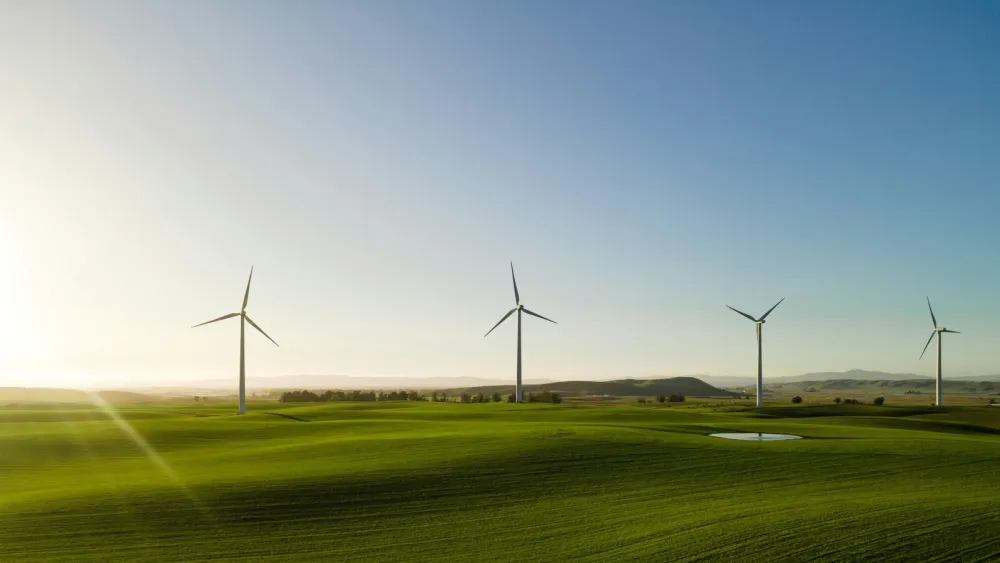
Rooftop leasing involves utility companies renting existing roof space to install solar panels for the purpose of large-scale electricity generation. Two California utilities, Southern California Edison and Pacific Gas & Electric, have embarked on large-scale commercial rooftop leasing programmes in order to install 500 megawatts of new capacity from rooftops.
The utility companies intend to lease rooftop space from owners of large properties such as schools, warehouses and shopping malls and install 1-2 megawatts of solar power capacity at a time. The electricity generated will be fed into the existing electricity grid. These leasing programmes follow outsourced project. A tender launched to select a solar service provider was closed in May 2011, but the results have yet to be announced.
As the developer of significant high-rise residential blocks in Singapore, HDB is uniquely suited to such programmes and its experience will pave the way for other property owners outside of the public sector to take up solar leasing schemes. The main obstacle to adapting solar financing programmes in Singapore is that such programmes usually require generous funding from the government.
While a host of clean energy incentive schemes such as the Clean Energy Research and Test-bedding Programme, Solar Capability Scheme and Market Development Fund could provide the necessary funds to kick-start solar leasing start-ups, they need to become self-sustaining to ensure their viability in the long term. Even if grid parity has not been achieved for solar at the moment, alternative solar schemes may be viable in anticipation of electricity price hikes.
This article was written by Rachel Wong and originally appeared on www.siew.sg.
The Energy Studies Institute is a Co-organiser of the Singapore Energy Summit, which is part of the Singapore International Energy Week from 31 Oct to 4 Nov 2011. For more information, click here.










 Read Here
 Advertise
 Sign Up