

The over-bearing dependence on (inadequate) regulation
By Gaurav SarupThe over-bearing dependence on regulation.
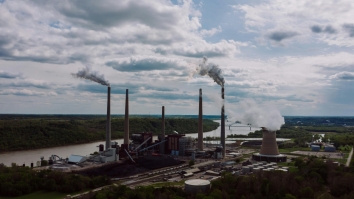
A few years ago, India based XYZ Company began work on its UMPP project in earnest. It had obtained the land clearances, funding hurdles had been crossed, the technology finalized and all environmental assessments and clearances had been approved. In fact, this coal-based thermal power plant promised to beat the air pollution laws of the land because it was procuring more efficient and less dirty coal from Indonesia.
The project developers and investors were confident of the viability of the project and expected to see the profits to start rolling in within five years. To add icing on the cake, the project was slated to be completed before time – a scenario that promised to save them a significant chunk of change. Yet, four years down the road the project is yet to produce electricity at full capacity. In fact, it has never run beyond 25% of its total capacity – leading to severe financial implications for all involved.
The culprits for such lacklustre performance? Coal and water availability.
The project developer and their financing company had not foreseen the significant rise in the price of imported coal – influenced by changes in the coal supply chain. They had also not realized the severe scarcity of water that would be prevalent in the region following a less-than-normal monsoon.
They had not anticipated these eventualities because they looked for them in the wrong place – in existing government regulations and local environmental impact assessments. Existing regulations told them that their project would fare well based on current environmental norms. Unfortunately, many of India’s existing environmental norms are hopelessly out of date.
Take for instance India’s Water Act – the country’s central regulation on water use. The act only addresses water pollution, prevention, and control. The act gives a company no indication about allowed water use. It does however, charge a water cess per kilolitre of water withdrawal. If price signals are a means to catalyze behaviour change, the industrial usage charge for water has not changed for the last 35 years!
This lack of resource consumption related regulation can leave a company under the false notion that it is meeting or exceeding environmental norms. The only environmental or social controls that may be placed on a company’s operations come in the form of environmental impact assessments or concerns raised from local stakeholders.
Lack of adequate regulation does not be the absence of sustainability risk
What becomes clear is that even if an area is deemed to have a resource surplus (in this case, water), at the time of project commissioning there is no body of work that accommodates for changes in natural resource availability over a 5, 10, 15 year time period in the future. These timeframes are important because most infrastructure and utility projects have a lifespan of 50-60 years.
It is not uncommon to find large industries facing severe resource constraints that result in the stoppage of operations well into their business cycle because once ‘friendly’ environmental and social conditions have taken a turn for the worse. That is exactly the position that XYZ Company found itself in 2 years into their operating cycle.
So if local regulations, environmental impact assessments, and stakeholder consultations do not shed light into the long term viability of a project what does?
Start the reassessment of all risks
Companies need to start assessing the long-term environmental and social risks (commonly known as sustainability risks) in a structured manner that takes into account prevailing as well as projected environmental and social conditions. Such an exercise can help companies anticipate potential operational roadblocks to their projects by creating scenarios and take adequate action to manage the most probable ones. This sustainability risk assessment can act as an early-warning system and allow projects to diversify their resource base, catalyze a search for substitutes, implement technology fixes, and manage stakeholder expectations.
Check for outdated regulations
In the rush to meet the demands of an economically surging South Asia, several companies are placing too much faith on (mostly) antiquated regulations to avoid having to account for environmental and social parameters in their decision-making. Such an attitude can lead to quick short-term profits, but can have a debilitating effect on long terms returns. Companies should understand that the lack of adequate regulation does mean the absence of environmental and social risk on the ground. In such a scenario, a re-look at their business development strategy through a sustainability risk lens is well advised.








 Read Here
 Advertise
 Sign Up