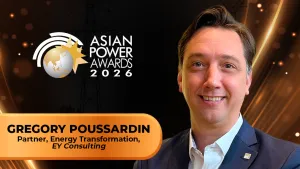
EY Consulting’s Gregory Poussardin says smart grids matter as it turns net-zero transition into an operable system
He notes that they will be one of the main stages on which the transition either succeeds or stalls.
Asia's power sector is undergoing a significant transition to net zero. As investments in renewable energy, grid modernisation, energy storage, and low-carbon technologies continue to reshape the industry, this has also been supported by increasingly ambitious climate targets and policy reforms. As the move in this direction gathers pace, conversations on innovation and sustainability are going to be critical in building a power sector that is more reliable.
Offering his valuable insights on this discussion is EY Consulting Partner Gregory Poussardin, who has 20 years of experience in providing advisory services to leading power & utility corporations across water, wastewater, electricity and gas sectors. He has led multiple business strategy, operating models, and large-scale, business-led, digital-enabled transformations across Europe, the Americas, the Middle East, Oceania, and Asia.
As a returning judge for the Asian Power Awards 2026, Gregory looks into how Asia's power utilities are navigating the transition to a cleaner, more digital, and resilient energy future. He examines the evolving strategies utilities are adopting to modernise operations, workforce challenges posed by digital transformation, the role of smart grids in supporting regional net-zero ambitions, and the innovative business models emerging alongside the shift to renewable energy.
Having advised power utilities across the world, what are the most significant differences you see in how they approach transformation?
The biggest difference is no longer between utilities that transform and utilities that do not. It is between those that still see transformation as a programme, and those that understand it as a new operating logic.
In some markets, transformation remains largely technology-led: a smart meter deployment, an ERP implementation, a digital grid platform, or an automation roadmap. These are important, but they often leave the utility’s underlying rhythm unchanged. The organisation still plans in cycles, operates in silos, governs through static KPIs and treats digital as an enhancement to existing work.
The more advanced utilities are moving differently. They are not asking, “which technology should we deploy?", they are asking, “what kind of utility must we become?" – that is a much more disruptive question. It forces them to rethink decision-making, planning, field operations, customer engagement, investment prioritisation, and workforce roles around intelligence, not infrastructure alone.
In Asia, the opportunity is particularly powerful because many utilities do not need to copy the legacy transformation path of Europe or North America. They can leapfrog. They can design digital grids, customer platforms, AI-enabled operations and new energy ecosystems together, rather than sequentially. The leaders will not simply become more digital utilities. They will become intelligence-led ecosystem orchestrators, such as utilities that can sense faster, decide smarter, act earlier, and continuously adapt to a more volatile energy system.
What workforce challenges will utilities face as they adopt more digital and automated operations?
The greatest workforce challenge is not that machines will replace people. It is that many utilities are still preparing people for work that is disappearing, rather than for the work that is emerging.
As AI, automation and digital operations scale, the centre of gravity of human work changes. People will spend less time assembling data, checking static reports, or manually coordinating fragmented processes. Their value will increasingly sit in interpretation, judgement, exception management, ethical oversight, and cross-functional sense-making. In other words, the most important human skill in the future may not be execution, but adjudication.
This creates a very different workforce agenda. Utilities will need planners who can work with predictive models, field teams who trust AI-generated insights, customer teams who understand network constraints, cyber specialists who understand operational consequences, and leaders who can govern both humans and digital agents. The future workforce will not be organised only around departments. It will increasingly operate through fluid, outcome-based teams where engineers, data scientists, operators, customer specialists, and AI agents work around shared missions.
The risk is not automation itself. The risk is creating a digitally advanced utility with an organisational model that still behaves like the analogue past. Successful utilities will not treat workforce transformation as training at the end of a technology programme. They will redesign work from the beginning, placing humans at the centre, not as manual operators of old processes, but as orchestrators of intelligent systems.
What role do you think smart grids will play in achieving net-zero targets across the region?
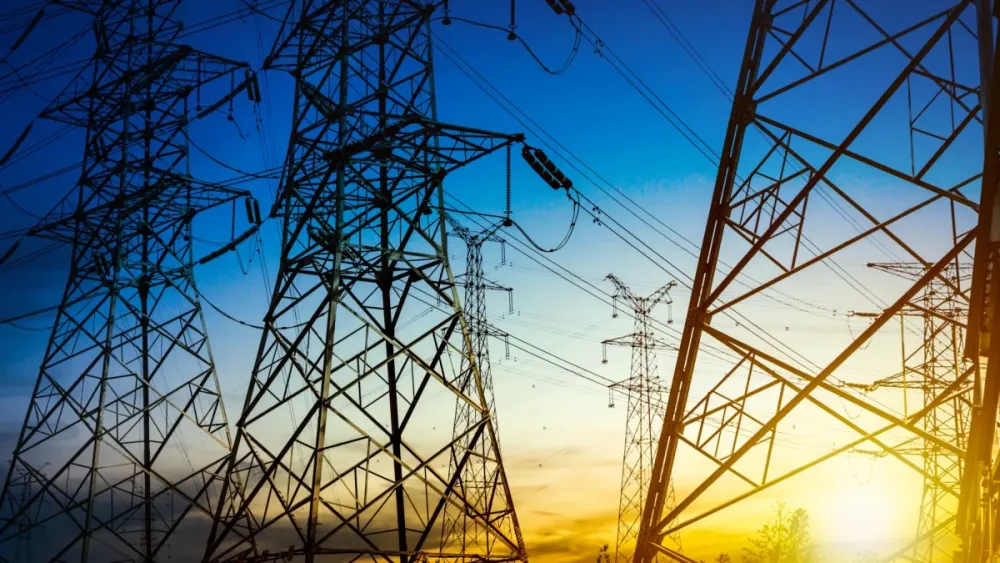
Smart grids will not be a supporting actor in Asia’s net-zero journey. They will be one of the main stages on which the transition either succeeds or stalls.
For many years, the energy transition was discussed mainly as a generation challenge: build more renewables, retire higher-carbon assets, and diversify the energy mix. That remains essential. But as solar, batteries, electric vehicles, data centres, electrification, and distributed energy resources expand, the bottleneck increasingly moves from generation ambition to network capability. A clean energy target is only credible if the grid can connect, balance, absorb and orchestrate the new system behind it.
This is where smart grids become pivotal. They provide the sensing, visibility, automation, and intelligence needed to manage a more decentralised and volatile energy system. But the next frontier is not visibility alone. The winners will not be the utilities that simply see the grid better. They will be those that anticipate constraints earlier, understand customer impact faster, and convert network data into operational and investment action.
This is especially true at the low-voltage level. The grid edge is becoming the point where electrification, customer adoption and local constraints collide. Hosting capacity may become as important to customer experience as traditional reliability. A network that cannot accommodate EV charging, rooftop solar or new connections may still be technically operational but strategically failing the transition. Smart grids therefore matter because they turn net-zero from an aspiration into an operable system.
What innovations are you seeing in utility business models as companies move toward cleaner energy systems?
The most interesting innovations are not only in new products. They are in the changing identity of the utility itself.
Historically, utilities were asset owners and energy suppliers. Their business models were built around generation, networks, metering, billing, and regulated service delivery. Cleaner energy systems are breaking that model open. Customers are no longer passive consumers at the end of the value chain. They are becoming prosumers, flexibility providers, EV owners, solar exporters, battery operators, and participants in local energy ecosystems.
As a result, utilities are moving from linear supply models to orchestration models. They are beginning to connect distributed energy resources, customer energy assets, flexibility markets, virtual power plants, energy communities, data platforms, and digital services. The future utility may create as much value by coordinating energy behaviour as by delivering electrons.
A second innovation is the rise of customer-aware grid models. In the past, customer experience was managed through call centres, billing systems, and digital portals. In the next phase, customer experience will increasingly be shaped by the network itself. Connection speed, local hosting capacity, power quality, outage anticipation, and flexibility enablement become part of the customer proposition.
That is a profound shift. It means the grid is no longer only an operational asset. It becomes a customer platform. The most disruptive business model innovation may therefore be this: utilities will stop seeing the customer interface as something sitting above the network and start seeing the network itself as the interface. The power line becomes the new customer careline.
As someone supporting utilities on their net-zero journey, what gives you the greatest hope about the future of the Asian energy industry?
What gives me the greatest hope is that Asia does not have to follow the old path. It can design the next energy system with fewer assumptions from the past.
Across the region, the scale of demand growth, urbanisation, electrification, and renewable integration is enormous. That creates pressure, but it also creates a rare strategic opening. Many Asian utilities are modernising at the same time as AI, digital grids, smart meters, predictive analytics, distributed energy resources, and new customer technologies are maturing. That timing matters. It means the region has an opportunity not only to catch up but also to leapfrog.
The most exciting possibility is that Asian utilities can avoid treating grid transformation, enterprise transformation, customer transformation and sustainability transformation as separate journeys. They can converge them. A smarter grid can also be a more customer-aware grid. A more digital operation can also be a more resilient and affordable operation. A more intelligent network can also accelerate customer participation in the energy transition. A modern ERP platform can support in winning the customer.
I also see hope in the region’s pragmatism. The best Asian utilities are not interested in digital theatre. They want solutions that work under real operational constraints, regulatory realities, and affordability pressures. That discipline is powerful. It forces innovation to be useful, not decorative.
The future will not be won by utilities with the most impressive pilots. It will be won by those that can convert intelligence into trust, investment into outcomes, and ambition into execution. Asia has the conditions to build that kind of utility.
As a returning judge at the Asian Power Awards 2026, what qualities will make a nominee truly impressive?
For me, a truly impressive nominee will not show only that it has delivered a project, but that it has changed the trajectory of its organisation, its customers or the energy system around it.
The strongest nominations will go beyond technology deployment. I will be looking for evidence of reinvention: has the organisation changed how it works, decides, collaborates, and creates value? Has it moved from pilot to scale? Has it connected innovation to measurable outcomes like reliability, affordability, sustainability, customer experience, resilience, safety, or workforce capability? Has it built something that can endure beyond the award submission?
I will also look for originality. In a sector full of similar claims around digitalisation, AI and decarbonisation, the most compelling nominees will be those that bring a sharper idea of the future. For example, not just using AI to optimise an asset, but redesigning the operating model around intelligence. Not just digitising the grid but making it predictive and customer aware. Not just improving outage management but anticipating customer impact before the customer complains.
Finally, I will value courage. The power sector is complex, regulated, and capital-intensive. Real innovation is rarely clean or easy. The nominees that stand out will be those that demonstrate ambition with discipline: bold enough to challenge the legacy model, pragmatic enough to deliver outcomes, and responsible enough to build trust. In short, I will be impressed by utilities that are not simply improving the past, but making the future operable, with the customer at the heart.







 Read Here
 Advertise
 Sign Up