Southeast Asia stays exposed to advanced grid equipment shortages
The Indian Subcontinent shares the problem despite expanding supply chains.
Southeast Asia is rated “potentially binding” for grid planning and delivery capability, the most severe of four levels in DNV’s Energy Transition Outlook 2026.
The report said the Indian Subcontinent and Southeast Asia remain exposed to shortages of advanced transmission equipment and engineering capacity despite benefitting from expanding domestic supply chains.
The Indian Subcontinent, rated “material constraint,” is one level less severe than Southeast Asia.
DNV cautioned that the ratings “should be presented as structural exposure, rather than as measured project-delay statistics.”
The report also rated Southeast Asia a “material constraint” on equipment and skilled labour.
Greater China is rated “generally manageable” on planning and delivery, with deeper domestic manufacturing capacity and extensive experience with high-voltage network construction.
However, the scale of expansion in Greater China continues to strain materials and factories, according to the report.
“The emerging problem is therefore one of delivery capacity,” the report said. “Securing a permit does not create a factory slot, a protection engineer, or a cable-laying crew.”
Large power transformers can take up to four years to procure outside China, and waiting times for specialised high-voltage direct current cables can exceed five years, DNV said, citing the International Energy Agency (IEA).
Since 2019, cable prices have nearly doubled in real terms and transformer prices have risen by around 75%.
Around 8 million people currently construct, operate, and maintain grids worldwide, and at least 1.5 million additional workers will be needed by 2030, DNV said, citing the IEA.
“This constraint is difficult to resolve quickly because many roles require several years of technical training and experience on live power systems,” the report added.
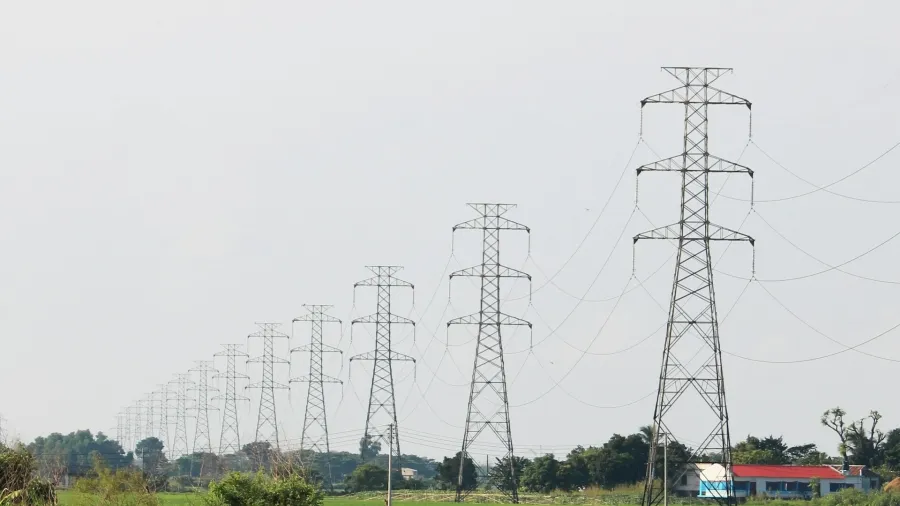
DNV forecasts transmission line length will nearly triple by 2060 as electrification, shifting supply and demand patterns, and the needs of variable renewables drive expansion, with the bulk of new build in Asia.










 Read Here
 Advertise
 Sign Up