
Philippines offshore wind ambitions meet the reality of grid readiness
By Lukasz Szylkowski, Scott Hsu, and Himanshu UpadhyayThe question is not about the reliability of offshore wind, but if the infrastructure can keep up.
The Philippines has many ingredients needed to build a successful offshore wind industry — available resources, growing government support, and interest from developers. The question is — can supporting infrastructure be delivered quickly enough to keep pace with these ambitions?
This issue became especially pronounced during the country's first offshore wind auction. The indicated generation capacity was significant, but transmission capacity, grid connection arrangements, port infrastructure, and permitting processes were still far from clear. This is not only a Philippine problem: Similar challenges can be seen across many Asia-Pacific countries, where renewable generation and data centres are being developed faster than power networks can accommodate them.
Success depends on power systems to connect both new generation and new demand in the right locations, and within realistic timeframes, without reducing reliability or creating additional costs.
The first offshore wind auction
The Philippine Department of Energy (DOE) launched the fifth round of its Green Energy Auction Program (GEA-5) in November 2025 — the first auction dedicated to offshore wind. However, the auction did not follow the original schedule.
In July 2026, the DOE suspended the process to review transmission readiness, port facilities, permitting requirements, environmental approvals, and supply-chain risks. A revised timeline indicates an auction date of 1 December 2026 and bid evaluation extending into 2027.
This pause was the correct decision. Governments too often announce renewable energy targets before properly considering how projects will actually connect to the grid. Without adequate preparation, the Philippines could award 3.3GW on paper whilst leaving developers to deal with transmission constraints and infrastructure bottlenecks later.
Research referenced by the DOE and the World Bank estimates approximately 178GW of technical offshore wind potential — approximately 18GW with fixed-bottom technology and 160GW floating. Of course, technical potential and commercially viable capacity are not the same thing. The strongest opportunities are located near northern Luzon. Other prospective areas include Batangas, the Mindoro Strait, Guimaras, northern Cebu, northern Samar, Surigao, and Davao Gulf.
A significant problem is that the best wind resource does not necessarily coincide with the strongest parts of the transmission system. Being close to a substation does not guarantee capacity. Constraints often exist elsewhere in the network. Transformer ratings, line loadings, voltage performance, reactive power requirements, system strength, and contingency conditions all need to be considered.
When many projects seek access in the same region, geographically and “electrically” speaking, cumulative impacts become particularly important. The grid must be studied as an integrated system, including credible outages of the lines, transformers, and generating units.
The existing transmission network
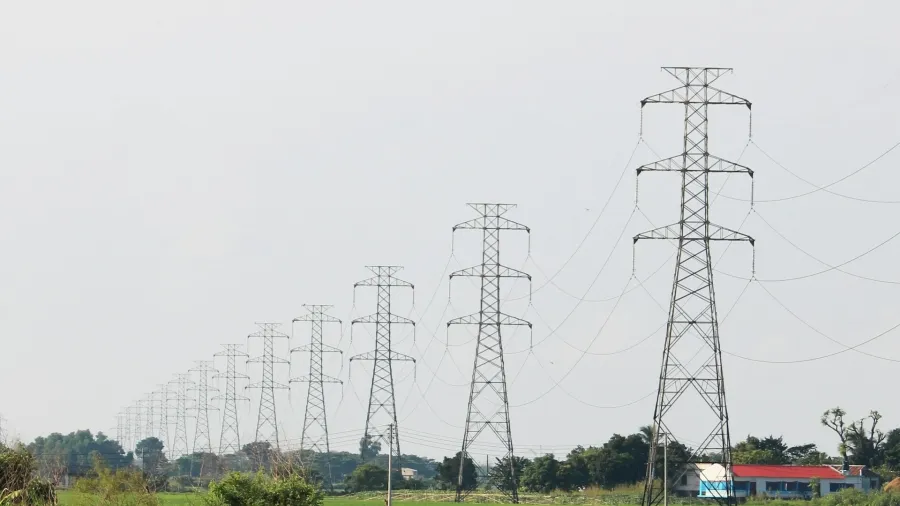
The National Grid Corporation of the Philippines (NGCP) operates the Luzon, Visayas, and Mindanao systems. Together, they include more than 21,000 circuit kilometres of transmission lines, approximately 20,000 towers and around 140 substations.
Luzon represents almost three quarters of national electricity demand, with the Visayas roughly 14%. A 500kV network is concentrated in Luzon, whilst 230kV infrastructure continues to expand in the Visayas and Mindanao. Overhead lines dominate, with submarine cables mainly used for inter-island connections, whilst underground EHV infrastructure appears limited.
Additional 500kV and 230kV developments, stronger inter-island links, grid digitalisation initiatives, and storage integration are all under consideration. Planned transmission investment could exceed PHP1t ($19.4t) over the next decade, but funding is only one part of the problem. Land access and navigating approvals and permitting requirements take longer than construction works.
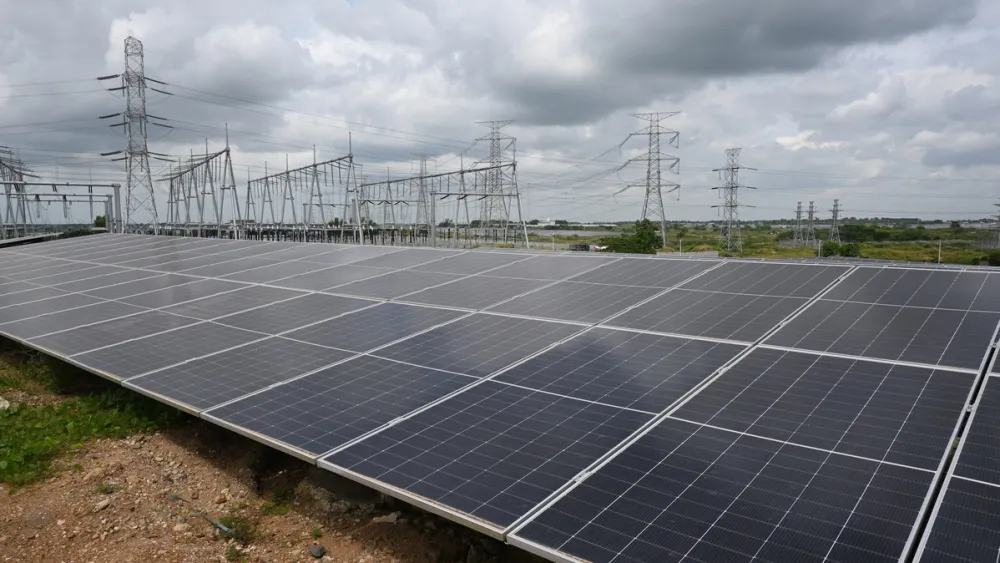
Renewables supply around 25% of electricity generation today and are projected to reach 35% by 2030, with offshore wind being a significant contributor. However, large projects will place corresponding demands on the transmission system. A 1GW offshore wind farm cannot be treated as a simple radial connection if the surrounding grid lacks sufficient transfer capacity and dynamic performance. The question is not about the reliability of offshore wind, but if the supporting infrastructure can keep up.
Asia-Pacific: Beyond offshore wind
The Philippine auction reflects a much bigger regional problem. Electricity demand is fast growing. At the same time, solar and wind projects are connecting to networks originally designed around large conventional generators and one-directional power flows.
The proposed ASEAN Power Grid concept aims to increase cross-border electricity trading and improve utilisation of renewable resources located far from demand centres. However, renewable generation represents only one side of the equation. Data centres create large, concentrated loads requiring hundreds of megawatts at a single location and delivered with high reliability, and can often be delivered much faster than the transmission networks needed to supply them.
In response, some regulators are beginning to require large customers to participate more actively in maintaining system flexibility through curtailment, installing battery storage or locating developments away from already congested regions.
Renewable Power Purchase Agreement (PPAs) can support investment and emission targets, but they do not replace physical network capacity. A distant wind farm does not guarantee continuous supply to a particular facility. Transmission capacity, balancing resources, local connections, and backup arrangements remain necessary. Matching annual renewable generation with annual consumption is not the same as matching supply and demand every hour of every day.
Planning supply and demand together
Offshore wind represents the supply side of the challenge, whilst data centres represent the demand side. From a power system planning perspective, both require realistic assumptions about location, timing and operating behaviour.
For Luzon, its Special Economic Zones (SEZ) creates an opportunity where land use planning, permitting, power, and digital infrastructure can be co-ordinated. Here, planning offshore wind expansion along the transmission and grid reinforcement should encourage data centres and other energy intensive industries to locate within the SEZs.
For offshore wind developers, connection planning must begin well before construction. For data centre developers, power availability should be assessed before land acquisition and design decisions become difficult to reverse.
Asia-Pacific is not short of renewable projects or digital investment, but turbines, solar panels, data halls, and servers can increasingly be delivered faster than the transmission infrastructure supporting them. The industry knows how to build generation. The harder challenge is building the grid first.











 Read Here
 Advertise
 Sign Up