Global renewables need 1,200GW of annual additions through 2030: IRENA
Nearly $1t in annual grid investment is needed over this period.
An average of 1,200 gigawatts (GW) of new renewable power capacity must be added annually between 2026 and 2030 to meet the global target of 11.2 terawatts (TW) by 2030, according to the International Renewable Energy Agency (IRENA).
This comes as total renewable capacity reached 5.15 TW at the end of 2025, with the year alone seeing a record 693 GW of new capacity.
The report—Delivering on the UAE Consensus: Tracking progress toward tripling renewable energy capacity and doubling energy efficiency by 2030—highlighted key factors amidst persistent bottlenecks in investment, grids, and electrification.
It said nearly $1t in annual grid investment is needed between 2026 and 2030, more than double 2025 levels.
“But we must go further and faster to clear the bottlenecks that delay the transition, drive investment to developing countries, and break our addiction to volatile fossil fuels once and for all,” said United Nations Secretary-General António Guterres.
Battery storage and flexibility should also be scaled to meet rising demand reliably, whilst solar, wind, and storage should be combined to secure “firm, cost-competitive, around-the-clock power.”
The report also urged the use of digitalisation and artificial intelligence to align rising electricity demand with clean supply and smarter system operations.
IRENA said renewables are the “most cost-competitive” source of new electricity in most markets in 2025.
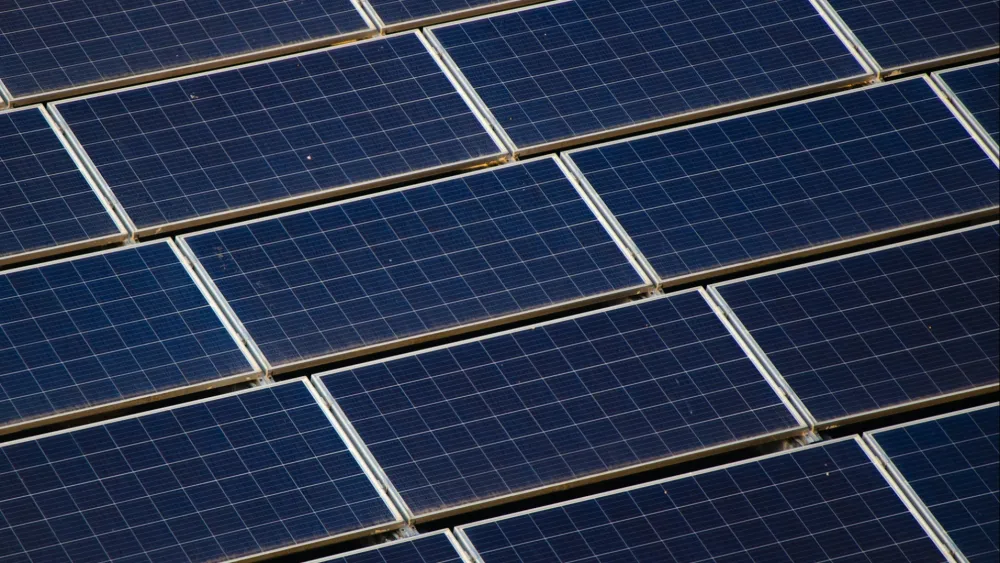
“Particularly solar technology is experiencing consecutive, record-breaking installation rates to become the backbone of the global energy transition, with net average annual capacity additions expected to double 2025 levels by 2030,” the agency said.
Variable renewables such as solar and wind are projected to overtake total fossil fuel capacity and account for around 62% of overall installed power capacity by 2030, up from 35% in 2025.
Simultaneously, battery storage costs fell by 30% between 2024 and 2025 and by 95% since 2010, supporting the deployment of reliable renewable-based power systems.
The report also showed that energy intensity improved by around 2% in 2025, far below the 4% needed to meet the UAE Consensus energy savings goal.
Beyond 2030, further acceleration will be needed to raise global electrification to 35% by 2035, a roadmap currently under discussion as part of the COP31 agenda that could provide a clear benchmark for scaling up efficient, renewable-based electrification across end-use sectors.
The report is the third assessment of progress towards the landmark energy goals set by the UAE Consensus at COP28.
It was released by IRENA, the COP31 Presidency Türkiye, and the Global Renewables Alliance during Climate Week NYC.
















 Read Here
 Advertise
 Sign Up