Kazakhstan’s wind hybrids could cover up to 90% of demand
Plants are oversized by design with 15% to 30% of annual generation curtailed.
Wind, solar, and battery hybrid plants built near demand centres could meet 70% to 90% of a typical electricity demand profile in Kazakhstan at a delivered cost below $60 per megawatt-hour (MWh), according to Ember.
The energy think tank ran hourly simulations at 15 sites across the country’s three power zones over a 30-year project life, according to a report published on 3 November.
The best of 125 wind, solar, and battery configurations at each site met 70% to 90% of the demand profile.
Delivered cost is the plant’s lifetime cost per MWh delivered, including the cost of curtailed output. Delivered cost averaged $56/MWh across the 15 sites.
Generation costs for the same plants range from $41/MWh to $49/MWh, against $70/MWh to $170/MWh for new coal.
The plants are oversized by design, with 15% to 30% of annual generation curtailed, an average of 23%.
“In a hybrid plant, wind and solar complement each other behind a single grid connection, whilst a small battery helps manage shortfalls,” the report said.
Ember said wind cannot meet demand as a standalone source, but the hybrid design gives a capacity factor comparable to a baseload power station at lower cost than new coal. Plants can be built near demand centres rather than at the windiest locations.
“And the best part is - wind resources are great across most of its territory, so hybrid projects can be built close to demand, minimising major additional transmission lines,” said Kostantsa Rangelova, Senior Battery Analyst at Ember.
The modelled plants meet over 70% of winter demand, from December to February, at 13 of the 15 sites. Shortfalls cluster on winter evenings and before dawn, when output falls below a fifth of demand.
A flexible, interconnected system can fill these gaps at lower cost than overbuilding each plant, Ember said.
The results come from simulations rather than operating plants, and Ember applied a generic national demand profile, scaled to a 100-MW peak, to every site.
Kazakhstan’s electricity demand grew by 16% over the past five years. It has been a net importer of electricity since 2022, and the government aims for self-sufficiency by 2027 and a possible net exporter status by 2029.
Coal supplied 62% of electricity generation in 2025, with its coal units averaging over 50 years old, which leads to frequent equipment failures.
There were 891 incidents of varying severity between January and July 2026, Ember noted.
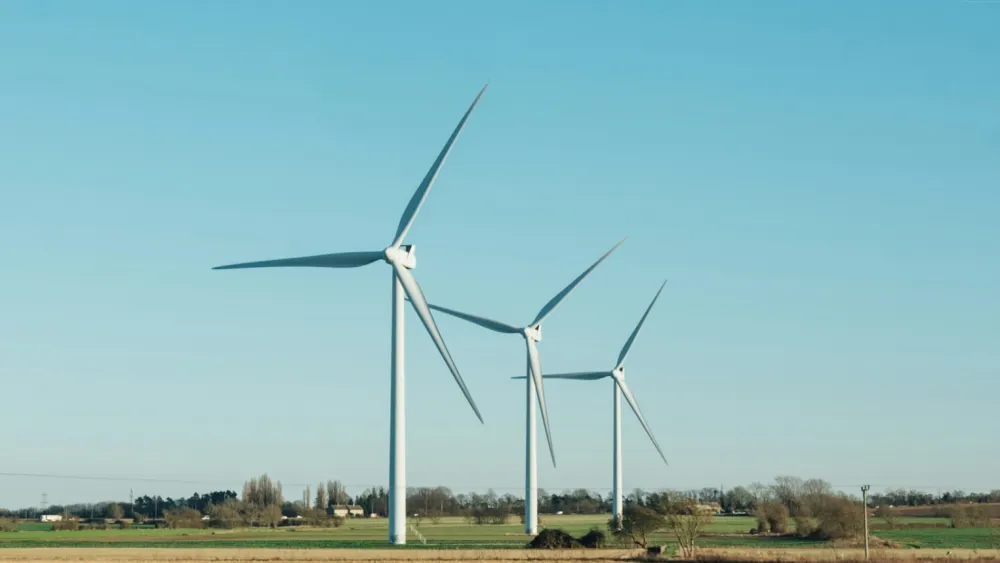
Wind supplied 4.4% of Kazakhstan’s generation in 2025, against a global average of 8.6%, whilst installed wind capacity stood at 2.1 GW as of mid-2026.
New onshore wind farms reached a 39% capacity factor in 2025, close to the 41% global average for offshore wind.
Two-thirds of the country has mean wind speeds above 7 m/s, against less than a third of Germany’s territory.
Wind is leading progress toward the national target of 15% renewables by 2030, but Ember said progress risks stalling beyond that milestone without a longer-term target.
Wind and solar could supply 23% of generation by 2035, up from 6% in 2025, bringing total renewables to 35% of generation.
“If batteries can earn revenue from balancing, capacity and grid services instead of only shifting their own plant’s output, they can deliver their full value to the system and further boost projects’ economic competitiveness,” the report said.















 Read Here
 Advertise
 Sign Up