Malaysia’s RE scheme could unlock $3.4b renewable project value
Tenaga Nasional’s 13-GW data centre pipeline could require 4GW of new RE capacity.
Malaysia’s data centre expansion could create at least $3.43b (RM14b) in renewable energy project opportunities through the Corporate Renewable Energy Supply Scheme (CRESS) over the next decade, according to UOB Kay Hian.
The Data Centre Task Force under the Malaysian Investment Development Authority requires new data centre developments to source at least 30% of their electricity consumption from renewable energy.
UOB Kay Hian estimates that Tenaga Nasional’s 13-gigawatt (GW) data centre project pipeline could require 4GW of new capacity through CRESS.
Based on project capital expenditure of $0.86m (RM3.5m) per megawatt (MW), this translates to at least $3.43b (RM14b) in potential project value.
The data centre clusters expected to implement CRESS are in Johor and the Klang Valley, the research house said.
It also expects data centre operators to start tendering renewable energy requirements through CRESS, with the Elmina Google campus having called for a tender.
DayOne and AirTrunk data centre clusters in Johor are also expected to tender their renewable energy needs through the scheme.
UOB Kay Hian said the regulator remains supportive of renewable energy.
Its discussions with renewable energy players indicate that the System Access Charge (SAC) for CRESS could fall from $0.049 (20 sen) per kilowatt-hour (kWh) to $0.0368 (15 sen) per kWh for firm output with battery storage.
“A $0.0123 (5 sen) per kWh reduction in SAC will lift CRESS project IRRs to 9%,” the research house said.
It said a 15-year CRESS project based on the current $0.049 (20 sen) per kWh SAC would produce a project IRR of 7%.
UOB Kay Hian said the return was not attractive enough for solar engineering, procurement, construction and commissioning (EPCC) players facing funding costs of 5% to 6%.
A lower SAC could make long-term CRESS agreements more attractive to solar EPCC players, it said.
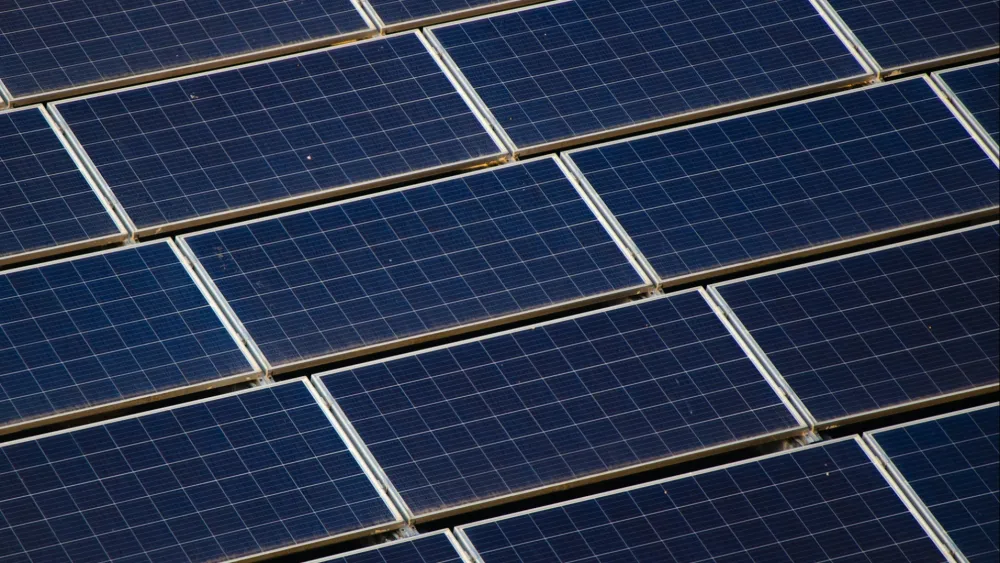
Solar capacity in Peninsular Malaysia is projected to grow at a 22% compound annual growth rate from 2026 to 2035, making it the fastest-growing energy mix over the period, according to UOB Kay Hian.
The Grid System Operator expects peak electricity demand to rise by 50% by 2035, driven by data centre development, and expects solar capacity to increase fivefold over the next decade.
UOB Kay Hian estimates about 8GW of solar plant-ups from 2027 to 2032, creating $3.92b (RM16b) to $5.88b (RM24b) in EPCC replenishment opportunities based on construction costs of $0.86m (RM3.5m) per MW.
It expects CRESS projects to take off in the fourth quarter of 2026 and first quarter of 2027, whilst the government is expected to award the LSS6 tender in the first half of 2027.
The research house said Solarvest, Pekat Group, and Northern Solar could participate in future CRESS EPCC awards.
A 50-MW CRESS win would have a contract value of $42.89m (RM175m) based on $0.86m (RM3.5m) per MW, including battery energy storage systems.
UOB Kay Hian maintained its overweight rating on the renewable energy sector.
(US$1 = RM4.08)

















 Read Here
 Advertise
 Sign Up