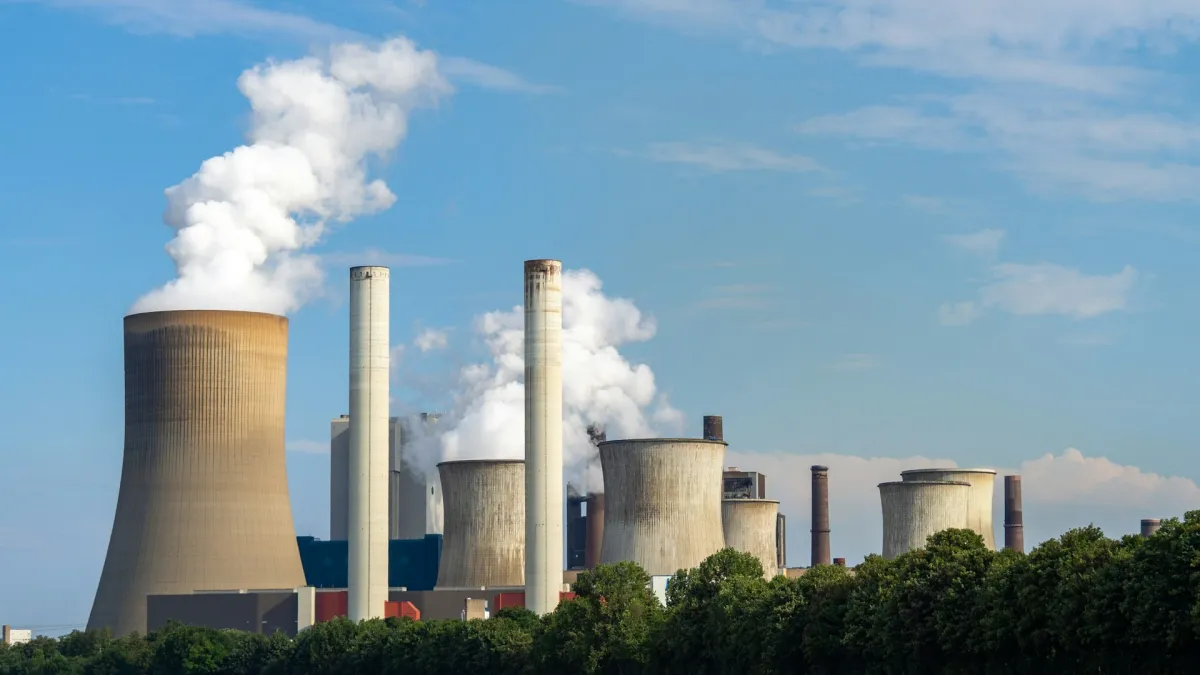
India’s gas power share sinks to 4% as renewables expand
Plants built for baseload now largely serve as flexible peak resources.
India’s gas power share has fallen to 4% from 10% over the past 15 years as gas-fired plants shift from baseload generation to flexible resources supporting peak demand, Wood Mackenzie reported.
Nikhil Babu, Research Analyst for APAC Power & Renewables Research at Wood Mackenzie, said gas-fired power plants now generate only around 1% of the country’s electricity needs.
Gas-fired generation faces four key challenges across supply, policy, infrastructure and pricing, according to the firm’s report, India’s gas-to-power market: Economics over ambition.
Supply remains well below demand despite recent upstream additions in Indian gas production after over a decade of falling supply from its large but mature KG-D6 field.
The shortfall is made up for with imported liquefied natural gas (LNG), making international gas prices the marginal driver of gas-fired plant economics.
“Under the country’s Domestic Gas Allocation Policy, use for transport, households, and fertiliser is prioritised over power generation,” Babu said.
Coal also remains the preferred fuel in India to ensure energy security. The lack of effective policy support limits investment in new gas-fired generation.
Gas pipeline connectivity has expanded but remains uneven, creating a two-tier gas-generating fleet with significant regional variations.
Plants in northeastern states enjoy reliable domestic gas supplies that support high utilisation, whilst western India benefits from proximity to LNG import terminals and well-developed infrastructure.
Babu said that elsewhere, limited access to fuel severely impacts plant utilisation.
Gas-fired plants must compete with lower-cost coal and renewables. Declining renewable and battery costs are making renewable-plus-battery solutions increasingly competitive, whilst persistently high and volatile LNG prices make gas generation expensive.
“As a result, most Indian gas-fired plants are brought online only during seasonal demand peaks when higher electricity prices mean dispatch is economically viable,” Babu said.













 Read Here
 Advertise
 Sign Up