Power availability could dictate Singapore data centre growth
Electricity connections, renewable supply and grid investment could increasingly determine when new facilities proceed and how much capacity developers can bring online.
Singapore’s data centre expansion could become increasingly dependent on electricity availability as new demand emerges faster than supporting generation and grid infrastructure.
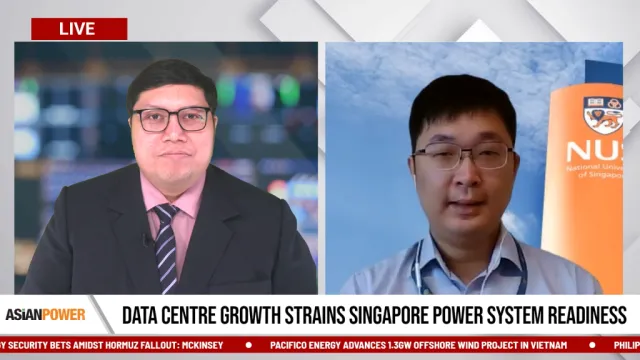
Dr Zhong Sheng, Senior Research Fellow at the National University of Singapore’s Energy Studies Institute, said demand for renewable electricity does not automatically result in additional generation being available when data centres need it.
Singapore’s limited land constrains domestic solar development, whilst new electricity connections and imports can take time to materialise.
“The new demand [can come] before the actual generation project can be ready,” Zhong said.
Supporting further growth will also require investment in grid infrastructure and energy storage. Zhong said operators could initially bear the costs of providing reliable electricity, although some expenses could eventually be reflected in consumer electricity bills.
However, revenues generated by data centres and storage services could offset part of those costs, meaning household bills would not necessarily have to increase.
“The real question is how much we need for this infrastructure upgrade and how much share has to be split between the operator and the final consumers,” Zhong said.
Power constraints could also affect individual investment decisions before becoming a national-level tipping point. Zhong pointed to international markets where limited grid connections have forced developers to wait longer, start with smaller facilities or develop data centres in stages, making power availability a direct factor in project timing and capacity.
Industry interest in Singapore is also expected to remain strong through the latter part of 2026 and the first quarter of 2027, according to Zhong.
Actual development, however, will depend on whether sufficient electricity supply is available and whether developers receive policy signals allowing projects to proceed.















 Read Here
 Advertise
 Sign Up








Commentary
What component material ratings miss about Asia’s power assets
Malaysia's gas plants are running harder, but who is ensuring they can keep pace?
AI, data centres, and the coming energy supercycle in Hong Kong