News
Asian utilities losing incentives to go green

Asian utilities losing incentives to go green
The environmental retrofitting of power plants in Asia is coming to an end as the CDM business dries up with no clear successor to the Kyoto protocol, warn analysts.
Malaysia’s largest hydroelectric plant starts operation in the next few days
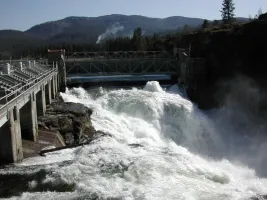
The RM7.5 billion Bakun hydroelectric project with an installed capacity of 2,400 megawatts will be fully operational on October 4, revealed Sarawak Energy Berhad (SEB) CEO Torstein Dale Sjotreit.
The Base load is dead so it's time to park your engines
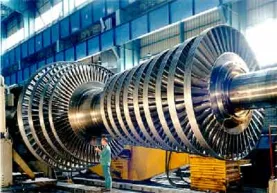
Power giant Alstom is staking its future range of engines on the belief that operators will need more flexibility in the operation of their power plants and has responded with a new rating of KA26 engines with some rather interesting characteristics.
GE moving fast to repower Japan post Tsunami

The lights are coming back on in Tokyo, thanks in part to the extremely fast installation of GE gas turbines which are plugging the energy gap left by the closure of the Fukishima nuclear plant.
India thermal capacity addition target for 11th Plan unlikely to materialize
The country is on the verge of missing the capacity addition targets for 11th Plan, with a cumulative capacity addition of merely 8,101 MW during the third quarter of FY 2011-12 likely to increase the burden of achieving the target for the last quarter of the year. The goal for the 11th plan was initially set to 78,577 MW, which was later scaled down to 62,374 MW by the Planning Commission. Even this revised target seems to be out of reach, since only 50,282 MW will be added by the third quarter end and the remaining amount of 11,092 MW will be too high to be achieved in the last quarter. The situation for the ongoing quarter looks bleak, with the estimated addition for the month of September likely to fall short of its target of 7,743 MW. Although the thermal capacity addition is likely to double over a period of 4 months from 6,580 MW to 13,101 MW, the goals set for the quarter are too ambitious and may not be fulfilled by the contribution of thermal and hydro sectors. According to the estimates provided by the Central Electricity Authority (CEA), the capacity addition by nuclear sector will amount to 1,000 MW for both November and December, whereas that by hydro sector will only increase by 580 MW during the quarter period.
OGPL reaches 300 Mw renewable energy capacity
Orient Green Power Company Limited (OGPL), a renewable energy company said that, through its subsidiary Beta Wind Farms Ltd, it synchronized another 40.80 Mw capacity to the state grid of Tamil Nadu. This Wind Farm is located at Kazugumalai in the Tirunelveli / Thuthukudi districts in Tamil Nadu. Orient Green Power Europe a subsidiary of OGPL also synchronized 10.5 Mw in Croatia recently. With these additions, OGPL has attained an operating capacity of 250 Mw of wind energy apart from the 50 Mw of Biomass based power. With 245 Mw of green power in Tamil Nadu, OGPL is one of the leading renewable energy IPP in the state. OGPL’s total operating capacity totals to 300 Mw comprising both wind and biomass. During the current financial year the company has added 80 Mw till date and plans to add another 147 Mw before this fiscal. Another 100 Mw of Wind capacity is planned to be added by June’12 – before the beginning of next wind season. Plans are on to add further capacities in Karnataka, Andhra Pradesh and also in possibly Maharashtra. The steady increase in capacity will see the company consolidate its position as the leading independent renewable energy-based power generation company in India. T Shivaraman, vice chairman, OGPL, said, “We plan to cross 500 Mw mark by Q2 of 2012-13 and will continue to be a significant player in the Renewable Energy space in India. This capacity addition will lead to enhanced availability of power, especially in rural Tamil Nadu and also offers employment to the people in the region directly and indirectly.
Russia gas pipeline via North Korea may pave the road towards cheaper energy

South Korean President Lee Myung Bak said the project to build a natural-gas pipeline across the divided peninsula is “a win-win for everyone involved”.
Areva to construct 2 high voltage substations in India
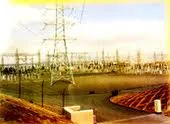
Areva T&D India will construct two 765kV extra-high-voltage substations worth US$45 million in the Indian states of Madhya Pradesh and Maharashtra.
Indian power utilities unhappy with pricing methodology

Indian power utilities refused to enter into Transmission Services Agreement with the Power Grid Corporation of India Limited due to the new 'Point of Connection pricing methodology. Much of the resistance has been directed at the substantial increase in the transmission tariff, following the regulation. Moreover, the charges are still higher for state generators. Orissa and Bihar, for example, are required to pay more while scheduling power from an inter-state generating station located within the state. Resistance has also been expressed over the basis of calculations for the tariff. Private power producers have complained that the PoC calculations are done on the basis of average energy scenario, instead of the required five seasonal scenarios, with peak and off-peak periods. In its defense, CERC has asserted that since it did not receive individual data from the states, it had to resort to using the average energy scenarios, instead. In fact, it claimed that a single PoC rate for the year is easy to comprehend and administer and gives a more stable signal. Utilities have also alleged that the present scenario, where actual PoC rates are converted into slabs, has resulted in cross subsidization. Nonetheless, the power watchdog has defended use of the slab approach, terming it to be a variant of the 'Min-max Fairness' principle, which would enable easy comprehension by the stakeholders as well as provide stability and certainty to the transmission pricing signal.
Ho Chi Minh City cuts down electricity use by 2.7%

Ho Chi Minh city has saved more than 232.8 million kWh of electricity, equivalent to VND 325.7 billion, in the first seven months of the year.
AboitizPower to put up Philippine coal-fired plant

Therma South has received an environmental compliance certificate for the 300 MW coal-fired project in Davao, Philippines.
CWPI starts building 198MW Chinese wind farm

Construction on the 198MW phase III wind energy development project in Heilongjiang Province, China has been started by China Wind Power International.
GE’s advanced aero technology to boost Indonesia’s power supply
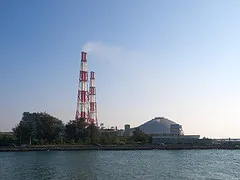
GE will supply two 41MW aeroderivative gas turbines to PT Kartanegara Energi Perkasa, owner of the Senipah Power Plant.
Bangladesh eyes $3B investment on solar energy

Solar energy can help expand information technology across rural Bangladesh, according to Energy Adviser Dr. Tawfiq-e-Elahi Chowdhur
NTPC targets 128,000 MW capacity by 2032

NTPC announced a Corporate Plan target of having a 128,000 MW capacity by 2032.
Japanese power companies work towards CO2 goal

The sector’s CO2 emissions were cut to 317 million tons, largely meeting protocol targets.

Thought Leadership Centre



Most Read
1. Fossil fuel use falls as electricity gains share of global energy mix 2. I Squared Capital launches Cube Grid to expand India power transmission assets 3. A*STAR expands fusion research collaboration with CFS 4. Thailand clean energy push accelerates with GCL SI–Getz Energy MOU 5. Indonesia renewables face grid limits as capacity rises to 14GW in 2024Resource Center

 Read Here
 Advertise
 Sign Up
Event News

Learn how operators can navigate evolving operating conditions, minimise reliability risks, and improve generator performance amidst increasing system demands.















Commentary
The supply-side blind spot in ASEAN’s data centre boom
Managing risk for Indonesia’s conventional power sector in a decarbonising economy