Limited trade, financing gaps hinder Asean grid modernisation
Southeast Asia needs billions for grid upgrades.
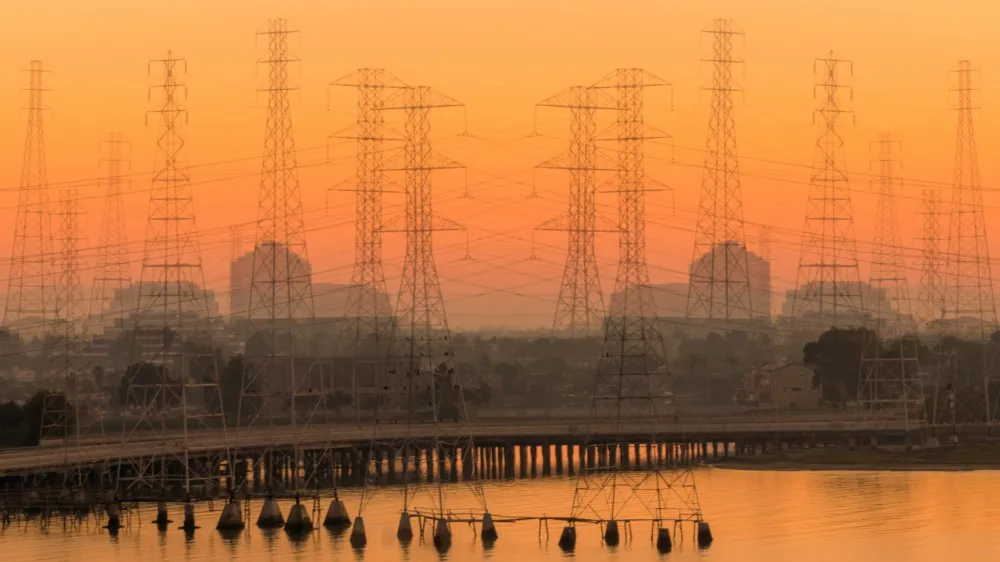
Southeast Asia’s power grid requires an unprecedented overhaul, with investment needs reaching up to US$764 billion by 2045, yet the region remains off track to meet its 2030 climate goals. Experts warn that limited cross-border power trade and major financing gaps are preventing ASEAN from building a modern grid capable of supporting large-scale renewable energy growth.
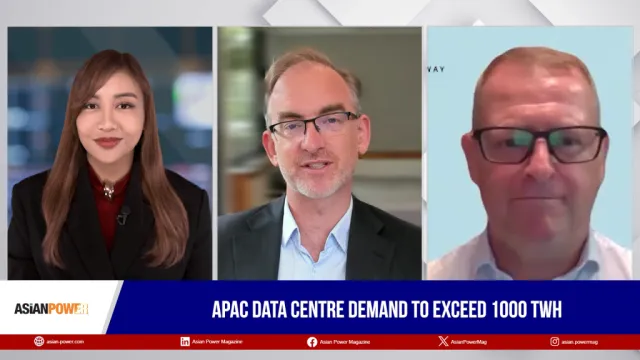
Kitty Bu, Vice President for Southeast Asia at the Global Energy Alliance for People & Planet, said the region faces “limited grid flexibility for renewable energy to be fully adopted as a variable source of energy onto the grid.” She highlighted physical weaknesses, pointing to “high losses in the transmission and distribution… hovering around about 9%,” above global benchmarks.
Bu added that coal remains dominant: “the ASEAN power grid is predominantly… composed of coal, and that remains the backbone of the energy resource for the region.” Without modernisation, renewable integration will remain constrained and the region’s energy transition delayed.
The largest financing requirement is in transmission infrastructure. Bu said ASEAN must raise annual grid investment sharply, from “about $10 billion needed in 2024 to $29 billion by 2035 and $43 billion by 2050.” She also underscored storage and control gaps, noting that the region lacks “real time grid control” needed to manage variable solar and wind generation.
Lavan Thiru, Executive Director of Infrastructure Asia, pointed to four vulnerabilities identified by the ASEAN Center for Energy. These include “aging transmission infrastructure,” inflexible systems not designed for renewables, “distribution network… gaps” in rural areas, and “limited cross border interconnections,” which restrict efficient regional power sharing.
Thiru said multilateral development banks typically provide only 15 to 25% of total infrastructure financing, with their bigger role being de-risking projects through guarantees, blended finance and policy support. When projects are well structured, he said “private capital can fund about 60 to 70% of investment needs.”
Bu noted that even major pledges fall far short. She said ADB’s $10 billion and the World Bank’s $2.5 billion commitment cover “about 1.5% of the total investment needed,” showing banks “cannot be seen and should not be seen as primary funders.”
Both experts stressed that unlocking investment will require stronger regional coordination, blended finance models, and harmonised rules to make projects bankable, expand cross-border trade, and accelerate ASEAN grid modernisation.













 Read Here
 Advertise
 Sign Up





Commentary
Scaling for resilience: What Asia Pacific’s bioenergy markets can learn from each other