Entering the age of electricity in Asia
By Frédéric GodemelThe future of energy is more automated and digitalised.
Asian power systems are entering a defining decade. Electricity demand is rising, driven by urbanisiation, industrial expansion, digitalisation, and electrification.
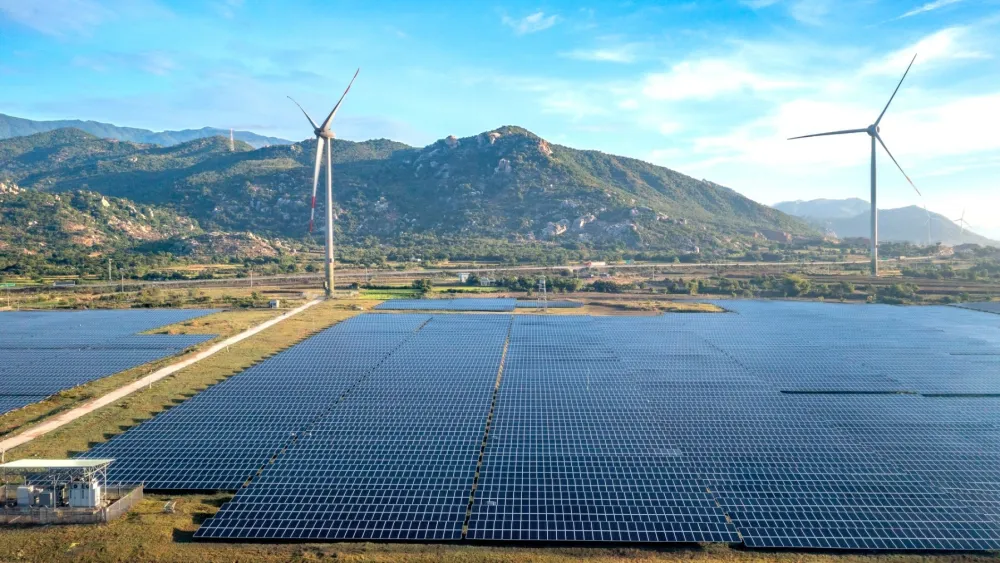
The International Energy Agency (IEA) estimates that Asia accounts for roughly half of global electricity consumption, with Southeast Asia’s demand projected to more than double by 2050. At the same time, the region is leading global renewable growth (over 70% of new capacity), whilst grappling with grid challenges from extreme weather and infrastructure constraints.
For decades, Asia’s power systems were largely linear: centralised generation delivering electricity one way to consumers. That model is rapidly evolving. Distributed solar, battery storage, electric vehicles (EVs), data centres, and digital industries are transforming grids into dynamic, bi-directional networks.
The central challenge today is no longer just generating electricity; it is managing this growing complexity at scale, whilst ensuring reliability, affordability, and sustainability.
As a result, several technological shifts are now reshaping the very architecture of Asian power systems, redefining how electricity is produced, stored, and delivered across the region.
Evolving energy distribution for renewable-heavy grids
Traditional electrical systems separate AC and DC circuits, requiring multiple conversions that waste energy. Hybrid systems are increasingly being installed. A hybrid system uses a single backbone for both AC power from the grid and DC power from solar panels and batteries, enabling renewable energy to be routed directly where it is needed.
This minimises conversion losses and creates smarter, more adaptive energy networks that better support electrification and net‑zero ambitions. This technology is especially useful for Asia, the global hub for renewable growth, with China leading in solar and wind, and India aiming for 500 gigawatts (GW) of non-fossil capacity by 2030 – having already achieved the 50% milestone.
But the AC/DC shift is only part of the evolution. Solid‑state and hybrid circuit breakers represent a second major leap forward. Unlike mechanical breakers that react after an electrical fault, solid‑state breakers use power electronics to detect anomalies in microseconds. This protection creates almost a proactive shield, increasing safety whilst maintaining continuity of service.
Agility for Asia’s rapidly expanding grids
In 2025 alone, extreme events such as the deadly earthquake in Myanmar and tropical cyclones in the Philippines caused widespread outages and disruptions across the region’s energy systems.
At the same time, Asia is building infrastructure at an unprecedented speed. With the integration of rooftop solar, cross-border interconnections, and EV charging clusters, agility has become critical.
As complexity increases, being able to showcase agility is increasingly important, too. Software Defined Power (SDP) is one area where this agility is coming to the fore. SDP replaces custom hardware with standardised, programmable, intelligent systems that can be updated and reconfigured as needs evolve. This responds to changing conditions and emerging threats.
For rapidly urbanising regions in Indonesia and the Philippines, this flexibility can accelerate electrification whilst maintaining resilience.
Digital overlays can modernise existing infrastructure, important in markets balancing cost and reliability.
From data to action: AI for energy optimisation
The modern grid is too complex to rely on manual management alone. Artificial intelligence (AI)-powered platforms now continuously monitor electricity use across buildings and sites, analysing data, detecting anomalies, and automatically optimising systems to reduce waste.
AI doesn’t just spot inefficiencies. It learns patterns, predicts demand, and can automate thousands of micro-decisions that add up to significant savings and emissions reductions.
And whilst 2025 might have been the year AI really entered mainstream conversations, this kind of approach to grid management isn’t something that has only just started to exist. For example, in Hyderabad, a smart factory cut energy use by 59%, water consumption by 57%, and CO2 emissions by 61% within four years.
How? With an advanced, cloud-based manufacturing system powered by IoT-enabled devices, leveraging real-time data, and predictive analytics for smart decision-making processes. It’s this kind of approach that shows us a world powered by data and digital insights is more efficient and sustainable.
Empowering the Asian energy citizen
The energy transition isn’t just happening at the grid level. It’s happening in our homes and communities. The rise of the “prosumer” – a home that both produces and manages its own electricity – is transforming the residential energy landscape.
Rooftop solar, batteries, heat pumps, and smart controls are turning homes and buildings into mini power stations, capable of optimising their own energy use and even supporting the wider grid through local microgrids.
Hybrid AC/DC systems route solar power directly to DC loads, whilst solid-state breakers and intelligent controls ensure safety and efficiency.
This change is about not only technology, but also about putting the power back in the hands of people. They’re no longer simple consumers of energy. They can choose when to use, store to sell energy and be more insulated from price volatility. All whilst knowing they’re playing a more active role in the journey towards net zero.
Powering Asia’s age of electricity
Data centres are growing in importance. So many tasks, from online shopping to sending emails, have touch points with a data centre. But in this new world where AI is growing exponentially, their role is soaring. As is their energy consumption and the power density of GPU-based accelerated compute.
Traditional air cooling can no longer keep pace with the heat generated by high-density servers in AI factory data centres. Liquid cooling, which delivers chilled fluid directly to the hottest chips, is now essential for efficiency and reliability.
In addition, governments are responding with policy frameworks balancing growth and sustainability. Singapore, for example, has introduced efficiency standards and green data centre requirements to manage energy intensity whilst maintaining its role as a regional hub.
The path forward
The future of energy in Asia is more electric, automated, and digitalised. It will demand hybrid AC/DC systems, AI, and software-defined power working together in an integrated, resilient systems.
Moving into this new age requires rethinking traditional, linear power flows, and investing in technology, infrastructure, and people to make it a reality.













 Read Here
 Advertise
 Sign Up