Singapore power use rises as data centres triple demand
Electricity prices have already climbed by as much as 12% as supply pressure builds.
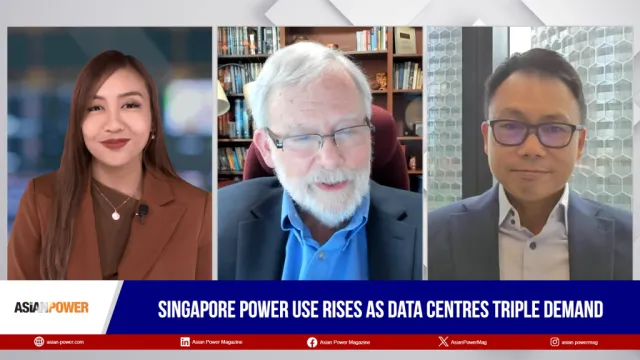
Singapore’s AI-driven data centre growth is set to sharply increase electricity demand, with usage expected to “almost triple from 2025 to 2030,” placing pressure on grid capacity, costs, and emissions targets, according to Bob Johnson, VP Analyst at Gartner, and Jason Ong, General Manager for Asia at Gentrack Ltd.
Johnson said data centre demand will grow about 25% annually, lifting its share of total electricity consumption from 4% to roughly 11%. This surge will account for “roughly 1/3 of the increase in projected generation capacity,” making AI workloads a central factor in energy planning.
The strain is also highly localised. Ong said data centres operate “24 hours a day, seven days a week” and can draw “hundreds of megawatts of electricity continuously.” When clustered in specific districts, this “will result in a significant spike in peak demand,” stressing transmission infrastructure and creating bottlenecks in those areas.
Overall electricity demand is projected to rise by about 3.2% annually, whilst supply is expected to grow faster at around 5.6%. However, the nature of AI workloads presents challenges. Continuous, high-load demand limits the use of intermittent energy sources such as solar, increasing reliance on natural gas in the near term.
Johnson warned this could “compromise your net zero targets,” as gas-fired generation is needed to ensure stable supply. Although plans to convert these plants to hydrogen may support long-term emissions goals, the near-term trade-off between reliability and decarbonisation remains significant.
Rising demand is already affecting costs. Ong said electricity prices have increased by up to 12%, as supply-demand pressures build. Businesses and households are adjusting by shifting consumption to off-peak periods and exploring alternative pricing plans.
Grid responsiveness is another constraint. Johnson said many systems are manually controlled and “cannot respond fast enough” to rapid fluctuations in AI-driven demand. He recommended deploying “smarter controls” to automate load balancing and enable real-time switching across the grid.
Policy and market responses are also accelerating. Ong pointed to efforts to expand battery storage, backup generation, and demand response programmes, alongside emerging models such as peer-to-peer solar trading.
As AI adoption scales, Singapore faces a tightening balance between powering digital growth and maintaining energy stability. Without faster grid upgrades and cleaner energy integration, rising demand risks higher costs, infrastructure strain, and delays in meeting climate targets.
















 Read Here
 Advertise
 Sign Up







Commentary
Why bigger digesters alone won't solve Asia's renewable energy challenge
Scaling for resilience: What Asia Pacific’s bioenergy markets can learn from each other