Digital shortfalls threaten Singapore’s low-carbon grid transition
Experts warn outdated systems and limited data could stall decarbonisation progress.
Singapore’s push to decarbonise its power sector is revealing major digital infrastructure gaps that could hamper the nation’s transition to a low-carbon economy. As more variable renewable energy sources and distributed assets come online, the grid must evolve quickly to remain stable, efficient, and secure.
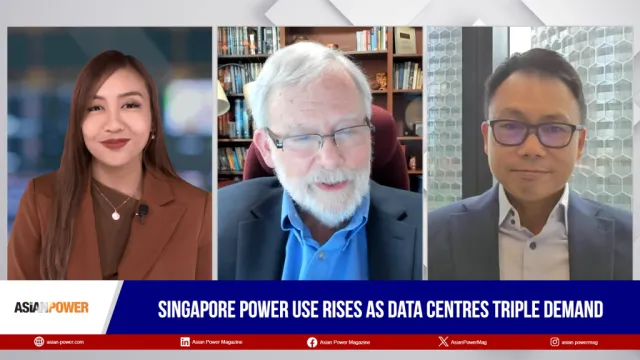
Joshua Ngu, Vice Chairman and Head of Asia-Pacific at Wood Mackenzie, said the energy system is becoming more complex as distributed resources grow. “We have variable renewables coming in. We have a demand side that is increasingly flexible as well. And so the grid really needs to be able to cope with all these different changes.”
He added that “there is a huge investment that's required” and noted that companies are beginning to “introduce more automation, more digitalisation into their processes, making them more efficient so that they can compete as well.”
Professor Lawrence Loh, Director at the Centre for Governance and Sustainability at NUS Business School, pointed to outdated technology as a key barrier. This is compounded by the lack of timely operational information. “Right now, there's limited real time data in this energy grid.” He also underscored the need for interoperability and cyber protection, noting that platforms “are sometimes quite isolated” and that “the issue of cyber security… is something quite critical.”
Rising capital expenditure commitments toward energy transition initiatives reflect both regulatory pressure and commercial necessity. “One of the key things that drive this high capacity is obviously to decarbonise, to lower their carbon admission,” Loh said, adding that energy security and regulations further drive investment.
Ngu observed that companies also see financial incentives, stating that “by increasing efficiency, by increasing productivity, they effectively reduce their cost,” while also managing carbon tax exposure and preparing for mechanisms such as Europe’s CBAM.
To integrate higher levels of renewables, Ngu emphasised the need for automation and two-way power flows as consumers become suppliers. He highlighted cybersecurity and data integrity as rising priorities. Loh added that smart grids must enable “real time monitoring” and “predict load forecasts better,” with cybersecurity remaining “the bottom line and the most important capability.”











 Read Here
 Advertise
 Sign Up






Commentary
Why bigger digesters alone won't solve Asia's renewable energy challenge
Scaling for resilience: What Asia Pacific’s bioenergy markets can learn from each other