Staff Reporter
Are Chinese thermal IPP's profit margins burning out?

Are Chinese thermal IPP's profit margins burning out?
Utlisation levels have all been plummeting.
ABB to suppply four 66 kV GIS substations for Singapore
This is part of SP PowerGrid's improvement project.
Singapore-based IPP Nexif Energy buys Vietnam hydropower plant

Coc San is a run-of-river 30 MW plant.
China to be the world's biggest energy importer by 2035

The power giant will trample Europe in power dependence.
CGN Wind Energy plugs in first 6 turbines at 150MW offshore wind farm
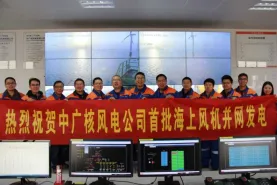
The farm's annual generation is projected at 400m kWh.
Myanmar lavishes on power infrastructure
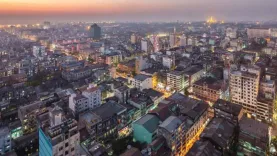
It's high time for Myanmar to tap its power sector.
GDF SUEZ changes to ENGIE, takes the lead towards a cleaner energy environment

Structural changes are taking place in the energy market and ENGIE is already leading the way.
How will China's on-grid wind tariff cuts affect Longyuan's financial profile?
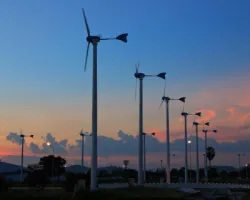
Returns on the firm's investments are likely to get hurt.
China is dead set to revive nuke power, hit total capacity of 58GW
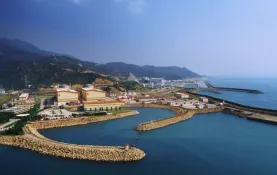
30 reactors are now in operation.
Thailand's RATCH joins Chinese firms in $6b nuke power project
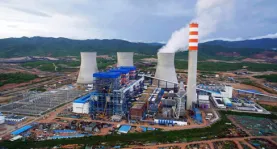
RATCH will inject THB7.5b in the project.
India's Adani Power to ink deal on building a $2b plant in Jharkhand
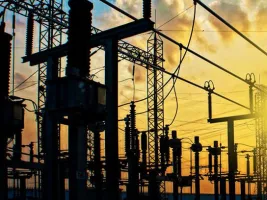
It's still part of capacity boosting measures, sources said.
AP's inaugural Power Utility Forum to kick off in Manila in March
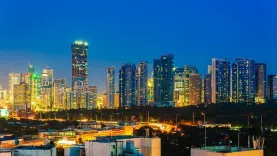
It will also be held in four other ASEAN cities.
Suzlon finally enters solar sector with 210MW project wins in Telangana, India

The 6 projects will be commissioned in 2016-17.
Regional power sector to benefit from China-led Asian Infrastructure Investment Bank

Coal-fired power plants are prime beneficiaries.
Indian distribution firms' reform success to alleviate power sector woes

Their weak fiscal position is in dire need of a reform.
Korean government eyes boosting energy utility investments to KRW6.4tr

How will KEPCO be affected by this?
Power Grid Corp. of India's 3Q profits jumped 31% to INR20.2b

Thanks to a sharp rise in transmission volume.
Thought Leadership Centre



Most Read
1. SEA green economy to hit $430b by 2030, but grid bottlenecks threaten growth 2. India loses 2.1TWh of renewables as coal hits flexibility limit 3. Japan’s US LNG resales equal output of 17 coal plants, report says 4. Pakistan’s LNG supply hit as Middle East conflict halts Qatar cargoes 5. Southeast Asia’s reliance on Middle East crude leaves region exposed to supply shocksResource Center

 Read Here
 Advertise
 Sign Up
Event News

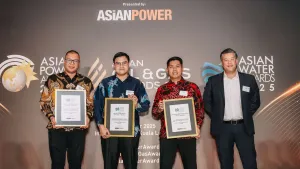
Be amongst the industry leaders recognised for driving innovation and operational rigour across Asia.









Commentary
Malaysia’s energy workforce is upskilling, but to what standard?
Asia’s grid decade: Why transmission will decide the pace of renewable growth