Staff Reporter

Focus now turns to China's low-wind areas

Focus now turns to China's low-wind areas

Vestas Wind Systems has agreed to hand a large consignment of high-tech turbines to the Longganhu wind farm in Hubei province.

GCIL gives nod for connectivity to Miyar HEP developer

PGCIL has given its consent for connectivity of the 120 MW Miyar hydro electric project as per the power evacuation system details detailed in the master plan.

Solar to dominate Asia’s renewable energy future

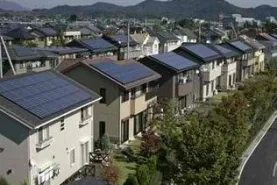
Recent trends within the PV industry have seen a massive increase in the number of module manufacturers within the Asian region. This will set the scene for the next few years where we can expect to see a move away from small roof-top PV systems to the deployment of large-scale commercial and industrial arrays. Historically, in most countries, such as Australia, the roll-out of PV has been dominated by domestic roof-top installations. For a country that has one of the greater levels of solar insolation, the deployment of solar as an energy source is small by world standards. Currently the largest PV flat-panel array is only 1.22MW located in Brisbane at The University of Queensland (UQ), which was designed primarily for research purposes. Whilst the Government has committed support for two large-scale projects and a number of other larger arrays are planned, most are still relatively small compared to those already established within Europe.

Why we should go green in shipping

Nazery Khalid assesses efforts in the shipping sector to go green

Expensive solar costs impede larger deployment

The cost of solar usually comes as the barrier for a larger solar deployment. Fit and PPA driven by RPS have lead the path for the revolution in Renewable Energies leading wind to achieve more than 100 GW and PV more than 20 GW.

The challenges of renewable energy sources in gulf countries

With intellections to reduce dependence on hydrocarbons and concerns over environments, Asian Power industry is currently demanding more green solutions to produce power.

What you need to know about pollution control technologies

World attention was recently focused on the climate change negotiations held during the United Nations Climate Change Conference in Durban, South Africa.

Japan’s nuclear “stress tests” get UN nod

The United Nations says Japan’s nuclear reactors are safe but . . .

Sinovel expects halved profits from wind turbine sales

The wind will be blowing the wrong way for Sinovel Wind Group Company, China’s biggest wind-turbine maker.

Indonesia seeks suitable nuke plant site amid nuke stigma

Kalimantan has been identified as a suitable site nuclear energy development as it is relatively earthquake-free from compared to Java.

U.N. nuclear agency approves Japan's stress tests

U.N. nuclear experts have endorsed stress tests designed to show that Japanese nuclear plants could withstand a repeat of last year's quake and tsunami, as the government campaigns to restart idled reactors and avoid a summer power crunch. The government, though, still faces an uphill battle to restore public trust in the nation's power utilities after the March 11 disaster wrecked the Fukushima nuclear power plant, triggering the world's worst nuclear crisis in 25 years. The Vienna-based International Atomic Agency's (IAEA) team has been in Japan at the request of the government to review stress tests conducted by its Nuclear and Industrial Safety Agency (NISA) on halted nuclear reactors to verify their safety. "We concluded that NISA's instructions to power plants and its review process for the comprehensive safety assessments are generally consistent with IAEA safety standards," James Lyons, the leader of the 10-member IAEA team, said Tuesday. "We were very impressed with the way Japan quickly implemented the emergency safety measures after the accident in March. They have also been very active in participating in the international community to determine the steps forward," Lyons added to reporters. He also pointed out areas that Japan could improve upon, such as communicating with local communities about stress tests. "NISA had done a good job in the transparency of information on their website, but we feel that it is also important for them to hold meetings in the vicinities of nuclear power plants to discuss their findings with the local population," Lyons said. Stress tests are computer simulations that evaluate a nuclear reactor's resilience to severe shocks. NISA completed a review of the stress tests earlier in January and said they showed reactors at Fukui prefecture's Ohi plant, the first to be assessed, were capable of withstanding an impact similar to the magnitude 9.0 earthquake and massive tsunami that wrecked the Fukushima plant. Some experts, however, have questioned the validity of the stress tests, charging the IAEA's visit was just for show. "It is obvious that a visit by an international organization advocating nuclear power is part of a political agenda that is built into a story already finished in advance," said University of Tokyo professor Hiromitsu Ino and former nuclear plant design engineer Masashi Goto in a joint statement last week. Ino and Goto, who serve on a committee that advises on NISA's review of the stress tests, said the tests were insufficient as they only simulate one natural disaster at a time and do not take into account the possibility of the sort of equipment failure and human error seen at Fukushima. Others suggested the IAEA's stamp of approval would not be enough to alleviate public concern. "The public mistrust toward the government's handling of information over the nuclear accident is high and I don't think the review will change that," said Atsuo Ito, a political analyst. ENERGY POLICY SHIFT In another effort to restore public confidence in nuclear power, the cabinet Tuesday approved bills that would set up a new nuclear safety agency, separating regulation of the industry from the trade and industry ministry, which has promoted nuclear power and came under criticism for its cozy ties with utilities. The Fukushima disaster has also prompted a major shift in Japan's energy policy. The resource-poor nation had aimed to increase the share of nuclear power from a third to more than half of the power supply by 2030 before the disaster, but it now looks to reduce its reliance on nuclear power and raise the role of renewable sources such as wind and solar power. But with only three of the country's 54 nuclear reactors running, and public anxiety preventing the rest from being restarted after routine checks, the government wants to avoid a an economically crippling power crunch in the summer and hopes the stress tests will help persuade a wary public that it is safe to restart some of the reactors. Local governments hosting nuclear plants, however, have said the stress tests were not sufficient to allow them to give their approval, with some requesting that findings from the Fukushima disaster be considered in drafting new safety standards as well. "A utility would not be violating any law if it went ahead and restarted a reactor after properly completing scheduled maintenance. But the Fukushima accident has heightened public concern over nuclear safety, making local consent an important part of the restart process," a trade ministry official said. Japan had promoted nuclear power as safe, cheap and clean before the Fukushima crisis. "The myth that nuclear power was absolutely safe is a theme we will explore. We need to find out how such a mindset developed," Kiyoshi Kurokawa, head of a parliamentary committee investigating causes of the Fukushima accident, told reporters Monday here

India, Japan collaborate to study improvements of coal-fired plants

India's CEA and the Japan Coal Energy Center are studying the possibilities of efficiency and environment improvements at India's coal fired plants.

Kansai Electric incurs $1.5B net loss in April-Dec.

Kansai Electric suffered a net loss of US$1.548 billion in the April-December period.

LTA application for NTPC's 1,320 MW Tanda power project awaited

The LTA application from NTPC for it's 1,320 MW Tanda power project in Uttar Pradesh is yet to be received, according to Powergrid.

Can the Philippines finally go nuclear?

A 2,000-megawatt nuclear power plant may be online by 2025.

Pakistan slow in challenging India's obstructive hydro project

Pakistan's delay in challenging the construction of the 45-megawatt Nimoo-Bazgo Hydropower Project before the ICA may benefit India.

India's NTPC to build Bangladesh coal power plant

Bangladesh has tapped NTPC to build a $1.5-billion coal-fired power plant.