Smarter choices and risk management secure long-term value – The Lantau Group’s Mike Thomas
He stressed how market design, risk, and end-user demand are reshaping Asia’s power sector.
Asia’s energy sector faces the challenge of balancing rising demand with decarbonisation goals. Navigating this will require integrating renewables, managing risks, and shaping markets that deliver sustainable outcomes.
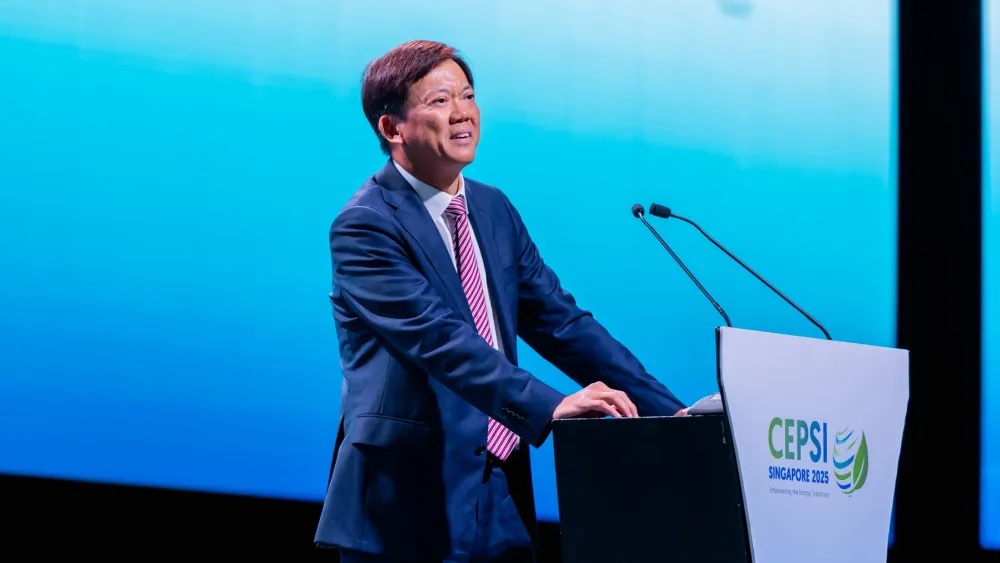
Mike Thomas, Managing Director of The Lantau Group, shared his expert insights. With more than three decades of expertise in the energy sector consulting, he has established a reputation for applying rigorous economic and analytical approaches to some of the most complex challenges facing the industry. His work spans the needs of policymakers, commercial stakeholders, and end-users committed to decarbonisation, reflecting both the breadth and depth of his professional focus.
His experience covers a wide spectrum of market structures and regulatory frameworks, ranging from fully nodal competitive markets, with and without capacity mechanisms, to vertically integrated regulated systems.
As a judge at the Asian Power Awards 2025, Thomas explored Asia’s energy transition and how economics and ESG shape smarter decisions.
In your extensive experience, how would you characterise the current state of the power sector in Asia, particularly in terms of its readiness to meet the challenges of energy transition and sustained economic growth?
We’re in an interesting place for sure. If you rewound the clock 10 years and just tried to imagine where we’d be right now, I don’t think anyone had China’s energy transition on their bingo card.
China has been reforming, integrating, and driving major changes in pricing, markets, and innovation. Whilst it is true that new coal plants are still being built, focusing only on that misses the bigger picture. China is no longer the leopard that never changes its spots, but a gazelle—still with a few spots, yet clearly transformed and moving forward. The real story lies in watching the gazelle.
ASEAN, however, continues to sort of poke along, which I think was pretty predictable. Only the Philippines has had the guts and vision to undertake fundamental reforms. It’s no surprise that it is now the most dynamic electricity market in ASEAN. Malaysia teeters at the edge of becoming a regional renewable energy powerhouse, but it’s still not clear if all the pieces will finally come together. Thailand is starting to wake up to datacentres and renewable energy after sort of disappearing for many years. Vietnam has finally pushed forward with LNG procurement many years after it was originally expected. Singapore has made many announcements, shifts, and zig zags as it faces the reality of a more difficult energy transition challenge than perhaps it was originally expecting. ASEAN really needs to get its act together, with real electricity trading arrangements and genuine open access.
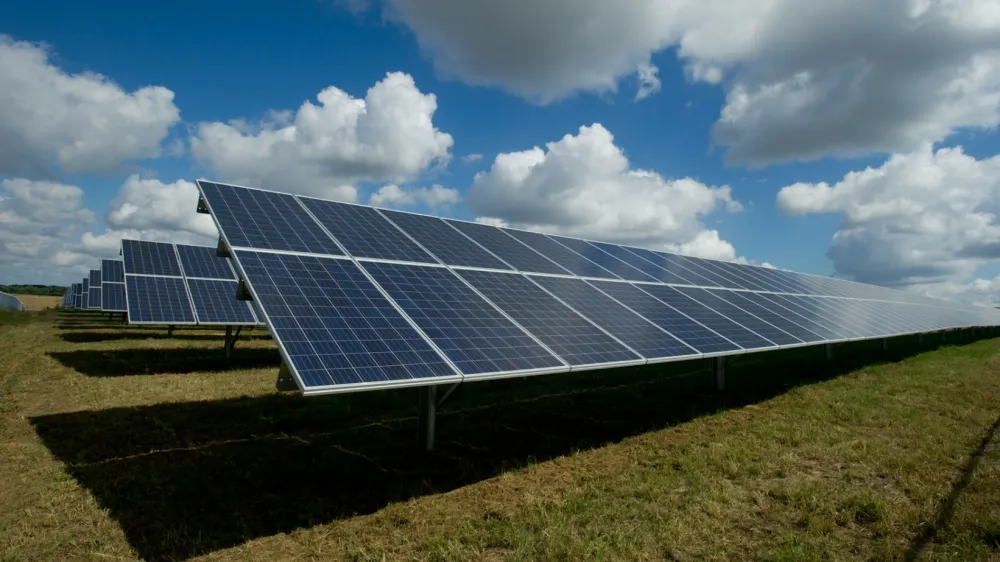
The problem remains that end users who want to lead the way on clean energy are still finding it super hard to make it happen. End users are looking for agency over their sourcing and cost control. Technology costs have fallen with solar and Battery Energy Storage Systems (BESS) beginning to dominate, as we see in China and many other markets, increasingly. The scale of developments is increasing as stakeholders have had several years to assemble land for ultra-scale solar fields. Unfortunately, regulatory regimes, policy arrangements, and missing or inadequate markets continue to stymie further development.
How can economics and analytics drive smarter decisions for energy stakeholders pursuing decarbonisation in Asia?
Risk is higher. Renewables and BESS costs have fallen, but their integration into systems and the availability of commercial arrangements are complex. Available contracts are often shorter than the life of the underlying asset or longer than the optimal end user’s preference. Integrating BESS into systems and resource offtake profiles involves optimisation modelling. Understanding some risks involves getting more deeply involved in understanding transmission expansion dynamics and regional demand growth. Everything is happening at a more granular level.
More choices, more complexity, and more risk all create an environment where being smarter means being more analytical.
How do different market designs across Asia influence the pace and effectiveness of the energy transition?
In some markets, customers are free to contract, and developers can proceed whenever they assemble the necessary elements. In much of Asia, however, markets remain either closed or “gated.” Sometimes the gate opens only for a limited few at specific times; other times it opens more widely, though what lies beyond is obscured by limited transparency. In certain cases, the gate may be fully open, yet new uncertainties make entry far riskier for investors.
Malaysia has used its Large Scale Solar auctions as a gatekeeper for some time. It has moved to the Corporate Renewable Energy Supply Scheme (CRESS), which is more open but less transparent. Markets like the Philippines are wide open, but large-scale interventions in the form of green energy auctions introduce a material amount of risk to investors otherwise exposed to the spot market.
Every market is moving generally at faster or slower speeds towards the energy transition, but not every movement is well thought through or coherently integrated with all the other movements.
What role should ESG play in long-term value creation for power companies in Asia, and how can it be effectively leveraged?
ESG has, in some respects, overreached. What began as a straightforward idea — that improving sustainability across all dimensions would reduce risk and strengthen a business’s future position — has become more complicated. At its core, the principle was simple: be smarter, waste less, evaluate risks more comprehensively, and think ahead.
It’s hard to fault the logic that thinking more forward and broadly is a good thing, especially in a world that is changing faster.
What we do not want to see is ESG in the energy sector reduced to a game of musical chairs, where early movers secure lower-cost options or push for market changes to gain advantages at the expense of others. When one party secures a “better” deal, is it due to foresight or because a “worse” deal has been left for others to absorb? Musical chairs inevitably ends poorly for someone, and such dynamics are incompatible with the spirit of ESG. Decarbonisation may begin with leaders, but it cannot succeed without bringing followers along. That remains a significant challenge and will require intense focus to drive progress within the practical limits of what APAC countries can accept and implement.
As a judge for the Asian Power Awards 2025, what key qualities will you be prioritising when evaluating this year’s nominees?
As a judge for the Asian Power Awards 2025, I recognise that evaluating such a wide range of projects is never an easy task. However, there are key qualities that I consistently prioritise when assessing the nominees. These include clarity, pride, scope, scale, and impact.













 Read Here
 Advertise
 Sign Up