
Are we just in time to close the energy workforce readiness gap?
By Alex SpencerAddressing the workforce skills gap is a major energy industry priority by 2030, but we only have a few months left to influence the size and shape of the talent pipeline.
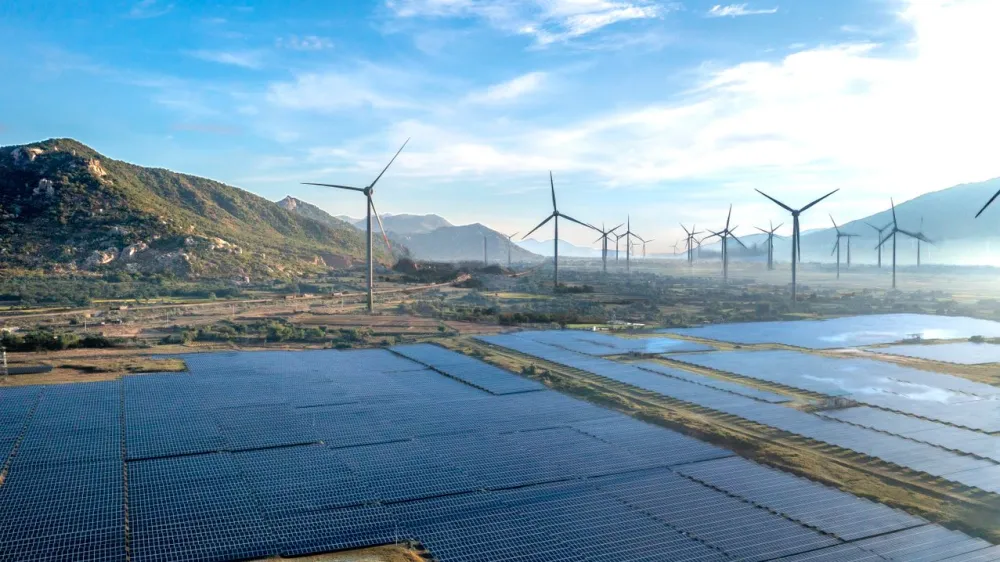
2030. The year when we should see transformative change in the energy industry, if we progress on the various goals before us, from ASEAN’s target of tripling renewable energy capacity to Australia’s ambition for 82% renewable electricity.
In the process of transitioning to more sustainable forms of energy, tens, even hundreds of thousands, of energy jobs are to be created and adapted. It’s a familiar narrative, one that has been repeated over the years.
Yet today, its meaning has taken on a more pressing significance. In just a few months, we’ll need to have secured the fresh talent pipeline that will play a large part in making 2030 possible.
“But Alex, 2030 is still 55 months away?” I hear you say.
As university degrees take roughly 42 months and most courses only enrol once a year, we have just a few months to attract students to a career in energy infrastructure, so that they can apply for the 2026 intake. For those interested in an apprenticeship, we have a little more time.
The need for a STEM degree, and for specialist qualifications or certifications, was highlighted as a key barrier to working in the energy industry. However, respondents were equally encouraged by the industry’s potential to offer good pay, career development opportunities, and job security.
Over the coming months, these are the factors that we should highlight with enthusiasm to secure that fresh influx of talent.
Once we get this right, we will have solved one of two pressing workforce problems. However, not only do we need heads in hard hats, but we also need those heads to be readily up to the task. Here lies the industry’s next challenge – the readiness gap.
Is the workforce ready?
Fast forward to 2030, let’s imagine we’ve succeeded in creating a workforce with the right foundational skills. How prepared are they to step into these emerging energy roles?
Whether it’s a need for more on-the-job experience or to gain the right set of qualifications to step onto the job site safely in the first place, this is the energy industry’s readiness gap.
Of course, we expect that many of the new jobs that are to be created will be filled by oil and gas workers. Often, their skills could meet up to 80% of the new brief, whatever part of the energy industry they step into.
But it’s that final 20% - that final push to readiness – that is so often overlooked when we talk about the skills gap. In Asia, this gap is often compounded by the challenges of accessing training in rural regions, complex local licensing rules, and varying recognition of certifications across borders — particularly between Southeast Asian countries.
Part of the challenge is that the industry does not know exactly what jobs it’ll need to be ready for, with every region at different stages in its energy transition journey.
From India’s rapid expansion of solar and green hydrogen to China’s offshore wind plans and Japan’s investment in carbon capture, how do we create a globally ready and mobile workforce with the capability to flex their expertise to meet evolving needs?
Enhancing workforce readiness
One relatively straightforward answer to this conundrum is to establish industry standards that ensure employees and contractors can always work safely and competently, regardless of the type of energy infrastructure they are assigned to.
Whether you’re maintaining a motor on an offshore oil platform or at the top of an offshore wind turbine, many of the safety requirements and electromechanical skills are the same, if not similar.
Products that were first developed for oil and gas – helideck operation, emergency response, confined spaces, rigging and lifting, working at height, safety induction, etc. – are all transferable to emerging technologies such as hydrogen and carbon capture, and for offshore wind too.
One of the ways we’re addressing the readiness gap is by developing introductory courses on business sustainability, carbon capture and hydrogen aimed at technical apprentices. Learners gain an understanding of the role of hydrogen and carbon capture in supporting the transition to clean energy, the technology’s characteristics and categories, and the required health, safety and regulatory frameworks for working with them.
Increasing the fidelity and flexibility of training
With little time left on the clock, we are working closely with industry stakeholders including developers, operators, regulators and contractors to establish training and assessment frameworks for emerging energy transition technologies. This is complemented by a global network of industry forums where we regularly receive feedback on how the skills and readiness gap is evolving.
For instance, one interesting development that has come out of those conversations is whether training providers can improve the realism of the helicopter underwater escape training (HUET). It’s already the most popular energy workforce training course globally but in several locations, including parts of Southeast Asia, it often does not include in-water CA-EBS use due to national regulations.
Operators and learners increasingly want more realistic training, so we are exploring ways to ensure that the training scenario is as close to real life as possible.
As with the skills gap, the readiness gap looks different in each region, so whilst global standards are necessary, so too is the need for flexibility to meet individual country and company needs.
For example, in Malaysia there are bespoke energy transition certificates that will support their workforce in becoming ready to make the most of emerging opportunities in the region.
Similarly, training adaptions include the T-BOSIET course, omitting cold-water components from the BOSIET and focusing on tropical survival scenarios to account for environmental and operational differences such as water temperature and humidity in tropical areas – ensuring that safety training remains relevant and practical for offshore workers in warm-water climates.
Another key consideration is language. Training in local dialects, combined with global standards translated effectively, is essential to ensuring workforce understanding and compliance, especially in multilingual countries like India, Malaysia, and the Philippines.
Safe, skilled and ready for the task ahead
Addressing the workforce skills gap is a major energy industry priority by 2030, but we only have a few months left to influence the size and shape of the talent pipeline.
To ensure that the pipeline is ready to make an impact from day one, the industry must take a proactive and agile approach to talent readiness. Whilst there are still many unknowns, global standards that can be adapted to address regional priorities will ensure that our future workforce not only has the knowledge and expertise but is also competent, confident and safe in its real-life application.








 Read Here
 Advertise
 Sign Up