Staff Reporter
Taiwan Power to sue 4 IPPs after negotiations fail
Taiwan Power Co will sue four independent power producers due to disputes in the terms of contracts for electricty sales.
Japan's J-Power to resume nuke plant construction
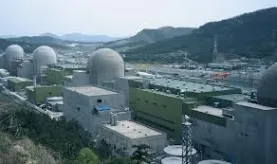
J-Power could become the first Japanese utility construct a nuclear power plant since the Fukushima crisis.
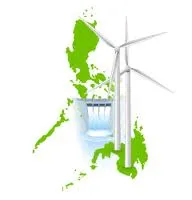
Thailand's EGCO targets 48MW Philippine wind project
Thai firm EGCO, through its subsidiary Quezon Power, is eyeing an equity take in the proposed P6-billion 48-MW wind power project in Oriental Mindoro, Philippines.
Pakistan govt unable to supply fuel to power plants
Power shortfall continues to increase in Pakistan as the government is unable to supply fuel to the plants claiming loss of infrastructure in the recent past rains.
This is how significant renewable energy will be in Asia
With its ever growing energy demand, Asia has a great potential to utilize renewable energy resources towards a more secure energy future. Renewable energy will play an important role in meeting high energy demand growth and in addressing environmental concerns from the increase in fossil-fuelled power generation. However, the potential for a large scale shift from the use of fossil fuels to renewable energy for electricity generation remains a highly debated issue in many Asian countries. This is not without reason as large scale implementation of renewable energy will pose significant challenges to legacy power systems due to temporal fluctuations, geographical dispersion of renewable energy sources and inadequacy of the existing power grid. Fossil fuel resources, once harnessed, may be transported easily and used at power plants. Fuel supply is largely predictable and both base load and peak load power plants may be supported reliably (e.g. coal-fired power plants are suitable for base load power plants while gas-fired power plants function effectively as peaking plants). On the other hand, renewable power plants (wind, solar and hydro) are highly dependent on weather conditions and locations. Areas with ample renewable energy resources are generally remote. It is therefore crucial to comprehensively analyse the efficiency and impact of remote electricity transmission networks. Any expansion of the existing grid will require efficient planning and operational improvement over the existing network. This creates opportunities for innovative monitoring, control, communication, and self-healing technologies to enhance grid operation.
Asia's solar thermal potential
Is there a market for solar thermal in Asia? This question is not easily answerable. On one hand of course people need hot water. On the other hand, many of these countries have natural solar water heating solutions by exposing the pipes to the sun or use of black water tanks, very common throughout all Asia. So what is the purpose to design a solar water heater system that will always be more expensive? The answer lies on a different segment or easily said on a different scale: when more users are involved the amount of water to be heated increases and the roof area may be limited, so it is important to come with shared solar water heater systems. This applies to hotels, malls, industries and domestic buildings. Shared systems for household can and should also be implemented in Asia. The market can then be divided into pressurized and non-pressurized systems and that immediately relates to cost. Good solar thermal collectors use coated absorbers and copper piping as well as insulation. All that can be relaxed in hot countries bringing down the costs and still be quality systems. The affordable price is usually not perceived, since the system has already “fuel” incorporated and that does not have to be paid. We usually talk about payback as the criteria for decision on purchasing, but be aware of the real performance of the systems, since a lower cost may not surely mean the same heat generation potential – or the quantity of water at a certain temperature. In Asia seldom standards have found their way among common people, but it should be the task of government to implement such minimum standards to avoid disappointments and prejudice from their citizens. Solar thermal is the cheapest of all renewable Energies and has a tremendous impact on the energy consumption of any country and most importantly on the livelihood. Hot water provides comfort and quality of life and improves health standards. The answer to the initial question is yes, there is a market, there is a need and it is good for the Asian countries. Standards and adoption of already established schemes – European, North America, India – should be the way forward. Another area of interest in solar thermal is the concentrated solar thermal – CSP - and here the technical, economics and financials are completely different. It is a power generation system, suitable for utility scale generation and requires a specific component of the solar irradiation – Direct Normal Irradiation (DNI) – which is not abundant everywhere. In Asia India, China, Thailand have started implementing some CSP projects. Is there a market for CSP in Asia? If we take the two massive countries: India and China and if they are doing CSP, then the answer is yes. On the other hand CSP competes with PV for power generation with the single advantage of being cheaper than PV when dispatchable power is considered – it means with storage capacity. The scope of application is shorter than PV and the market players are also less. CSP and all dispatchable solutions are required when grid management is an issue, so load analysis and load management should actually dictate whether CSP is a better solution than PV. Good DNI sites exist in Asia and with large extensions and also low cost of land – usually barren lands – and if there is one solar energy that still has space for integration and addition of players is CSP, so it is also a business opportunity for Asia to be able to export technology to other continents. Solar thermal has been forgotten with all the PV revolution, but solar thermal is an industry with more than 30 years old while PV is now becoming a teenager. Asia should not forget solar thermal in its policies and goals. According to ESTIF (European Solar Thermal Industry Federation) almost 2.6 GWth were installed in 2011 (3500000 m2) in Europe and the total installed capacity in Europe is now 26.3 GWth, generating 18.8 TWh of solar thermal energy while contributing to savings of 13 MMt CO2. Despite the impact of the economic and financial crisis, the solar thermal sector still shows an average growth of 3.9% and 9.0% over the last five and ten years, respectively. China – the solar thermal giant According to the SHEC (Solar Heating and Cooling Program of the International Energy Association) on their yearly report on Solar Thermal worldwide regarding 2010, it is shown the installed solar thermal capacity worldwide per regions. China stands out with a massive 117600 MWth which means roughly 168 million sqm of collector area installed (1 m2 = 700 Wth) Asia, without China, comes second with Japan, India, Taiwan and South Korea being above the 1000 MWth (1,5 million sqm of collector area). Thailand comes next in the ranking with around 64 MWth of installed capacity. A more interesting metric may be the installed capacity per 1000 inhabitants, which removes the massive size of some countries versus others. The leaders in quantity and usually not the leaders in this metric an some countries do show a remarkable penetration of solar thermal, as Cyprus for example. China comes first again closely followed by Australia and NZ. Asia is way back with 9 m2 per 1000 inhabitants. There is actually no reason why Asia lacks so much behind when even the MENA region comes third showing that hot water is also needed in hot countries. Cyprus – the small great Champion – reigns with a massive 820 m2 per 1000 inhabitants and all those familiar with the solar thermal industry know that children in Cyprus never draw a house without a solar collector in the roof! A word for Austria which astonishingly comes third and it is a clear statement of the smart use of the solar resource for heating. China comes tenth, while Taiwan is the next Asian country in the list followed by South Korea, India and Thailand with slightly more than 1 m2 per 1000 inhabitants. Solar thermal compares favourably to other Renewable Energy technologies and stands in installed capacity hand in hand with wind, way in front compared to PV. The growing trend of wind and PV versus solar thermal is huge and the gap is being bridged, but energy is not only electricity, so heat should not be overlooked! The market growth is enormous in Asia, higher than anywhere else, even toppling China’s growth on this sector. We are poised to see Asia growing and taking advantage of the solar resource for heating and increasing the comfort of its populations. It is still common to see electrical water heaters being marketed strongly in Asia, while solar thermal should clearly be favoured and pushed by legislation. Solar thermal technologies In solar thermal for heating purposes it is usual to divide the market in unglazed, flat plate collectors (FPC) and evacuated tube collectors (ETC). The first refer to collectors that are open or are not enclosed with a glazed surface (glass), flat plates are the common type for almost everyone in the world, except in China where the evacuated tubes are more common. The distribution worldwide is: Clearly the evacuated tubes in China crowd out all the others, though unglazed still have a big predominance in some markets, namely those for swimming pool heating (Australia and the US). Chinese evacuated tubes are different from the European evacuated tubes and so are the prices and quality. It is nonetheless true that Chinese ETC from some companies are reliable and do provide a very interesting return on investment and increase the possibilities of building integration die to the nature of heat collection in evacuated tubes. Another interesting metric is the type of system installed. Here we have thermosyphon (tank and collector are both on the roof) and using pumps (only the collectors are on the roof). Asia (three countries are considered Japan, South Korean and Taiwan) shows a dominance of the former, which is also the case of China. Mostly we see domestic systems (Domestic Hot water – DHW) being the market for solar thermal worldwide, though interesting niches can be seen.
The price of electricity in Vietnam
The electricity industry in Vietnam is unique. The Government still controls large components of the industry. Critically, it controls the price. This Article discusses the general pricing regime.
Philippines' First Gen plans $3-B expansion
First Gen Corp. may invest as much as $3 billion in the next six years building power plants and a liquefied natural gas terminal.
Last turbine of Son La hydro power plant joins Vietnam grid
Vietnam’s largest hydro power has launched its last turbine, fulfiling its work on time for 2012.
India's Jindal Synfuels pushes through with 1125MW coal-to-liquid plant
Jindal Synfuels Limited is moving ahead with its coal-to-liquids project that would include a mega captive power plant.
Moser Baer to build 1980-MW thermal plant in Jharkhand
Moser Baer has secured a terms of reference for preparation of environment impact assessment studies for a 1980MW coal-fired 1980-MW in Saraikela Kharswan district of Jharkhand.
Management consultancy needed for 2 Indian hydel projects
Hydel projects at Jammu and Kashmir in Ganderbal and Poonch districts are in need project management consultancy services.
Sabah Electricity runs after power thieves
Sabah Electricity Sdn Bhd blames electricity theft as the biggest contributor for it recorded a loss of almost RM5 million in its last financial year.
Prai gas turbine plant project to be awarded in October
The Combined Cycle Gas Turbine plant construction in Prai, Penang, and an extension of the first generation power purchase agreement will be awarded in October.
Japan's renewable generation program off to promising start
Japan's new renewable energy program has already exceeded its fiscal 2012 target by more than 50 percent.
Siemens to build India's first 765kV test laboratory
Siemens Limited will build a 765kV test laboratory, the first-of-its-kind in India, at Bina, Madhya Pradesh for the National High Power Test Laboratory.
Power-starved Indian state asks for increased power access
The state government of Assam has requested India's power minister Veerappa Moily to increase the minimum available transfer capacity to the north-eastern region to 400 MW.
Commentary
How pump retrofits boost profitability and efficiency in ageing power plants