India achieves 50% clean power generation ahead of 2030 target
The country has installed over 240 GW of non-fossil fuel sources.
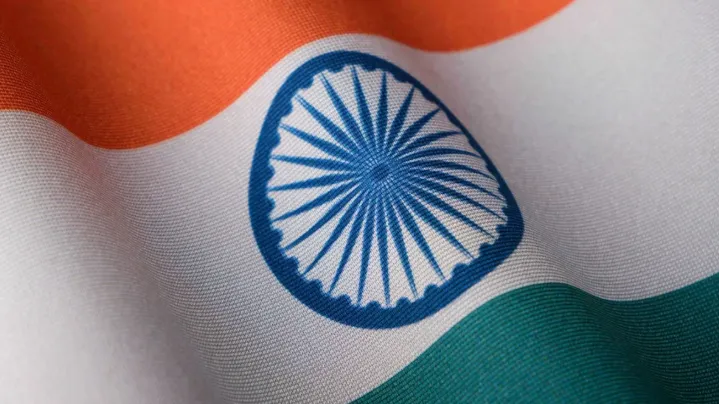
India has announced that 50% of its total 484.8 gigawatt (GW) installed power capacity now comes from renewable sources, reaching the goal ahead of its 2030 target.
According to the Ministry of New and Renewable Energy, this development means that 242.8 GW of its installed capacity comes from non-fossil fuel sources.
“India has achieved a landmark in its energy transition journey by reaching 50% of its installed electricity capacity from non-fossil fuel sources—five years ahead of the target set under its Nationally Determined Contributions (NDCs) to the Paris Agreement,” the ministry said.
Of the 484.8 GW capacity, 49.92% comes from thermal energy, 1.81% from nuclear, 10.19% from large hydro, and 38.08% from RE.
The ministry said the next phase of India’s transition will prioritise quality, equity, and resilience in clean energy access. Battery energy storage systems and pumped hydro storage expansion will also play a critical role in ensuring grid reliability and round-the-clock power availability.
“Artificial Intelligence (AI) is set to emerge as the backbone of India’s future energy infrastructure. AI will play a central role in demand forecasting, predictive maintenance, automated grid management, and system efficiency enhancement,” the ministry said.
“As the power sector becomes increasingly reliant on data and digital infrastructure, cybersecurity must be prioritised. Protecting critical infrastructure from cyber threats, data breaches, and algorithmic manipulation is integral to ensuring a secure and resilient energy system,” it added.
















 Read Here
 Advertise
 Sign Up