Energy transition requires genuine end user support – The Lantau Group’s Mike Thomas
He highlights the hurdles, policy gaps, and innovations shaping oil and gas decarbonisation.
The energy sector is in a period of transformation as global decarbonisation ambitions reshape industries rooted in oil and gas. The transition demands collaboration, sharper analytics, and a readiness to rethink established models, with the focus now on how quickly and effectively change can be achieved.
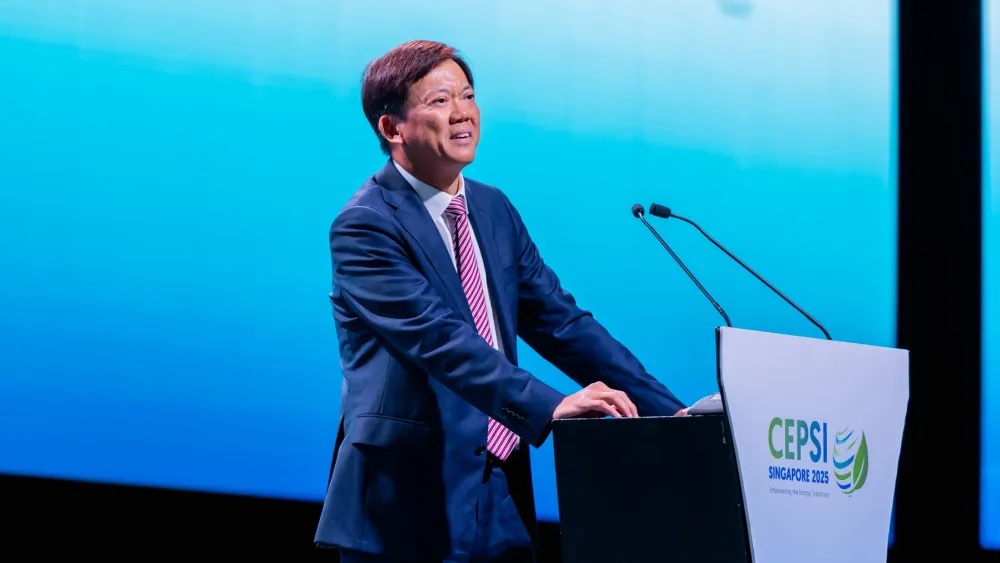
Offering valuable insights is Mike Thomas, Managing Director at The Lantau Group, bringing over three decades of experience in energy sector consulting. He is recognised in the rigorous application of economics and analytics to address the complex challenges faced by policymakers, commercial stakeholders, and decarbonisation-committed organisations in the energy sector.
His expertise spans a broad spectrum of energy market designs and regulatory frameworks, ranging from fully nodal competitive markets, with and without capacity mechanisms, to vertically integrated regulated structures.
As a judge at the Asian Oil & Gas Awards 2025, Thomas discussed the hurdles to meeting climate goals, lessons from the electricity transition, and the role of analytics and collaboration in shaping the sector’s future.
What are the most significant hurdles companies face in aligning oil and gas operations with ambitious decarbonisation targets?
Willingness to pay is still not quite where it needs to be if decarbonsation is to go much faster with respect to green molecules. Another issue is that the scope for green molecules may be smaller than some think, demand forecasts for green molecules vs green electrons are going to be at odds for some time. I think the winner will be green electrons on the “by sheer scale” measure, but the opportunities for green molecules will be intensively valuable and location and situationally specific. The transition for oil and gas will still take quite some time. As fast as many of the new technologies are moving, solar for example, the world is big and we aren’t turning the corner yet. Also, remember that it is a very differnet economic and commercial dynamic to meet “new demand” versus displace “old or existing demand.” For faster growing economies, we see faster adoption of RE but not necessarily equivalently faster displacement, just keeping up is quite a market opportunity. To actually push stuff out is much harder. Regulatory and policy flip flops don’t help either.
How can better dialogue between regulators and industry players drive more effective climate-aligned policies in the oil and gas sector?
At some point the idea is that oil and gas is fading away. That’s not a real great basis for dialogue. I mean we can sugarcoat it and say we really want you to find a way, and maybe there will be CCUS or something. But honestly, that’s not going to scale economically anywhere near enough to preserve the O&G industry in its present form. So really the talk is about timing and aligning timing with future investment needs and avoiding stranded costs, or what not. And that soon takes us to the question of what actual outcomes can we tolerate before we lose any chance of hitting a climate goal. The only mechanism that theoretically works consistently is a carbon tax, perhaps with recycling revenues to help manage the transition. But right now that’s not just gaining traction.
Once policy and regulatory and decarbonisation related risk is high enough, long-term capital investment in oil and gas exploration and development also become riskier. In such a sector, you usually see more consolidation, firming prices, because of limited supply, which in turn feeds strategies to reduce demand. If unbelievably lucky, it all lands softly over some period of time. If something more profound happens, then somewhere in the back-end electrification and shift from molecules to green electrons ramps up even faster. But we have to see that happen first. All of this is still a lot of orderly speculation as we make sense of what would need to happen if you work back from a particular end target.
What lessons from the electricity sector’s energy transition can be applied to accelerating decarbonisation within the oil and gas industry?
The transition is only real when end users support it. Willingness to pay a big premium is still unproven. The vulnerability of the transition has always been whether end users want it enough to pay the premium, or whether the outlook is clear enough to drive investment in technology that winds up falling in cost to the point there is no premium to pay. That’s coming with EVs, solar, batteries, and it’s coming from many directions. The demand for molecules vs electrons is set to become more interesting, which should manifest in slower demand growth for molecules. AI demand is supposed to be the swing factor, but the jury is still out on that, in my mind anyway as that sector can also drive energy efficiency in other areas and will become more energy efficient in its own right. Without a willingness to pay a big premium, the oil and gas industry is not going to decarbonise be through CCUS at massive scale, nor is it going to be through H2. Folks can disagree, but it is looking more and more like those just don’t make sense except in very specific situations, not at some global scalable level. At least not for green electrons, the market for green molecules still remains too small.
What potential do you see in advanced analytics to enhance operational efficiency in oil and gas companies?
It is exciting just looking at the types of projects and applications that the proposals incorporate. Everything has some analytics angle. Start by knowing more about your current state. Then add an intelligence layer to identify savings. Then, an execution layer is used to capture that and make changes. Consistently across the board, the proposals all identified significant savings from often straightforward opportunities. Many of which are from homegrown initiatives and teams. Technology makes it possible to push innovation deeper into each company and often right into the hands of implementation teams.
What new collaborative frameworks between governments and industry do you anticipate will become critical to scaling low-carbon technologies in the oil and gas sector?
I, unfortunately perhaps, see the intersection of government and the oil and gas industry as a bit of a feeding trough. The low carbon technologies available are expensive and probably are not going to scale up. Everyone will talk about them and perhaps they will take off in idiosyncratic corners, but the required premium over conventional costs is still way too high. The costs are high and the projects are hard to commoditise and drive costs down. Government can help with funding and risk-shifting, but the risks and costs get shifted to consumers who ultimately don’t want to bear it. So I think we are quite stuck at the moment and collaboration is more conversation than construction.
As a returning judge for the Asian Oil & Gas Awards 2025, what advice would you give companies on how to craft their submissions to showcase their achievements and stand out in the judging process?
I look for specifics—clear estimations of benefits, opportunities that can be scaled, and initiatives with strong in-house grassroots support. I value clever uses of available information, innovative ways to extend the efficiency of existing equipment, and large-scale projects that are managed with outstanding precision. Ultimately, I am drawn to things that are challenging, valuable, or that emerge from empowering people to solve problems.












 Read Here
 Advertise
 Sign Up