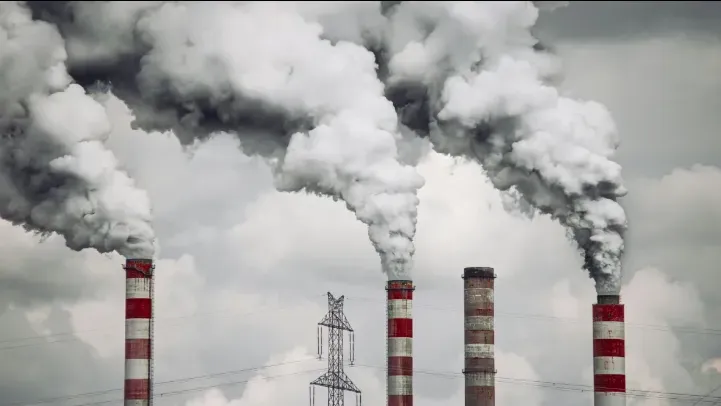
Rising fossil fuel costs push countries toward clean energy alternatives
Net importers spent $1.7t on fossil fuels in 2024.
Three-quarters of the world’s population live in countries that import fossil fuels, exposing them to price volatility, according to Ember report.
The report said that about 50 nations rely on imports for more than half of their primary energy needs. For instance, Spain, Italy, and Germany import over two-thirds of their energy, whilst Japan and South Korea exceed 80%. India depends on imports for 37% of its energy, and China for about a quarter.
“When trade routes are under threat, these countries are exposed,” it noted.
Around 60% of the global population lives in countries that are net LNG importers. In at least nine nations, LNG accounts for more than 10% of total energy supply.
Taiwan is the most reliant at 24%, followed by Japan at 20% and South Korea at 17%.
In several countries, dependence on LNG has grown since the Ukraine crisis, adding to the current pressures on the Hormuz Strait.
Globally, LNG from the Gulf is far less significant than its oil. Gulf LNG accounts for less than 1% of world primary energy, whilst Gulf oil supplies 9%. Ember’s analysis of IEA data shows that 79% of the world’s population lives in countries that import oil.
In 2023, 62 countries imported virtually all of their oil (99% or more), and 89 countries imported over 80%, including Spain (99%), Japan (99%), Germany (96%), Türkiye (92%), and India (87%).
In 2024, net-importing nations collectively spent an estimated $1.7t on fossil fuel imports.
Two-fifths of the global population—across 92 countries—send more than 3% of their GDP abroad for fossil fuel imports.
The report said that this figure could rise sharply with increasing fuel prices, noting that every $10 per barrel increase in oil prices adds roughly $160b annually to global import costs. Every $1 per MMBtu rise in LNG prices adds about $20b per year.
The report also pointed to clean energy technologies as a long-term solution to reduce dependence on imported fossil fuels. Expanding the use of electric vehicles (EVs), renewable energy sources, and heat pumps—collectively referred to as “electrotech”—could allow importing countries to cut fossil fuel imports by as much as 70%, particularly across transport, heating, and electricity generation.
In 2025, electric vehicles displaced oil use equal to 70% of Iran’s exports. “Global solar growth in 2025 alone could displace gas-fired electricity equivalent to all LNG exports through the Strait of Hormuz that year,” the report noted.
The ongoing energy challenges are expected to accelerate a broader structural shift already underway. Asia, which imports 40% of its oil via the Strait of Hormuz, faces rising risks similar to Europe’s 2022 crisis—but now has cheaper clean energy options
The outlook for LNG as a transitional fuel in Asia is weakening, the report said. Oil demand may peak sooner than expected, with the International Energy Agency already lowering its 2026 growth forecast and indicating the peak once projected for 2029 may already have arrived.

















 Read Here
 Advertise
 Sign Up