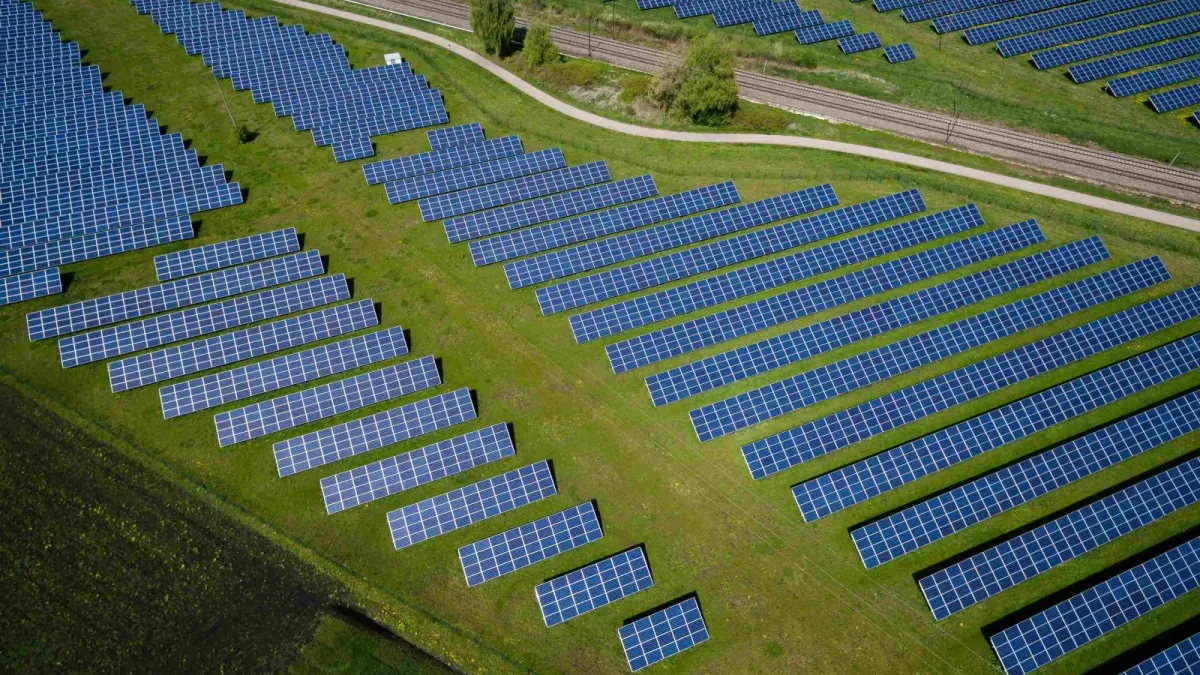
Japan energy policy forces renewable curtailment surge
Solar output hits 3,290 MW cuts in Tokyo grid as inflexible supply rises.
Japan is expanding coal-fired generation and restarting nuclear reactors in response to energy security concerns linked to liquefied natural gas (LNG) supply risks via the Strait of Hormuz and higher import prices.
The shift has coincided with rising renewable curtailment and higher consumer costs.
The Ministry of Economy, Trade and Industry suspended the 50% utilisation cap on inefficient coal-fired power plants for fiscal year 2026.
The measure applies to plants operating below 42% thermal efficiency with around nine gigawatts (GW) of combined capacity. The policy targets an estimated reduction of 500,000 tonnes of LNG consumption annually.
Coal generation has faced operational constraints linked to fuel supply conditions. In March 2026, J-Power’s Matsuura plant in Kyushu reduced output by 50% due to diesel supply constraints. JFE Steel’s Fukuyama facility halted a thermal unit due to a heavy oil shortage.
Japan is also progressing with nuclear restarts. Tokyo Electric Power Company’s (TEPCO) Kashiwazaki-Kariwa Unit 6 restarted on 21 January 2026 and began commercial operation on 16 April 2026 after multiple operational interruptions.
The 1,356 megawatts (MW) reactor is expected to displace about 1.1 million tonnes of LNG annually. As of March 2026, 15 of Japan’s 36 reactors were in operation, with a combined capacity of 37 GW.
The government has indicated that nuclear output, together with coal generation, could reduce LNG imports transiting the Strait of Hormuz by around 40%. Japan imports around 4 million tonnes of LNG annually through this route.
Renewable curtailment has increased alongside nuclear restarts and system constraints. In Kyushu, curtailment began in 2018 following nuclear restarts. In Kansai, it started in 2023 when multiple reactors were operating.
In the Tokyo area, TEPCO curtailed up to 1,810 MW of renewable output on 1 March 2026 after Kashiwazaki-Kariwa Unit 6 returned to service.
On 29 March 2026, curtailment peaked at 3,290 MW, more than seven times the level recorded on 21 March when nuclear output was lower.
Across 28 to 29 March, curtailed energy totalled 16.2 gigawatt-hour (GWh), compared with 9.2GWh across 1, 8, and 21 March.
Curtailment in Japan has risen to 1,895 GWh in fiscal 2023 from 100 GWh in fiscal 2018. It reached 1,740 GWh in the first half (H1) of 2025. All transmission system operators recorded curtailment events by fiscal 2025.
The Institute for Energy Economics and Financial Analysis states that system structure limits flexibility. Nuclear plants operate as baseload with limited ramping capability.
Coal and LNG plants also face minimum output constraints of 30% to 50%, reducing their ability to adjust to variable renewable generation.
Grid constraints have also affected system operations. On 1 March 2026, the Tokyo area imported nearly five GW of power from Tohoku whilst curtailing local renewable generation.
Battery storage systems discharged during curtailment periods rather than absorbing excess supply, reflecting limited capacity.
Curtailment has also affected renewable investment conditions. Japan does not compensate curtailed output.
Developers are shifting from feed-in tariff schemes to feed-in premium systems that allow revenue from stored and discharged electricity. As of March 2025, feed-in premium capacity stood at 3.8 GW across 1,889 projects.
From fiscal 2027, ground-mounted commercial solar will no longer qualify for feed-in tariff or feed-in premium support. New projects will connect under non-firm access arrangements that allow curtailment without compensation during grid congestion.
Consumer electricity costs are rising alongside curtailment. The renewable surcharge stands at $0.03 (JPY4.18) per kilowatt-hour (kWh) in fiscal 2026. A household using 400 kWh per month pays about $126 (JPY20,064) a year in surcharges.
The Institute for Energy Economics and Financial Analysis estimates that curtailment in H1 2025 equated to about $43.2m (JPY6.9b) in lost surcharge value.
Five curtailment events in March 2026 represented about $0.63m (JPY100m) in surcharge losses based on TEPCO data.
Electricity tariffs are also rising due to fuel costs. TEPCO and Chubu Electric have revised tariffs from April 2026 to reflect higher LNG procurement costs.
Household electricity bills are projected to increase by about $94 (JPY15,000) from June 2026 under current assumptions.
Japan continues to rely on imported fossil fuels whilst increasing renewable curtailment. The system effect is reflected in higher consumer costs through both fuel exposure and renewable surcharges.
(US$1 = JPY160)















 Read Here
 Advertise
 Sign Up