Staff Reporter
EVN estimates vnd3.5tln loss in 2011
Vietnam Electricity Group estimates it suffered a VND3.5 trillion loss in 2011.
Electricity and petroleum industries seek price increases in 2012
The Electricity of Vietnam (EVN) and Vietnam Petroleum Corporation (Petrolimex) reported their achievements and sought price increases instead of explaining issues on business losses and profits at the conference to launch 2012 industry and trade missions held on Jan 3 in Hanoi. Bui Ngoc Bao, Chairman of Petrolimex explained that in 2011, price impacts seemed to be stable but it was the year with a lot of sudden changes in petrol prices. Despite crude oil price was lower, imported product prices jumped to the record high. Compared with 2008, the price of diesel surged 40% while that of gasoline soared 17% in 2011. 2011 was the first year with the least number of times to adjust petrol prices, he added. There should have been over 11 new petrol price adjustments to catch market prices, but factually the number was 3 times only. Total business revenue of Petrolimex last year reached 177 trillion dong, state budgetary contribution at 24 trillion dong, loss of 2.5 trillion dong (the loss from forex rate spread accounted for 1.5 trillion dong). However, the firm’s pre-tax profit has not been announced because of a number of other reasons. So, Bao said, oil is estimated at $97 a barrel in 2012, equaling to 2011 but price pressure will likely increase. Regarding business, Petrolimex proposed Ministry of Finance’s approval to take account in line with the whole industry instead of the independent accounting between the holding company and affiliates. Meanwhile, Pham Le Thanh—General Director of EVN emphasized that his firm fulfilled the electricity supply plan and invested over 63 trillion dong in new power sources, subsidize more than 400 billion dong to the poor households. He also proposed to apply electricity price adjustments to call for investment without elaboration on average income of 13.7 million dong/month per EVN employee as posted recently by the press. At the conference, Prime Minister Nguyen Tan Dung requested Minister of Industry and Trade Vu Huy Hoang to have direct talk with people about the trade of electricity and petroleum and disclose electricity and petrol prices, losses and profits of two giants. As reported by Ministry of Industry and Trade, the monthly average income of SOEs under the ministry in 2010 and 2011 was hereafter: 8.3 million dong and 8.6 million dong respectively at EVN, 7.5 million and 7.7 million dong at Vinacomin, 15.1 million dong and 16.2 million dong at PetroVietnam, 9.8 million dong (in both 2010 and 2011) at Sabeco. In other SOEs, the employee income ranged between 3 and 6 million dong per month.
Electricity and petroleum industries seek price increases in 2012
The Electricity of Vietnam (EVN) and Vietnam Petroleum Corporation (Petrolimex) reported their achievements and sought price increases instead of explaining issues on business losses and profits at the conference to launch 2012 industry and trade missions held on Jan 3 in Hanoi. Bui Ngoc Bao, Chairman of Petrolimex explained that in 2011, price impacts seemed to be stable but it was the year with a lot of sudden changes in petrol prices. Despite crude oil price was lower, imported product prices jumped to the record high. Compared with 2008, the price of diesel surged 40% while that of gasoline soared 17% in 2011. 2011 was the first year with the least number of times to adjust petrol prices, he added. There should have been over 11 new petrol price adjustments to catch market prices, but factually the number was 3 times only. Total business revenue of Petrolimex last year reached 177 trillion dong, state budgetary contribution at 24 trillion dong, loss of 2.5 trillion dong (the loss from forex rate spread accounted for 1.5 trillion dong). However, the firm’s pre-tax profit has not been announced because of a number of other reasons. So, Bao said, oil is estimated at $97 a barrel in 2012, equaling to 2011 but price pressure will likely increase. Regarding business, Petrolimex proposed Ministry of Finance’s approval to take account in line with the whole industry instead of the independent accounting between the holding company and affiliates. Meanwhile, Pham Le Thanh—General Director of EVN emphasized that his firm fulfilled the electricity supply plan and invested over 63 trillion dong in new power sources, subsidize more than 400 billion dong to the poor households. He also proposed to apply electricity price adjustments to call for investment without elaboration on average income of 13.7 million dong/month per EVN employee as posted recently by the press. At the conference, Prime Minister Nguyen Tan Dung requested Minister of Industry and Trade Vu Huy Hoang to have direct talk with people about the trade of electricity and petroleum and disclose electricity and petrol prices, losses and profits of two giants. As reported by Ministry of Industry and Trade, the monthly average income of SOEs under the ministry in 2010 and 2011 was hereafter: 8.3 million dong and 8.6 million dong respectively at EVN, 7.5 million and 7.7 million dong at Vinacomin, 15.1 million dong and 16.2 million dong at PetroVietnam, 9.8 million dong (in both 2010 and 2011) at Sabeco. In other SOEs, the employee income ranged between 3 and 6 million dong per month.
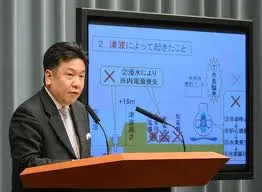
Japan looking at taking control of nuclear power
Japan's government is considering taking control of the nation's nuclear power plants away from private utilities, in a bid to improve accountability of the industry, the Yomiuri newspaper reported on Friday. The move comes as Tokyo Electric Power Co has fallen under criticism for its handling of the crisis at the Fukushima Daiichi nuclear plant triggered by the devastating earthquake and tsunami in March last year. "Japan should avoid a situation where private companies own nuclear power facilities and only enjoy the benefits (of low running costs) when the state takes care of compensation and decontamination arising from nuclear accidents," Trade Minister Yukio Edano, who oversees energy policy, was quoted as telling the paper. Edano also said the government must reach a clear decision on whether private companies should pay massive insurance fees and operate nuclear power facilities or hand over the benefits to the state, which also would take on the risks of nuclear accidents, according to the paper. As Tokyo Electric, better known as Tepco, faces massive compensation from the world's worst nuclear crisis in 25 years, the government has set up a bailout body for payment assistance. But with the firm's future still in doubt due to additional burdens of decommissioning the crippled reactors, the government may also inject about $13 billion into the company as early as the summer, effectively nationalising it. Edano reiterated that it was highly likely Tepco would be put under a state control but that he did not see it as a permanent move as private firms should basically be responsible for supplying electricity, the Yomiuri said. The trade ministry is set to deepen debate on nuclear power operations toward the spring and reach conclusions in step with a planned revision in the summer of the law governing nuclear damage compensation, the Yomiuri said. Through the overhaul, the government is likely to seek the public's understanding on the restart of nuclear reactors shut for regular maintenance, it added. The Nikkei business daily reported that the trade ministry was considering separating licensing system for power generation, transmission and retailing as part of power sector reform aimed at opening it up to smaller players. Last month, the government announced the agenda for power sector reform, including a possible separation of power generation and transmission operations, a long-discussed idea that would break the monopolies of regional power companies like Tepco, but stressed that any movement on the
Three Gorges power generation down by 7.2%
The Three Gorges Power Plant generated 78.29 billion kilowatt-hours of electricity in 2011.
PLN targets 135MW from geothermal plants
PN expects to generate an additional 135 megawatts of electricity from its three geothermal power plants that are set to go online this year.
State Grid Corp of China profit grows 18%
The State Grid Corporation of China's profit increased 18 percent year-on-year in 2011 on stronger business revenues.
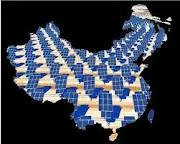
Canadian-Chinese partnership completes 10MW solar project in China
A 10MW ground-mounted solar project in north west China has been constructed and connected to the grid.
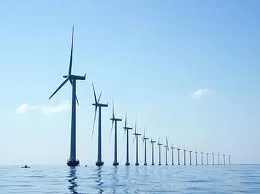
Phase 1 of Mayitasi Wind Farm connected to grid
The Mayitasi Wind Farm Phase I has been successfully connected to the grid for power generation.
TEPCO says reactor may have gone critical
TEPCO says it found in the Fukushima Daiichi nuclear power plant's No.2 reactor radioactive substances that could have resulted from continuous nuclear fission.
Japan to impose 40-year limit for operation of nuclear reactors
Operation of nuclear reactors will be limited by the Japanese government to 40 years, although there would be exceptions if certain requirements are met.
Shikoku Electric to halt Ikata nuclear plant for checks
Shikoku Electric Power Co. halted the No.1 reactor at its Ikata nuclear power plant in Ehime prefecture for a three-month scheduled checkup.
India produces more power from bioenergy
The increasing number of bioenergy power generation projects in 2011 produced 500MW of energy.
US delays tariff impositions on Chinese solar modules
A decision over antidumping penalties against Chinese solar module imports into the US has been delayed by a month.
Power crisis looms in Andhra Pradesh
Power crisis in Andhra Pradesh is expected to worsen with an average power shortfall of 1,180 million units from January-May 2012.
Future Bangla power plants to face gas shortage: Petrobangla Chairman
Power plants to be installed in Bangladesh by 2015 may not get adequate gas supply.
Thai group eyes 10% sales growth aided by new solar products
Thailand's Delta Electronics aims to boost sales by 10 percent this year to $1.3 billion with new products, inlcuding those for solar energy.
Commentary
How pump retrofits boost profitability and efficiency in ageing power plants