Staff Reporter

A holistic security program is needed for energy and utility systems

A holistic security program is needed for energy and utility systems

In the US and even globally there is an increasing emphasis on improving the cyber security of the systems and components controlling such things as electric substations, control centers, gas pipelines, and the associated Supervisory Control and Data Acquisition (SCADA) systems. As an active observer of this industry for many years I can say that the cyber security of these systems is improving; however, there is a new gap or omission brewing. We are often asked to perform security assessments for energy and utility companies. As we do work at some customer sites we are continuing to note that the emphasis on cyber is certainly in place; however, the physical security of the infrastructure is being ignored. What we are concluding is a holistic security program is missing at some of these companies. What do I mean by holistic? Essentially holistic security is concerned with the whole security environment in an organization rather than simply focusing on single elements such as cyber, physical, administrative or technical security. In other words, security is viewed as a collection of interconnected and coordinated functions to protect assets and maintain reliability. Why is the holistic emphasis missing? The history of security for energy and utility enterprises has primarily been focused on “guns, gates and guards” until around 2008. Overall the security focus was really a military of police mindset. Cyber was very rarely considered. After 2008, in the United States and North America, the North American Electric Reliability Corporation (NERC) Critical Infrastructure Protection (CIP) standards were published and enforcement began with emphasis on protection of critical cyber assets that are important to the reliability of the bulk electric system. The enforcement included inspections and fines for non-compliance. A new emphasis on cyber security emerged; and as a result physical security was placed in a lower echelon. The observation we offer is based on our own experiences in the field. For instance, we see the singular focus on cyber at various global utilities we inspect. We have seen examples of where physical security is in decline and not being address at substations and generation facilities, including: External doors and locks are not adequately protected. There are gaps between the doors and door frames and the lock assemblies are not protected with simple metal plates. In several cases we’ve been able to open doors with simple plastic credit cards and gain access to critical cyber assets and copper. Door hinges are on the outside of the door frame. Because of this practice it would be easy to unscrew the hinges then simply lift the door out of the frame. Control building perimeters have unprotected windows in doors and walls. We’ve seen windows in doors that could simply be broken physically and then the door opened by reaching inside through the window break.

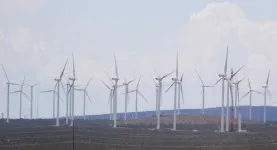
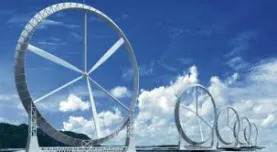
Asian wind turbine manufacturers jostle for export supremacy

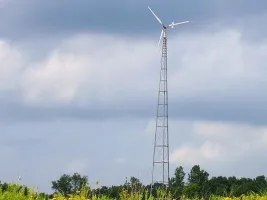
Exports have been the driving force behind the spectacular economic growth rates seen across much of Asia over the past decade. So it comes as little surprise that exports have fuelled the rapid growth of the region’s clean energy sector as well.

Carbon capture, utilization and storage

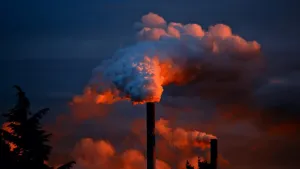
Fossil fuels will remain the predominant source of global energy through for at least the next two decades and possibly beyond. However, their usage will continue to produce carbon dioxide (CO2). Many studies evaluating mitigation options argue that carbon capture is an essential technology that should be applied to any carbon-based fuel, including coal, natural gas, and biomass.

Enabling cleaner power generation in Asia through digital prototyping

As Asia grows, so too do its economic, social, resource and environmental challenges. At the same time, corporations are becoming more aware of the important role they have to play in addressing these challenges, and the opportunity this represents. Promoting clean technology is one way for business to lead by example. Under government, consumer and competitive pressures, companies need to adopt sustainable practices in their business operations and product development. By developing or investing in use of clean technology, companies can more easily achieve these goals.

China power market growth - green energy and opportunities

China Power Capacity Additions Expenditure to Total $1.2 Trillion between 2012 and 2021

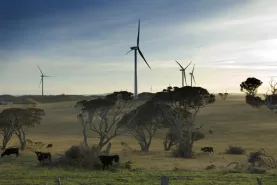
Wind project cut off from Vietnam's plans

Construction of the Nam-Enfinity renewable energy project in Ninh Thuan province will be delayed to late 2012 due to land costs.

Fukushima govt to stop all nuke reactors in its area

The governor of Fukushima called on the central government and TEPCO to decommission all nuclear reactors in the Japanese prefecture.

China hikes power price to prevent blackout

China will  raise its power tariffs by over 5 percent, the second increase this year.

JSW Energy rises on possible nod to sell power

JSW Energy has moved higher by 8% to Rs 44.25 on reports of a go-ahead from the Maharashtra Electricity Regulatory Commission to sell power to its group company.

Kansai Electric wants mothballed unit restarted by summer

Kansai Electric wants to restart the 450 megawatt No.2 oil-fired unit at its Kainan plant in western Japan by next summer.

Chinese solar companies taunt US complainants

Leaders of China's solar power industry rejected a U.S. trade complaint that they receive unfair government support. The chairmen of four of China's biggest solar companies, including Suntech Power Holdings Co. and Yingli Green Energy Holding Co., said at a news conference that their success comes from more advanced technology and skillful management. "If you ask whether the solar industry in China has received special treatment or special support, the answer is no," said Suntech's Shi Zhengrong, one of the solar power industry's most successful entrepreneurs. The U.S. Commerce Department launched an investigation this month into complaints that Chinese companies were exporting solar panels and equipment to the United States at less than fair value. A final ruling is due in July. If the complaint is upheld, the U.S. government could impose punitive tariffs. The case has attracted unusual attention for a trade complaint following the bankruptcy of solar-panel maker Solyndra LLC, after the California-based company received a $528 million U.S. government loan. Last week, China's Commerce Ministry announced its own trade probe into whether U.S. government support for producers of wind, solar and other renewable energy technology is an improper trade barrier. If Washington imposes sanctions, one result will be a loss of American jobs because U.S. companies are both buyers of Chinese products and suppliers of materials, the companies said in a statement. They said Chinese manufacturers spend some $2 billion a year to buy materials such as polysilicon from U.S. suppliers. "Any trade restrictive measures that may be imposed will unavoidably cause serious impairment to the sustainable development of the green energy industries as well as consumers' interests both in China and the United States," said the statement. The executives sharply criticized the lead company in the Commerce Department complaint, SolarWorld Industries America Inc., a unit of Germany's SolarWorld AG. They said it receives U.S. and European subsidies while complaining about Chinese support. "We applaud the support of the European Union and the U.S. government toward renewable energy. But we are very sorry that SolarWorld has applied such a double standard when they talk about subsidies," said Canadian Solar's Qu.

Macau consumes 18% more electricity in Q3

Macau's electricity consumption reached 1.198 billion kWh in the third quarter of 2011, according to the city's Statistics and Census Service.

Suzlon awarded 75.6MW wind turbine contract for Rajahastan project

Suzlon Energy has won a contract worth Rs4.7bn or $90 million from Coromandel Wind Energy Company.

Bank of China funds waste to energy project

C&G Environmental Protection Holdings will get a group credit facility of RMB2.284b for its capital expenditure requirements.

Vietnam’s Mekong Delta to get funding from Asian Development Bank

And you'll never guess how much loan ADB approved for the project.

Kansai Electric to build 2 solar plants in Fukui

Kansai Electric will build two solar power plants with a total capacity of 1 MW in Fukui prefecture in western Japan  by March 2015.

Power bills with hefty arrears upset local Pakistani govt, farmers

The Khyber Pakhtunkhwa government and farmers have accumulated over Rs400 million arrears in power tariffs.