Staff Reporter
Banks to discuss lending 1 trillion yen more to Tepco: report
Banks to discuss lending 1 trillion yen more to Tepco: report
Tokyo Electric Power Co Inc's (9501.T) main lenders will begin talks this week to decide conditions to lend Japan's biggest utility, also known as Tepco, an additional 1 trillion yen ($13.01 billion), at the government's request, business daily The Nikkei said. Sumitomo Mitsui Financial Group Inc (8316.T) unit Sumitomo Mitsui Banking Corp and other financial institutions have already infused funds in Tepco, including about 2 trillion yen in emergency financing last spring, the daily said. The government plans to inject 1 trillion yen in public funds to help Tepco pay for decommissioning reactors at the crippled Fukushima Daiichi nuclear power plant and have private sector financial institutions provide about 1 trillion yen in working capital financing, Nikkei said. Tepco and the government-backed Nuclear Damage Liability Facilitation Fund have indicated to financial institutions that they plan to restart the Kashiwazaki-Kariwa nuclear plant in about two years, the daily said. If nuclear plants that have been idled since the March earthquake and tsunami cannot be brought back online, Tepco's earnings would take a hit because it would need to rely more on fossil fuel, Nikkei said.
Tata Power commissions 4,000MW power project in India
Tata Power has commissioned its 4,000MW power station in Gujarat, India.
Myanmar scraps coal-fired plant after local opposition

Myanmar has halted construction of a 4,000 megawatt coal-fired power plant following an outcry over its environmental impact.
Bangladesh to develop skills in renewable energy applications
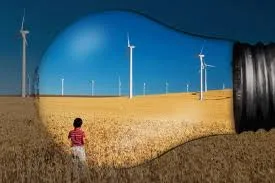
Bangladesh is one of the fastest growing markets of renewable energy, said experts at the launching of the Institute of Clean Energy Training and Research.
India, Azerbaijan discuss cooperation on renewable energy

The State Agency for Alternative & Renewable Energy is preparing a draft state strategy to be completed in about six months.
Malaysia to boost renewable energy generation by more than 5 times

Malaysia will increase the percentage of electricity generated from renewable energy to 5.5 per cent from the less than one per cent currently.
Solar power to attain grid parity in India by 2017: Secretary
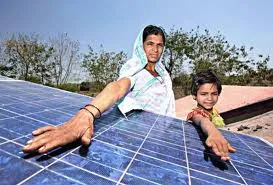
The Joint Secretary of India's Ministry of New and Renewable Energy believes that solar power will attain grid parity by 2017. Sec. Tapun Kapoor based his assessment on the response from the Solar Manufacturing Industry to levelize cost that is equal to or less than the price of purchasing power from the grid. Kapoor said this while presenting the Solar Power Scenario in India during the recently concluded 27th Meeting of Forum of Regulators. Reaching grid parity is an important point in the development of new sources of power, such as solar power, as it is the point at which it becomes a contender for widespread development without subsidy support.
30,000 MW solar projects may be built on Indian waste land

The Orissa Electricity Regulatory Commission announced that 30,000 MW solar thermal power projects could be set up in 10% of wasteland in the state were to be made available for solar power installation.
India to export additional 150 MW to Nepal via electricity market

Nepal will import additional 150MW from the Indian electricity market despite the latter's power deficit.
India’s largest solar power plant goes on line
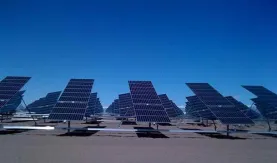
The Adani Group has commissioned what is being touted as India’s largest solar power plant after a build process that took only five months.
China wind power output to surge by 2050
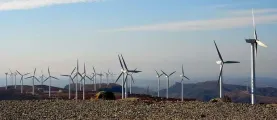
China intends to increase the electricity it derives from wind power by 25 times to 1,000GW.
Azure Power commissions 3rd solar plant in less than 2 years
Azure Power has commissioned its third solar plant, located in Rajasthan, in just under two years.
EVN estimates vnd3.5tln loss in 2011
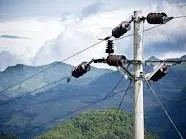
Vietnam Electricity Group estimates it suffered a VND3.5 trillion loss in 2011.
Electricity and petroleum industries seek price increases in 2012
The Electricity of Vietnam (EVN) and Vietnam Petroleum Corporation (Petrolimex) reported their achievements and sought price increases instead of explaining issues on business losses and profits at the conference to launch 2012 industry and trade missions held on Jan 3 in Hanoi. Bui Ngoc Bao, Chairman of Petrolimex explained that in 2011, price impacts seemed to be stable but it was the year with a lot of sudden changes in petrol prices. Despite crude oil price was lower, imported product prices jumped to the record high. Compared with 2008, the price of diesel surged 40% while that of gasoline soared 17% in 2011. 2011 was the first year with the least number of times to adjust petrol prices, he added. There should have been over 11 new petrol price adjustments to catch market prices, but factually the number was 3 times only. Total business revenue of Petrolimex last year reached 177 trillion dong, state budgetary contribution at 24 trillion dong, loss of 2.5 trillion dong (the loss from forex rate spread accounted for 1.5 trillion dong). However, the firm’s pre-tax profit has not been announced because of a number of other reasons. So, Bao said, oil is estimated at $97 a barrel in 2012, equaling to 2011 but price pressure will likely increase. Regarding business, Petrolimex proposed Ministry of Finance’s approval to take account in line with the whole industry instead of the independent accounting between the holding company and affiliates. Meanwhile, Pham Le Thanh—General Director of EVN emphasized that his firm fulfilled the electricity supply plan and invested over 63 trillion dong in new power sources, subsidize more than 400 billion dong to the poor households. He also proposed to apply electricity price adjustments to call for investment without elaboration on average income of 13.7 million dong/month per EVN employee as posted recently by the press. At the conference, Prime Minister Nguyen Tan Dung requested Minister of Industry and Trade Vu Huy Hoang to have direct talk with people about the trade of electricity and petroleum and disclose electricity and petrol prices, losses and profits of two giants. As reported by Ministry of Industry and Trade, the monthly average income of SOEs under the ministry in 2010 and 2011 was hereafter: 8.3 million dong and 8.6 million dong respectively at EVN, 7.5 million and 7.7 million dong at Vinacomin, 15.1 million dong and 16.2 million dong at PetroVietnam, 9.8 million dong (in both 2010 and 2011) at Sabeco. In other SOEs, the employee income ranged between 3 and 6 million dong per month.
Electricity and petroleum industries seek price increases in 2012
The Electricity of Vietnam (EVN) and Vietnam Petroleum Corporation (Petrolimex) reported their achievements and sought price increases instead of explaining issues on business losses and profits at the conference to launch 2012 industry and trade missions held on Jan 3 in Hanoi. Bui Ngoc Bao, Chairman of Petrolimex explained that in 2011, price impacts seemed to be stable but it was the year with a lot of sudden changes in petrol prices. Despite crude oil price was lower, imported product prices jumped to the record high. Compared with 2008, the price of diesel surged 40% while that of gasoline soared 17% in 2011. 2011 was the first year with the least number of times to adjust petrol prices, he added. There should have been over 11 new petrol price adjustments to catch market prices, but factually the number was 3 times only. Total business revenue of Petrolimex last year reached 177 trillion dong, state budgetary contribution at 24 trillion dong, loss of 2.5 trillion dong (the loss from forex rate spread accounted for 1.5 trillion dong). However, the firm’s pre-tax profit has not been announced because of a number of other reasons. So, Bao said, oil is estimated at $97 a barrel in 2012, equaling to 2011 but price pressure will likely increase. Regarding business, Petrolimex proposed Ministry of Finance’s approval to take account in line with the whole industry instead of the independent accounting between the holding company and affiliates. Meanwhile, Pham Le Thanh—General Director of EVN emphasized that his firm fulfilled the electricity supply plan and invested over 63 trillion dong in new power sources, subsidize more than 400 billion dong to the poor households. He also proposed to apply electricity price adjustments to call for investment without elaboration on average income of 13.7 million dong/month per EVN employee as posted recently by the press. At the conference, Prime Minister Nguyen Tan Dung requested Minister of Industry and Trade Vu Huy Hoang to have direct talk with people about the trade of electricity and petroleum and disclose electricity and petrol prices, losses and profits of two giants. As reported by Ministry of Industry and Trade, the monthly average income of SOEs under the ministry in 2010 and 2011 was hereafter: 8.3 million dong and 8.6 million dong respectively at EVN, 7.5 million and 7.7 million dong at Vinacomin, 15.1 million dong and 16.2 million dong at PetroVietnam, 9.8 million dong (in both 2010 and 2011) at Sabeco. In other SOEs, the employee income ranged between 3 and 6 million dong per month.
Japan looking at taking control of nuclear power
Japan's government is considering taking control of the nation's nuclear power plants away from private utilities, in a bid to improve accountability of the industry, the Yomiuri newspaper reported on Friday. The move comes as Tokyo Electric Power Co has fallen under criticism for its handling of the crisis at the Fukushima Daiichi nuclear plant triggered by the devastating earthquake and tsunami in March last year. "Japan should avoid a situation where private companies own nuclear power facilities and only enjoy the benefits (of low running costs) when the state takes care of compensation and decontamination arising from nuclear accidents," Trade Minister Yukio Edano, who oversees energy policy, was quoted as telling the paper. Edano also said the government must reach a clear decision on whether private companies should pay massive insurance fees and operate nuclear power facilities or hand over the benefits to the state, which also would take on the risks of nuclear accidents, according to the paper. As Tokyo Electric, better known as Tepco, faces massive compensation from the world's worst nuclear crisis in 25 years, the government has set up a bailout body for payment assistance. But with the firm's future still in doubt due to additional burdens of decommissioning the crippled reactors, the government may also inject about $13 billion into the company as early as the summer, effectively nationalising it. Edano reiterated that it was highly likely Tepco would be put under a state control but that he did not see it as a permanent move as private firms should basically be responsible for supplying electricity, the Yomiuri said. The trade ministry is set to deepen debate on nuclear power operations toward the spring and reach conclusions in step with a planned revision in the summer of the law governing nuclear damage compensation, the Yomiuri said. Through the overhaul, the government is likely to seek the public's understanding on the restart of nuclear reactors shut for regular maintenance, it added. The Nikkei business daily reported that the trade ministry was considering separating licensing system for power generation, transmission and retailing as part of power sector reform aimed at opening it up to smaller players. Last month, the government announced the agenda for power sector reform, including a possible separation of power generation and transmission operations, a long-discussed idea that would break the monopolies of regional power companies like Tepco, but stressed that any movement on the
Three Gorges power generation down by 7.2%

The Three Gorges Power Plant generated 78.29 billion kilowatt-hours of electricity in 2011.
Thought Leadership Centre



Most Read
1. Annica wins Sarawak solar‑hydrogen project in regional expansion 2. About $165b ASEAN renewable assets face climate risk, Zurich Insurance says 3. Middle East energy disruption spurs Asia coal demand surge, Rystad says 4. SEA green economy to hit $430b by 2030, but grid bottlenecks threaten growth 5. Japan’s US LNG resales equal output of 17 coal plants, report saysResource Center

 Read Here
 Advertise
 Sign Up
Event News

Be amongst the industry leaders recognised for driving innovation and operational rigour across Asia.











Commentary
Malaysia’s energy workforce is upskilling, but to what standard?
Asia’s grid decade: Why transmission will decide the pace of renewable growth
The supply-side blind spot in ASEAN’s data centre boom