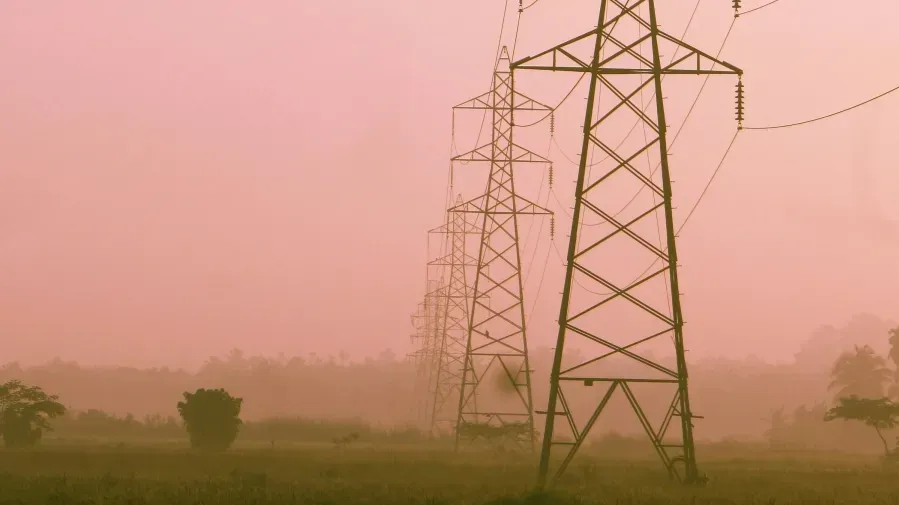
Critical minerals supply risks threaten energy sector
Recycling and diversification are key to securing supply.
Global demand for critical minerals is soaring as the clean energy, technology, and defense sectors expand, but supply-side risks could slow development, according to GlobalData.
The report said that the worldwide shift toward clean energy is accelerating, driven by technologies such as solar PV cells, wind turbines, hydrogen, energy storage, and carbon capture.
At the same time, the technology and defense sectors are increasingly dependent on critical minerals for high-performance magnets, sensors, and other advanced applications.
However, supply-side challenges threaten to disrupt international supply chains and could slow development across these industries.
GlobalData’s Critical Minerals report identifies four key risks, namely, mineral depletion, resource monopolisation, geopolitical tensions, and environmental, social, and governance (ESG) challenges.
“The near-term depletion of critical minerals raises concerns, especially amid instability in the mining market, which drives price volatility,” said Martina Raveni, senior analyst at GlobalData. “Lower-grade ores complicate extraction, making it less efficient, particularly in the copper industry. Recycling will play a key role in diversifying supply chains.”
The report noted that critical minerals are heavily concentrated in specific regions, creating uneven resource distribution and volatile markets.
For instance, much of the world’s lithium is found in South America, cobalt is largely supplied by the Democratic Republic of the Congo, and Indonesia dominates nickel production.
To secure resources, nations including the United States and China are investing in infrastructure and energy projects across South America and Africa.
“Amongst the supply risks are environmental factors such as water scarcity. Indigenous opposition can also affect projects by removing large volumes of mineral production or delaying new capacity,” Raveni said.
Moreover, geopolitical tensions worsen the situation. Trade restrictions between the US and China, instability in Myanmar, and rising resource nationalism in South America are disrupting supply. “Critical minerals are not just raw materials—they are strategic assets,” Raveni added.
He added that geopolitical tensions are tightening supply of critical minerals. US-China trade restrictions, Myanmar’s political instability, and rising resource nationalism in South America are all disrupting mining and exports. “Critical minerals are not just raw materials; they are strategic assets.”










 Read Here
 Advertise
 Sign Up