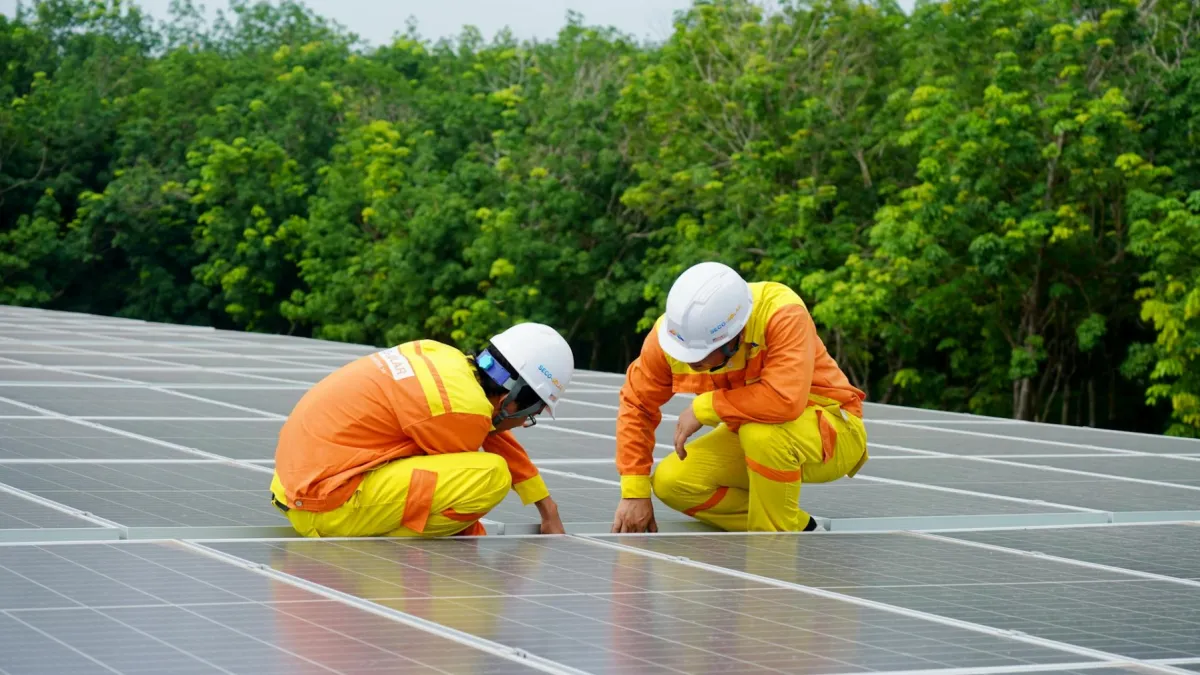
India power demand growth slows to 2.4% in 2025 as renewables surge
Renewable generation rose by 98 TWh, led by solar.
India’s electricity demand grew by 2.4% (49 TWh) in 2025, sharply down from 6.2% growth in 2024 and below the previous decade’s average, according to Ember's Global Electricity Review 2026 report.
The slowdown has been largely attributed to unusually mild summer temperatures, which reduced cooling demand by an estimated 32 TWh compared to the record heat experienced in 2024. Industrial electricity consumption also showed signs of moderation. Despite this, India’s economic growth remained steady, with GDP expanding by 6.6% in 2025, similar to 6.5% growth in 2024.
Meanwhile, renewable energy output surged by 98 TWh—twice the increase in total electricity demand—driven primarily by strong gains in solar power (+53 TWh), followed by wind (+22 TWh) and hydropower (+21 TWh). Combined wind and solar growth reached 75 TWh, more than double the previous record set in 2022.
India posted the world’s third-largest increase in solar generation in 2025, with output rising 37%. Solar capacity additions hit a record 38 gigawatts (GW), marking a 54% increase from the previous year.
For the first time, India installed more solar capacity than the United States. Government-backed rooftop solar programs introduced in 2024 continued to accelerate adoption, with distributed solar contributing an estimated 22 TWh of the year’s growth.
Wind generation nearly doubled its previous growth record, whilst hydropower rebounded strongly due to favorable monsoon rains. India added 6.3 GW of wind capacity and 4 GW of hydro capacity during the year.
As renewables expanded and demand growth softened, coal-fired generation declined by 44 TWh (-2.9%). Coal’s share of electricity generation dropped from 75% in 2024 to 71% in 2025, though it remains the dominant energy source.
India’s power sector emissions stood at 1,395 million tonnes of CO₂ equivalent in 2025, a 2.9% decrease from 2024, reflecting reduced fossil fuel use. Clean energy accounted for 27% of electricity generation, up from 22% the previous year, whilst wind and solar combined contributed 14%—still below global and Chinese averages.
Looking ahead, India aims to triple its non-fossil energy capacity to 500 GW by 2030, with over 250 GW already installed as of late 2025. The transition is being driven largely by solar expansion, supportive policies, and growing investments in energy storage and hybrid renewable systems.
Whilst carbon intensity declined to 670 gCO₂e per kWh in 2025, it remains above global and Asian averages due to the continued reliance on coal. However, per capita electricity demand in India remains relatively low at 1.4 MWh, helping keep per capita emissions modest compared to larger economies.


















 Read Here
 Advertise
 Sign Up