India
GVK Power's profit slides 11% in 3Q
GVK Power's profit slides 11% in 3Q
GVK Power's profit after tax went down 11 percent to Rs 37.92 crore from Rs 42.81 crore in the three months to September 2011.
Sunborne to build 50MW solar thermal plant in Andhra Pradesh
Sunborne Energy will build a 50MW solar thermal power project in Andhra Pradesh, India in partnership with Kosla Ventures and General Catalyst Partners, from which it secured $25m in funding.
Indian solar projects behind January deadline

More than one third of the PV projects handed out in India’s first national auction look set to miss their January completion deadline, according to an official at the Indian Renewable Energy Development Agency.
Adani Power eyes conclusion of critical works of unit-1 Tiroda thermal plant
Adani Power Limited will wrap up all the critical activities of the 660 MW unit-I of the Tiroda Thermal Power Plant by January next year.
Tata Power to lose Rs 500 crore in 4,000 MW Gujarat project
Expensive Indonesian coal may cost Tata Power to lose Rs 500 crore in the first year of commissioning of its 4,000-Mw ultra mega project at Mundra, in Gujarat.
India expects to have 2 GW solar capacity by 2013
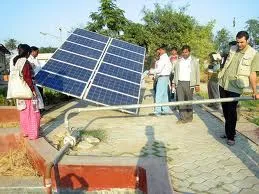
India plans to have two gigawatts of solar power generation capacity by March 2013.
Norway- based REC: India favors local manufacturers

Renewable Energy Corporation said it was unlikely to set up its manufacturing presence in Indiadue to unfavorable government policies.
JSW Energy loses a whopping 1.09b rupees in Q2 2011

Blame it on the 8.7% decline in the rupee.
Essar Energy to commission 1 power projects by March 2012
Essar Energy Monday said it expects to complete three power projects by March next year that would increase its total generation capacity to 4,510 Mw. The company, a part of Ruias-led conglomerate Essar group, is also planning to float a sponsored ADR programme this year that would allow American investors to trade in Essar Energy shares. London-listed Essar Energy also has interests in oil and gas and owns the Vadinar oil refinery in Gujarat. “In Power, we expect to commission three projects, Mahan I, Salaya I and Vadinar P2, by end March 2012 which will increase our total generation capacity by 2,910 MW to 4,510 MW,” Essar Energy said in its interim management statement for the period ended September 30. “We expect to complete a further 7 power generation projects by the end of March 2014 to take our total generation capacity to 9,670 MW,” it noted. The 1,200 MW Salaya I and 510 MW Vadinar P2 projects are located in Gujarat while Mahan I is in Madhya Pradesh. According to the statement, the company is looking to initiate American Depository Receipt (ADR) programme, for which BNY Mellon has been appointed as the depository bank. “To further enhance the ability of a wide range of institutions to invest in Essar Energy, the company has decided to establish a Level 1 (Over-The-Counter) sponsored ADR programme. “… it is expected that the ADR programme will be in place before the end of 2011, opening up a new source of potential investors in Essar Energy,” it said. When contacted, an Essar spokesperson said the proposed ADR programme is just to allow US investors to trade in Essar Energy shares and that there would not be any kind of share issue or raising capital. As on September, Essar Energy’s net debt stood at USD 5,507 million, which is in line with its plans.
Gujarat proposes new feed-in tariff rates
The Gujarat Electricity Regulatory Commission (GERC) has proposed the new feed-in tariff (FiT) rates for PV projects commissioned from January 29, 2012 until March 31, 2015. These new rates range from INR10.27 (US$0.21) to INR13.14 per kWh (US$0.268) and are applicable for ground-mounted, rooftop and concentrating solar power (CSP) systems. Should the proposed rates be confirmed, CSP projects will be eligible to receive levelized tariff payments between INR12.45 (US$0.252) and INR13.14 (US$0.266) per kWh, while systems over 100kW are in line for tariffs from INR10.37 (US$0.21) to INR10.92 (US$0.221) per kWh. Rooftop projects under 100kW will still receive the greatest assistance, with subsidies ranging from INR12.6 (US$0.255) to INR13.24 (US$0.268) per kWh. The deadline for feedback on the new FiT is December 1. Gujarat’s solar industry is booming at present and this is reflected in the GERC’s change of approach in terms of subsidies; previously PV had been eligible for higher tariffs than CSP, but with PV module and inverter prices continuing to fall, the commission is believed to feel project developers are deserving of less generous handouts. Another facet of the new FiT is phased subsidies. This will see large-scale PV and CSP projects receive roughly double the subsidy payment level during the first 12 years of operation than in the next 13 years. Tariff levels will also vary depending on whether or projects utilise an accelerated depreciation benefit. Since 2009, more than 80 companies have signed power purchase agreements worth an estimated 965MW in Gujarat. At first, progress was slow, with red tape and financial difficulties holding up developers. However, the state is finally beginning to deliver on some of its early promise – last month a 30MW system was completed in Banaskantha – and GERC expects many more to be commissioned by the year’s end.
India introduces new innovations in wind energy sector
With an installed capacity of over 14,150 MW, India is currently the fifth largest market in the world for wind energy. Estimates put the available potential for wind energy at around 65,000 Mw which leaves a lot of room for expansion. India is being considered as a market of the future by many global wind energy majors who are lining up to enter the market. With an estimated wind potential of 8,591 Mw, Karnataka produces 1,576.2 Mw according to the World Institute for Sustainable Energy. While this places the state behind others like Tamil Nadu, Maharashtra and Gujarat where wind energy has taken off on a bigger scale, there are many small producers. Windmill management is no easy job, however, as industry experts point out, it is a huge investment of financial resources and planning. “Windmill maintenance is a very demanding sector, it is not very easy to get up there and fix problems whenever they occur as there are no lifts,” said Bhagwant Divate. “Windmills need to function for 20 years which is their average life span. During this time they see strain on all their parts due to varied velocities, vibrations and idle time, and lubrication and sealants play an important part,” he added. The height of the windmill increases each MW of extra power it generates. Some windmills can reach up to 80 m in height with blades that spin up to 22 times per minute. Blade manufacture is a science that ensures proper functioning of the windmill. “A minor crack in the blade before installation can run up a bill of crores in repairs if installed improperly. It is very important to use a proper release agent when manufacturing,” said Gerard Lourduraj, Chem Trend. The release agent helps in freeing the blade from the mould in which it is cast without causing cracks in the blade. “Proper management of financial resources is essential for small players, they are strained by land expenses, lack of regulatory framework in the state for power sales to other states and inadequate government incentives, investment in proper machinery is very important,” added Divate. Express News Service.
IAEA asks nuclear scientists to change communication methods

A top IAEA expert said nuclear scientists need to change the way they communicate with the people at large, particularly on safety aspects of an atomic power plant.
Power Grid grants Rs 776 crore contracts to EMC
EMC Ltd bagged a contract of Transmission Line & Substations worth Rs 776 crore from PGCIL.
CEA accords highly awaited concurrence to UJVNL
After fumbling in the darkness for the past few months with no big project in sight, the state-run Uttarakhand Jal Vidyut Nigam Limited (UJVN) has finally emerged a winner after being granted the techno economic clearance for the 120 MW Vyasi hydro electric project (HEP) from the Central Electricity Authority (CEA). The contract has been awarded to UJVNL for a total of Rs 936.23 crore, which includes a domestic component worth Rs 935.57 crore along with a foreign component of US $ 0.143 million. Having been provided ample funds for the hydel project, the company can now breathe a sigh of relief and resume the works that were left hanging in the middle for the past few years due to severe shortage of funds. Even though the financial situation has turned around for the better, UJVNL must take utmost precaution and utilize its resources judiciously, since Rs 20.88 crore of the total investment has already been accounted for as payment to NHPC, as part of the Rs 73.07 crore liability after UJVNL took over the 420 MW Lakhwar-Vyasi project and went on to implement the Vyasi project independently. Further, an amount worth Rs 60 crore has already been incurred by the Irrigation Department of Uttar Pradesh for the Vyasi HEP. The first course of action for the company includes floating tenders for the remaining percentage of works and paying the liabilities to all contractors. Fully aware that there is no safety net to save them this time around from any possible setbacks, UJVNL officials are getting ready to roll up their sleeves and smoothen out any creases that may prove to be a roadblock in the near future for carrying out the project works.
US Ex-Im Bank to help fund two more Indian projects
The US’s Export-Import Bank awarded loans totalling US$103.2 million to two Indian companies to to pay for panels and engineering from US firms for planned projects in Gujarat and Rajasthan.
Pakistan's Nandipur power project to be revived
A bailout package for the 425MW Nandipur Thermal Power Project has been cleared by Pakistan Prime Minister Yousuf Raza Gilani.
Pakistan's power authority allows power tariff hike for Wapda companies
Pakistan's National Electric Power Regulatory Authority approved an increase of Rs1.77 per unit in electricity tariff for distribution companies of Wapda.
Thought Leadership Centre



Most Read
1. India’s clean energy push hinges on debt market structure 2. Global RE capacity hits record 5,149 GW in 2025 amidst geopolitical uncertainty 3. Danantara Indonesia centralises waste-to-energy projects under PT Denera 4. China pulls ahead in power capacity as US AI expansion faces grid constraints 5. Cosmo Eco Power and Fuji Electric sign virtual PPA for wind power supplyResource Center
 Read Here
 Advertise
 Sign Up
Event News
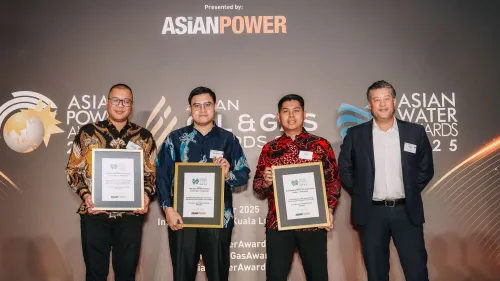
The firm achieved recognition for initiatives addressing critical water access in Bali, reforestation in West Java, and sustainable supply systems in East Java.










Commentary
Supply chain efficiency, skilled manpower are key for India’s renewable energy