News
India's finance ministry intervenes in power project loans

India's finance ministry intervenes in power project loans
India's Finance Ministry is intervening in power project loans after disbursements failed to materialize.
Sharp to invest $1 billion in solar tech in Indonesia
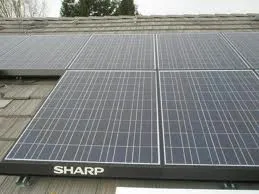
Sharp will invest US$ 1 billion in solar cell technology in Indonesia according to a deal sealed at the ASEAN Summit in Bali.
Thai power firm to double capacity at Philippine plant
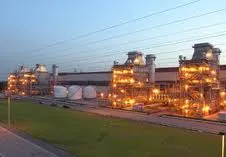
Thailand's Electricity Generating Pcl plans to more than double capacity at its Quezon power plant in the Philippines as part of a regional expansion.
Average power capacity of India’s n-plants rises to 78%
The average power capacity of India’s nuclear plants has improved to 78% during 2011-12 (April- October) against 71% in 2010-11, largely due to the increased uranium imports, according to the latest data provided by National Power Corporation of India Ltd. The imports of uranium is largely from France and Russia and now the possibilities are high of getting yellow cakes from Australia too. The country is going ahead with new projects and also enhancing the already existing plants with better technology and fuel availability. The advancement in the India’s nuclear sector has come at the perfect time as the shortage of Coal was creating problems to meet the energy needs of the country. Many countries put back it nuclear projects after the destruction of Japan’s six-reactor Daichi Fukushima nuclear power complex by an earthquake and tsunami. But the rising BRIC economic superpower, India, has been going along with the proposed project with modifications like improved safety technologies etc. The opposition against nuclear plants are high but the government feels that it could be manageable. The major protests were seen in Kundankulam Nuclear Power Project in Tamil Nadu and also in against the proposed 9,900 megawatt Jaitapur Nuclear Power Plant. For India, use of nuclear energy is of great importance as it is carbon free(Clean energy and no green house gas emission) and could benefit countries seeking both power expansion and winning plaudits for reducing greenhouse gas emissions. Currently, there are 20 nuclear reactors being operated by NPCIL which add up 4,780 MW. India in its 12th five year plan (2012-17), more important would be given to power generation and plans to accelerate the nuclear power generation to 20,000 mega watt by 2020 from the existing 4780MW. Commodityonline.com
Pakistan's PM urged to scrap rental power policy

Four leaders of Pakistan People`s Party have asked Prime Minister Yousuf Raza Gilani to scrap the government`s rental power policy.
Philippines' Alsons eyes Thai, Japanese partners for 200MW project

The Philippines' Alsons Consolidated is looking to build 200 MW coal-fired power facilities in southern Mindanao and dealing for possible partnerships.
SunEdison secures financing for Indian solar energy projects

And guess how much funding SunEdison got from Overseas Private Investment Corporation?
Two firms to build 88-MW hydropower plants in Laos

The Phongsubthavy Road and Bridge Construction and Dongfang Electric International Company have agreed to build hydropower plants with a combined installed generation capacity of over 88 MW.
India's PM, Obama discuss civil nuke deal implementation

Indian Prime Minister Manmohan Singh has discussed ways to implement the civil nuclear deal with US President Barack Obama.
Incentives to be launched for large-scale solar projects in Australia

Australian Capital Territory is launching a new incentive scheme to promote large-scale solar in the state to help install projects totalling up to 210MW.
Regulations drafted for Vietnam power market
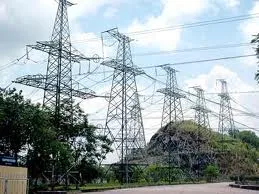
A circular has been completed to regulate the competitive power market including responsibility for all players.
Norwegian investor eyeing hydropower projects in Vietnam
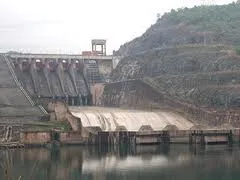
Norwegian SN Power Company intends to buy big amounts of stakes of hydropower plants in Vietnam, which is believed to activate the hydropower merger and acquisition market.
China's suspended nuke project may resume this year
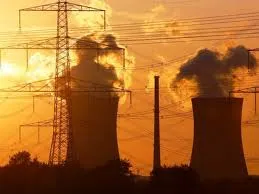
China may resume construction of nuclear reactors that were stopped earlier this year following Japan’s Fukushima crisis.
India a key partner in renewable energy: UK minister

India is a key strategic partner in the UK’s effort to promote renewable energy and tackle climate change, according to United Kingdom’s minister of state for climate change Gregory Barker.
Bangladesh's waste-fueled power plants to solve electricty, garbage woes

Bangladesh wants to solve two problems with one solution.
Tohoku loses 400 MW of output due to repair work
Japanese utility Tohoku Electric Power Co said on Thursday it has lost 400 megawatts of power output due to extended work on a turbine at its gas-fired 1,700-MW Higashi-Niigata plant. The company said it expects the unit to resume full operations around Dec. 1, after it replaces a turbine wing at the No.4 series unit. Tohoku on Tuesday resumed getting surplus power, totalling 700 MW, from neighboring utilities Tokyo Electric Power Co and Hokkaido Electric Power Co for the first time since the summer, as power demand spiked due to chilly winter weather. The northern utility has been struggling to secure enough power supplies on its own after the March 11 earthquake and tsunami damaged several nuclear and fossil-fuel fired plants. here
Thought Leadership Centre



Most Read
1. Fossil fuel use falls as electricity gains share of global energy mix 2. I Squared Capital launches Cube Grid to expand India power transmission assets 3. A*STAR expands fusion research collaboration with CFS 4. Singapore and ADB renew 3-year pact to back ASEAN power grid projects 5. Thailand clean energy push accelerates with GCL SI–Getz Energy MOUResource Center

 Read Here
 Advertise
 Sign Up
Event News

Learn how operators can navigate evolving operating conditions, minimise reliability risks, and improve generator performance amidst increasing system demands.















Commentary
The supply-side blind spot in ASEAN’s data centre boom
Managing risk for Indonesia’s conventional power sector in a decarbonising economy