Staff Reporter
Geo Energy Resources inked two deals with Indonesian coal-mining firm
Geo Energy Resources inked two deals with Indonesian coal-mining firm
Its subsidiary will provide services in 150 hectares of concession area.
China grants subsidies to makers of electric vehicles

Subsidies will be given from 2013 to 2015.
China will limit coal use to curb air pollution
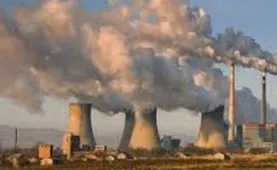
Releases plan to cap coal consumption.
France eager to invest in India’s renewable energy sector
Expands relationship in conventional energy.
India approves rules for shale gas exploration
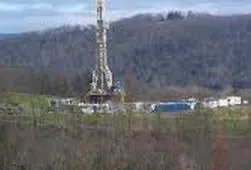
New policy covers shale gas and oil exploration. The U.S. Energy Information Administration estimates show that India could have as much as 96 trillion cubic feet (tcf) of recoverable shale gas reserves equivalent to 26 years of the country's gas demand. Exploration and production of shale gas, however, remains a long way off for India. India is beset by energy shortages that make power outages common and hinders its industrial growth. Energy imports account for a large share of its energy supplies and strains its finances. The Cabinet Committee on Economic Affairs (CCEA) approved the shale gas and oil exploration program to boost domestic output. This policy will allow national oil companies to carry out exploration and exploitation of unconventional hydrocarbon resources particularly shale gas and oil in their already awarded in Petroleum Exploration License/Petroleum Mining Lease (PEL/PML) acreages under the nomination regime. Six basins hold shale gas potential: Cambay (Gujarat); Assam-Arakan (in the northeast); Gondawana (in central India); KG onshore (in Andhra Pradesh); Cauvery onshore and the Indo-Gangetic basins. State-owned Oil and Natural Gas Corp and Oil India Ltd have been permitted to explore and produce shale oil and gas. Of the 356 blocks held by ONGC and Oil India, 176 could hold shale resources. The government will offer shale oil and gas blocks to other companies through an auction planned after this policy is taken to the Cabinet for approval in next few weeks.
India to build 16 pressurized heavy water reactors
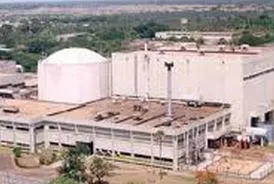
Plans to derive 63,000 MWe from nuclear power by 2032. The Department of Atomic Energy said the average annual availability of Indian nuclear power producers has remained at 90%. Six of the 19 operational reactors have logged continuous operation of over 300 days this year. DAE said Indian pressurized heavy water reactors are some of the most economical in the world. India is ready to sell these reactors and is currently building four: two each at Kakrapar in Gujarat and Rawatbhatta in Rajasthan. It noted that India has brought down the price of a nuclear reactor to among the cheapest in the world. The prototype fast breeder reactor (PFBR) at Kalpakkam is close to completion. PFBR is expected to achieve criticality in about a year.
Japan’s dependence on renewable energy rising
Japan’s “zero nuclear power” state accelerating development of renewable energy. As a result, the total amount of grid-connected installations may reach 7 GW this year or triple the installations last year. Ever since the Fukushima nuclear disaster, most of the nuclear power plants have been shut down causing the usage of nuclear power to drop from 33% in 2010 to 2.15% in 2012. The top 10 power utilities significantly increased the usage of thermal power generation from 59.1% in 2010 to 89.8% in 2012. This forced Japan to import large quantities of coal, oil, natural gas and other fuels. These utilities have purchased more power generated from solar energy since 2008. The annual growth rate increased from 9.25% in 2008 to 45.89% in 2011. According to EnergyTrend, the amount of grid-connected installations in Japan has continued to increase.
Malaysia launches investment fund for clean energy projects
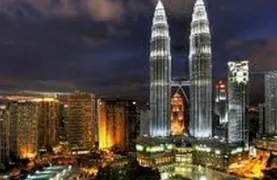
Fund has capital of US$100 million.
What you don't know about the Ring of Fire
Bandung 1955, the Non-Aligned Movement, Sukarno, Nehru, Tito, Nasser, etc. – like leaves from a sepia photo album faded as time moved on. Yet in the interconnected global economy where international investments and financing routinely ignores borders, is there room to dust off the “South-South” paradigm for energy development? Especially in a sector such as renewable energy where the challenge and risk profiles are similar along a “South-South” axis, there may yet be some juice left in that old model.
India assisting Cuba develop renewable energy projects

Offers Cuba lines of credit and its RE expertise.
Vietnam approves fifth foreign-funded BOT power project
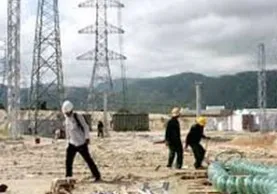
China will build plant at Binh Thuan province.
India goes ahead with world’s largest solar project
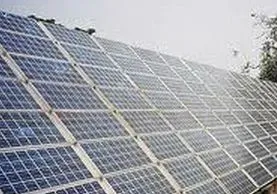
Will have a total generating capacity of 4,000 MW.
China, Russia energy trade to quadruple by 2025
Trade will involve 100 million metric tons of Russian oil. Consulting firm Wood Mackenzie said China and Russia have already reached an agreement for the supply of oil, coal and power and expects another deal in the next two years for the supply of natural gas.
China hits back at USA for anti-dumping probe
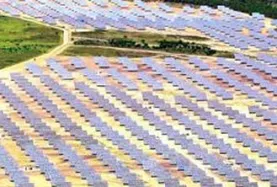
Will investigate alleged US subsidies for renewable energy firms.China has launched an investigation into American government policy and subsidy support for renewable energy after the USA decided to probe the alleged dumping of Chinese-made solar panels in the USA.China's solar industry association earlier asked Beijing to launch an anti-dumping and subsidy probe into imports of U.S. polysilicon, the raw material used to make solar cells.The tit-for-tat investigations highlight rising trade tensions between China and the USA, with analysts warning of more protectionism amid weak global economic growth.A Chinese government announcement said the Ministry of Commerce has decided to initiate a trade barrier investigation into policy support and subsidies for the U.S. renewable energy sector.It said Chinese companies claim the U.S. policies are in effect a trade barrier against Chinese renewable energy exports to the USA. The Chinese RE companies argue that these US policies violated the US commitments under World Trade Organization rules.The US policies are also an unreasonable barrier and restriction on China's renewable energy industry, reducing the competitiveness of Chinese products in the USA.
Suzlon gives up control of China business

Continues to restructure its loans.
Asia can take a starring role in war against carbon
The world can no longer afford to be intimidated by the magnitude of the climate crisis, nor into believing that we must choose between economic prosperity and environmental security. Climate change presents one of the greatest challenges in human history, one that transcends national boundaries, income, ideology, ethnicity. But these challenges should be viewed as economic opportunities.
Find out how solar energy can slash electricity costs
It's cost-effective in remote areas.
Thought Leadership Centre



Most Read
1. Middle East conflict deals $25b blow to energy infrastructure 2. RATCH Group’s Nava Nakorn expansion starts commercial operations 3. Biggest private microgrid initiative in PH kicks off across 24 locations 4. APAC dominates turbine market as OECD curbs coal installs 5. Strait of Hormuz disruptions sink energy transits by 95%, report saysResource Center

 Read Here
 Advertise
 Sign Up
Event News
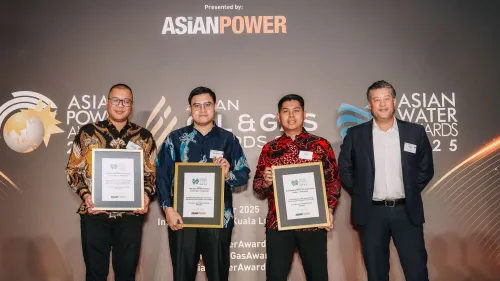
The firm achieved recognition for initiatives addressing critical water access in Bali, reforestation in West Java, and sustainable supply systems in East Java.











Commentary
Supply chain efficiency, skilled manpower are key for India’s renewable energy