Staff Reporter
Japan nuke restart may revive uranium at LNG's expense: Fitch

Find out why they think so.
Flexible Service Solutions: ServiceGrid<sup>SM</sup>
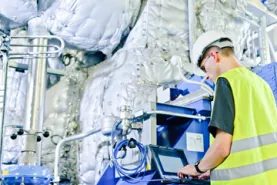
ABB offers a complete portfolio of flexible service solutions that meet the diverse requirements of customers, their plants and the market conditions in which they operate.
JA Solar unveils new series of highly efficient PV modules

They are slated for commercial launch in May.
Detected Sumatran hotspots climbed to 18

Smoke haze creeps in.
It's getting hot in here: Longest dry spell hits Singapore

27 days have never been this long and hot.
The role of NAMAs in achieving low carbon growth in India
In recent years, remarkable economic growth in developing countries has caused a rapid increase in greenhouse gas (GHG) emissions in addition to the increased energy demands.
Distributed power technology investments to double to $205b by 2020
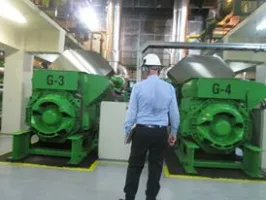
Asian electricity consumers to benefit big time.
GE invests US$1.4b in global distributed power business

Here's how it plans to light the world.
What newcomers need to know about nuclear power programmes
Nuclear newcomers’ desire for nuclear power has not decreased even after the accident at Fukushima Daiichi Nuclear Power Station in Japan. Many countries are either considering nuclear power or actively preparing their infrastructure for a possible nuclear power programme.
Does shale gas have a future in China? - Part 2
In March 2012, the NDRC, Ministry of Finance, MLR and NEA jointly issued a development plan designated for China's shale gas development. The Plan applies to shale gas development activities and initiatives in China from 2011 to 2015.
Indonesia tightens law on Sumatran forest fires

After haze occurred in January and February.
China, US pledge cooperation in injecting efforts to reduce global climate change

Here is their joint statement.
India's battery-run three-wheelers chugging successfully in Delhi

The autorickshaws cost Rs60,000-1.2m.
Taiwan, Mongolia inked renewable energy generation deal

Energy management is also covered.
China's BYD Daimler seals fast charging systems deal with ABB

This is good for 6 years.
Sarawak feared to lose RM400m in sales tax revenue per year post-Wilmar's policy
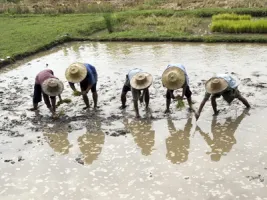
Will all planters be hurt?
Thought Leadership Centre



Most Read
1. SEA green economy to hit $430b by 2030, but grid bottlenecks threaten growth 2. India loses 2.1TWh of renewables as coal hits flexibility limit 3. Japan’s US LNG resales equal output of 17 coal plants, report says 4. Pakistan’s LNG supply hit as Middle East conflict halts Qatar cargoes 5. Philippine renewable projects draw $5.72b in investmentsResource Center
 Read Here
 Advertise
 Sign Up
Event News

Be amongst the industry leaders recognised for driving innovation and operational rigour across Asia.







Commentary
Malaysia’s energy workforce is upskilling, but to what standard?
Asia’s grid decade: Why transmission will decide the pace of renewable growth