Staff Reporter

KEPCO posts alert electricity shortage alert

KEPCO posts alert electricity shortage alert

Korea Electric Power Corp.has issued a power shortage alert as high temperatures increased electricity consumption.

Analysis of the electricity meters market in India

Several sectors in India, especially industrial and infrastructural that include commercial and residential corridors, are presently witnessing substantial rise in investments. Extensive power capacity augmentation and improvement of electrical grid networks are imperative to support this growth. The need to have an efficient and reliable power distribution setup at both macro and micro levels is providing growth opportunities for the electricity meters market in India. Apart from billing purposes, electricity meters are also essential to monitor and manage energy consumption on the demand side.

Waste-to-Energy in India: Understanding interaction between technology and local waste characteristics a must in order to realise full potential

As India is experiencing rapid urbanisation, it faces a double challenge of managing ever-rising volumes of municipal solid waste (MSW) and securing electricity supply for its fast-growing urban population. Waste-to-energy (WtE) technology can help India address both of these needs while adding the benefit of avoided carbon dioxide emissions.

1 GW CSP project emerges in inner Mongolia but challenges remain

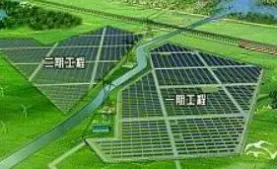
Sanhua Group, a Chinese listed company, plans to invest RMB 600 million (US $95 million) to install 600 dish-turbine units in Inner Mongolia as the first phase of a concentrated solar power (CSP) project. By the end of 2013, the first batch of the 100 dish-turbine units will be installed. After that, a combined heat and power system, including 500 dish-turbine units and two sets of 300 MW thermal power-generation systems will be built. Phase II includes plans to invest another RMB 60 billion to build a GW-scale solar thermal power base that is expected to attract other players in the value chain to cluster together in the base. Phase III plans to complete the installation of 10,000 dish-turbine units in total, reaching 1 GW of power-generation capacity.

Thailand’s renewable energy adder rates

Thailand underpinned its credentials as a leader in the Asian power sector for renewable energy by introducing a comprehensive package of adder rates for renewable energy technologies in 2007, and currently offers incentives for biomass/biogas, solar (thermal and photovoltaic), wind and mini/micro hydropower projects. Adder rates are available for VSPPs (Very Small Power Producers, producing up to 10 mW) and all adder rates except for hydropower are available for SPPs (Small Power Producers, producing from 10mW up to 90 mW). The adder rates are payable in addition to the normal price of electricity paid to VSPPs and SPPs. Adder rates for solar and wind projects apply for ten years and adder rates for other renewable energy projects apply for seven years. Renewable technology                            Adder rate (Baht/kW hour)* Biomass/biogas (>1 MW / up to1 MW)                          0.30 / 0.50 Hydro (50-200kW/<50kW)                                            0.80 / 1.50 Waste (landfill, digestion/thermal)                                 2.50 / 3.50 Wind (> 50kW /up to 50 kW)                                         3.50 / 4.50 Solar (Thermal and photovoltaic)                                      6.50                                                                                                       * 1 USD = 31.6 Baht, July 2012 Additional adders are also available for projects located in Thailand’s three southernmost provinces of Yala, Pattani and Narathiwat (where civil unrest has received consistent media coverage for several years) and for projects which replace electricity produced by diesel generators. Additional adder rates (Baht/kW hour):

Carbon Trading and Carbon Taxes: Just because or real solutions?

It’s a common perception that we have a carbon problem here on earth. Most everyone nods there head in agreement when it comes to recognizing that we’ve got to do something and there is a need to reduce emissions. Air pollution is not a good thing; I left Cleveland, Ohio many years ago because of it.Regardless of which side of the climate debate you fall on all but a few madmen agree that clean air is essential. But mad or not that’s where the agreement ends and the controversy begins on how best to reduce emissions and save the planet. Where is all the carbon coming from? The combustion of fossil fuels of course, but that is the engine that has taken us to where we are today and continues to drive the economy of the world. So unless there is a massive return to subsistence farming we need practical solutions that will give us and future generations breathable air that won’t cripple the global economy any further than it already is. One scenario, carbon trading has been presented by the same people that gave us energy trading (Enron) and Wall Street firms that were a part of the Subprime real estate debacle that the global economy has yet to recover from. As I understand it, carbon trading involves setting caps on emissions, issuing credits that can be traded (by the above investment banks) and offsets that are issued by doing something such as planting a forest in Botswana to negate any carbon emitted. Leave it to the financiers to figure an angle to bilk trillions from a problem. Criminals in Europe also thought it was worth a look and managed to steal about $62 million in these certificates, so some obviously see an opportunity in carbon. In addition to Wall Street, Governments are suggesting what comes natural to them, levying taxes. Over on the other side of the pacific there is a movement in the USA to tax carbon emissions and the SOCA or Save Our Climate Act is being considered. SOCA is not likely to get serious consideration until after the presidential election, but it is estimated that the proposed $10 dollar per ton of Co2 produced will generate 2.6 trillion dollars over ten years. According to an article by Dan Watkins of McDermott Will Energy LLP the tax will be used to pay for the bureaucracy to run the program and set up a Clean Climate Trust fund. The article starts out by pushing the “Oceans” button talking about the most rapid acidification of the oceans in 300 million years. Wow, that’s a long time! I don’t know about you but I’ll be sleeping a lot easier knowing another tax, federal bureaucracy and “fund” is put in place to save the planet for our children’s, children. The reason we have the carbon problem is because somewhere, someone is profiting in one way or another from the burning fossil fuels. Carbon is a commodity, why not treat it as such and make the reduction in carbon profitable in a tangible way, capture a ton of carbon and get compensated, not some financial scheme that benefits no one but investment bankers? If the tax is actually used in a logical way like that to create incentives for inventors, scientists and industry to come up with solutions that will be profitable then a tax may indeed be beneficial. The next step would naturally occur as the carbon piles up and someone finds a way to turn it into something useable that could be profitable instead of pumping it into the ground for future generations to deal with. We’ve come a long way since we first unleashed the energy stored in fossil fuels, but now is the time to invest some of the wealth that burning all that fuel has created to discover how we can continue to provide power for economic development while still reaping the benefits and assuring future generations that they too will be able to enjoy a comfortable lifestyle. One thing in the carbon debate is for certain, Mother Nature has built-in self-limiting mechanisms and if we cross the tipping point where they kick in the discussion and solution will be taken from our hands; carbon will come down and the air will clear and life will be better for those left to report the outcome!Or will it?

Companies begin 30-year search for coalbed methane

CNOOC, Ltd will invest US$1.56 billion in a wide search for coalbed methane in China.

China wasting its wind power

China, the world’s largest wind power market, has lost US$1.03 billion from misusing this form of renewable energy.

Pakistan allocates land for largest wind farm in Asia

A wind project in Pakistan has been allotted with around 908 acres by the Sindh government and their wind turbines will be spread over 12,000 acres.

Up to $2.7B investments expected in Pakistan wind projects

An investment between $1.2 billion and $2.7 billion in wind energy projects in Pakistan are expected by its government.

Tunnel-boring machines installed at Neelum-Jhelum hydro plant

Two tunnel-boring machines were installed at the site of the 969-megawatt Neelum-Jhelum hydropower project in Azad Jammu and Kashmir.

Meralco PowerGen eyes 650MW thermal power plant

Meralco PowerGen Corp plans to acquire the 650MW Malaya thermal power plant in Rizal province, the Philippines.

China, Japan enter 47 energy, environment pacts

Japan and China concluded 47 cooperation agreements on environmental and energy conservation.

Renewable energy use leaps in China

Renewable energy sources supplied 377 terawatt hours to China’s power grid network in the first half of the year.

China to connect Xilodu hydro station with UHV transmission line

The State Grid Corporation of China has started the construction on a west-to-east ultra-high voltage direct current power transmission project.

Reactor of Japan's Hamaoka plant may be decommissioned

Chubu Electric Power may decommission a reactor of Hamaoka nuclear plant due to seawater infiltration of a reactor core.

Japan power demand down 1.4%

Government calls to save electricity pulled down power demand in Japan by 1.4 percent in July from a year earlier.