Staff Reporter

China shifts from thermal to non-nuclear thermal sources of power generation

China shifts from thermal to non-nuclear thermal sources of power generation

Thermal installations are expected to account for just 64.8% of total installed capacity by 2020 from the over 72% reported in 2010, says the GlobalData.

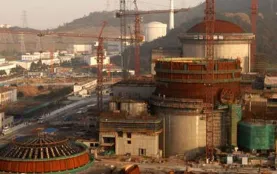
Vietnam to build its first nuclear power plant

Guess which country agreed to lend as much as $9b for the project?

Emerson seals US$10m deal with Saudi Electricity Company

Emerson’s Fisher® control valves will be used for SEC’s Rabigh Power Plant project.

Chinese group hits back against US solar manufacturers for “dumping”

The China Photovoltaic Industry Alliance is launching its own counteroffensive against the US for dumping polysilicon at below cost prices in China.

India's finance ministry intervenes in power project loans

India's Finance Ministry is intervening in power project loans after disbursements failed to materialize.

Sharp to invest $1 billion in solar tech in Indonesia

Sharp will invest US$ 1 billion in solar cell technology in Indonesia according to a deal sealed at the ASEAN Summit in Bali.

Thai power firm to double capacity at Philippine plant

Thailand's Electricity Generating Pcl plans to more than double capacity at its Quezon power plant in the Philippines as part of a regional expansion.

Analysis: Easy loans now a burden for China solar firms

Generous state bank loans to Chinese solar companies, a bone of contention for their Western counterparts, are threatening the financial health of the firms, as they grapple with falling product prices and tumbling demand from their biggest customer, Europe. The huge funds that flow into China's solar sector, in which local governments hold stakes, have boosted production in the first half despite fragile demand, depressing product prices and setting off an anti-dumping probe by the United States. State banks provide easy loans to the sector amid the Chinese government's push to develop clean energy. Provincial governments that have helped build solar companies are also pressuring banks to continue lending, which may add to the woes of the struggling industry. The glut of production and swelling inventories of the panels that turn sunlight into electricity have already driven down prices by about 40 percent so far this year. Analysts expect prices to slide by another 10 percent by early next year. "The longer and larger the Chinese bank lending bubble for solar inflates, the sharper and more unpredictable will the eventual fundamental correction be due to industry consolidation," Credit Suisse analyst Satya Kumar said. "We need much sharper production cuts, which will only happen when the debt bubble bursts," he said, warning that the industry may suffer a prolonged period of depressed product prices unless China tightens lending. Total borrowings at top 13 listed Chinese solar companies had doubled to about $15 billion as of June 30 from a year ago, according to CLSA. Majority of those debts are with Chinese banks and are due within a year. AT BREAKING POINT China's support to its companies has angered U.S. solar firms, which say Chinese producers can undercut American prices as they receive massive cash grants and other subsidies. However, mounting unsold products, spiraling debts, shrinking profits and a worsening market could lead to a major shakeout of the legions of weaker Chinese companies, analysts and bankers say. "Over the next six months, there won't be profits to be made," said CLSA's solar analyst Charles Yonts. He expects some companies to start defaulting on loans and put themselves up for sale. "Balance sheets across the solar sector are already stretched to breaking." China's LDK Solar Co Ltd last week sharply lowered its revenue outlook due to price falls, joining First Solar Inc, Trina Solar Ltd, Yingli Green Energy Holding Co Ltd and Renesola Ltd, among others, in cutting targets for the year. Among the U.S.-listed Chinese firms such as LDK Solar, Suntech Power Holdings and Canadian Solar, LDK has the highest credit risk, according to CLSA. Wells Fargo solar analyst Sam Dubinsky dropped coverage of LDK last week, saying he was "not convinced shares are a viable investment," due to increasing liquidity risks in light of its balance sheet geared to short-term borrowings. LDK did not respond to an email from Reuters seeking comment about its credit position. Canadian Solar, China Sunergy, LDK and Suntech had net gearing ratios -- a measure of financial leverage -- of more than 100 percent, making them vulnerable to any further slide in product prices, analysts said. The median net gearing of companies in the sector is 46 percent. SELECTIVE LENDING Despite requests for more lending from local governments, Chinese banks in Jiangsu, one of the country's largest solar panel production bases, are tightening lending for local solar companies, according to banking sources. "We are worried about this industry every day," a senior loan banker who has knowledge of loan arrangements with Chinese solar companies told Basis Point, a Thomson Reuters publication. "The industry is going through a painful reshuffle. Some companies will face tremendous problems and even go bankrupt," said the banker, who declined to be identified as he was not authorized to speak to the media. Cash-strapped companies may be forced to raise capital on poor terms or cut investments if banks tighten funding. Shanghai-based solar panel maker JinkoSolar Holding has raised short-term bank-accepted notes in the second quarter by eight folds from a year ago to pay its suppliers, highlighting the liquidity challenges faced by the industry, according to Susquehanna Financial. JinkoSolar's Chief Financial Officer Longgen Zhang said issuing bank-accepted notes is a common industry practice. "It helps keep a healthy cash flow," the CFO said, adding that the company keeps a strong balance sheet. Banks are also becoming more selective in extending loans amid growing fears that the industry may face further difficulties. "Banks are becoming uncomfortable with many companies' debt levels and as a result, are likely to become unsupportive to uncompetitive producers," said Colm O'Connor, fund manager at KBC Eco Fund Alternative Energy. But relatively big firms such as GCL-Poly Energy Holdings and Trina Solar should be able to survive the downturn as they enjoy the support from their state shareholders or local governments -- who need to keep the plants afloat to boost employment. "The companies are large employers. Local governments will strongly encourage banks not to close out lines of credit and roll over short term debts," said an analyst who requested anonymity due to the sensitive nature of the issue. LDK, which is backed by the Jiangxi provincial government, plans to triple its polysilicon capacity to 55,000 metric tons by 2013, just as it braces for lower revenue. In September, China Development Bank, one of China's three policy-oriented banks, approved a $713 million loan deal with GCL Poly, which is 20 percent owned by sovereign wealth fund China Investment Corp.

Average power capacity of India’s n-plants rises to 78%

The average power capacity of India’s nuclear plants has improved to 78% during 2011-12 (April- October) against 71% in 2010-11, largely due to the increased uranium imports, according to the latest data provided by National Power Corporation of India Ltd. The imports of uranium is largely from France and Russia and now the possibilities are high of getting yellow cakes from Australia too. The country is going ahead with new projects and also enhancing the already existing plants with better technology and fuel availability. The advancement in the India’s nuclear sector has come at the perfect time as the shortage of Coal was creating problems to meet the energy needs of the country. Many countries put back it nuclear projects after the destruction of Japan’s six-reactor Daichi Fukushima nuclear power complex by an earthquake and tsunami. But the rising BRIC economic superpower, India, has been going along with the proposed project with modifications like improved safety technologies etc. The opposition against nuclear plants are high but the government feels that it could be manageable. The major protests were seen in Kundankulam Nuclear Power Project in Tamil Nadu and also in against the proposed 9,900 megawatt Jaitapur Nuclear Power Plant. For India, use of nuclear energy is of great importance as it is carbon free(Clean energy and no green house gas emission) and could benefit countries seeking both power expansion and winning plaudits for reducing greenhouse gas emissions. Currently, there are 20 nuclear reactors being operated by NPCIL which add up 4,780 MW. India in its 12th five year plan (2012-17), more important would be given to power generation and plans to accelerate the nuclear power generation to 20,000 mega watt by 2020 from the existing 4780MW. Commodityonline.com  

Gridcorp gets Rs 158 crore income tax relief

India's Income Tax Appellate Tribunal struck down an order for collection of Rs 158 from Grid Corporation of Orissa  for the amount paid to Orissa Power for power transmission charges during 2008-09.

Pakistan's PM urged to scrap rental power policy

Four leaders of Pakistan People`s Party have asked Prime Minister Yousuf Raza Gilani to scrap the government`s rental power policy.

Suzlon receives 23.1 MW wind turbine order from GAIL

Suzlon Energy received a fourth consecutive order from GAIL consisting of 11 units of its S88-2.1 megawatt wind turbines, totalling to 23.1 megawatts.

World Bank to invest $1.5B in Indian energy sector

The World Bank expects to invest about $1.5 billion in India's energy sector over the next two years.

Korea-Philippines cooperation includes power plant, dam projects

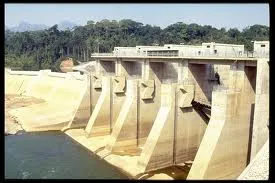
A dam and a coal-fired power plant will be built in the Philippines with the assistance of South Korea.

Philippines' Alsons eyes Thai, Japanese partners for 200MW project

The Philippines' Alsons Consolidated is looking to build 200 MW coal-fired power facilities in southern Mindanao and dealing for possible partnerships.

Honeywell to supply integrated system for Vietnamese offshore oil platforms

Honeywell will work on Hoang Long Joint Operating Company's H-04 wellhead platform in the Te Giac Trang Field.