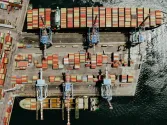
How can Indonesia boost renewable energy development?
A shared transmission network can provide additional revenue for PLN.
Indonesia will be able to fuel its renewable energy development through the shared use of the transmission network, according to a joint report by RE100, the Institute for Essential Services Reform (IESR), and the Institute for Energy Economics and Financial Analysis (IEEFA).
In their analysis, sharing the transmission network will be able to support the programmes of national electricity utility PT Perusahaan Listrik Negara (PLN), said co-author Mutya Yustika, IEEFA’s Energy Finance Specialist, Indonesia.
The proposed scheme can provide the $5b needed annually for power generation and the $146b investment gap that Indonesia needs to meet its 2030 climate targets.
To support this, PLN should strengthen its capacity to serve as a transaction hub for shared electricity networks. Indonesia was also urged to include provisions for a joint transmission network utilisation scheme in the New and Renewable Energy Bill and integrate this mechanism into PLN's 2024-2034 Electricity Supply Business Plan.
IESR Executive Director Fabby Tumiwa noted Indonesia has a technical potential of over 3.7 terawatts of renewable energy, with approximately 333 gigawatts of economically viable projects.
“The long-term benefits of a joint transmission network for renewable energy will far outweigh the limitations, and regulations that provide long-term certainty are essential to attract more private sector investment,” Tumiwa said.
The report also provided four prerequisites for the success of a joint transmission network for renewable energy. These are transmission access for renewables developers, fair and transparent tariffs ideally established by an independent regulator, reliable interconnections, and clear contractual agreements.
Yustika said that a dedicated PLN subsidiary could be established in the future to enhance cost transparency.
“Introducing an upfront fee for renewable energy developers utilising the electricity grid, along with an annual quota system and renewable electricity roadmap, can ensure its sustainability,” she added.

















 Read Here
 Advertise
 Sign Up