Asia fusion market enters decisive phase with $5b China lead
The China Fusion Energy Corporation serves as a $2.1b national hub for artificial sun projects.
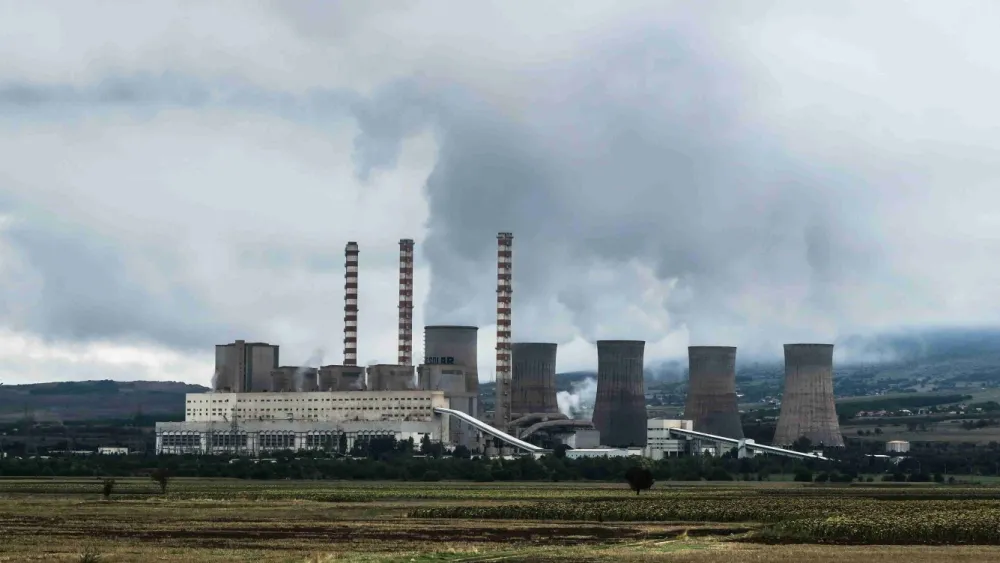
Fusion energy is gaining momentum across Asia, with China emerging as the region’s biggest backer through investments of at least $5b.
Fusion energy, which produces power by merging atoms in the same way the sun does, has entered a “decisive new phase,” with 33 countries now working together to prove the technology can be commercially viable, the International Atomic Energy Agency said in an October 2025 report.
If successful, fusion could become a major source of clean, reliable electricity as global power demand continues to rise. In a low-cost scenario, fusion could supply as much as half of global electricity by 2100.
Even if costs remain high, it could still account for about 10% of power generation, according to long-term projections.
As governments increase funding, experts are increasingly optimistic that fusion could become a long-term backbone of low-carbon energy systems.
Asian Power spoke with analysts about how fusion efforts are shaping up across the region. Here are excerpts from the interviews.
Attaurrahman Ojindaram Saibasan
Senior power analyst at GlobalData Plc
Versus coal and gas, fusion’s key potential advantage is firm, low-carbon power without combustion pollution; its disadvantage today is that it is not commercially proven and is likely expensive initially.
Versus fission, fusion aims to match fission’s firm low-carbon performance with a different safety and waste profile, but fission is available now.
Versus wind and solar, fusion would complement renewables by providing firm capacity and reducing reliance on storage and backup. Renewables win on cost and deployment speed, while fusion’s value would be in high reliability, always-available low-carbon generation—if it can be made economical and maintainable.
The long-term market could be very large if fusion becomes bankable because Asia is the world’s biggest electricity-growth region and is also where firm, low-carbon capacity is most constrained by land, air quality, and fuel-import exposure.
Some developments include China establishing the China Fusion Energy Corporation in 2025 with $2.1b in capital to serve as a national hub for its “artificial sun” projects, including the Experimental Advanced Superconducting Tokamak.
South Korea recently doubled its fusion R&D budget for 2026 and committed $866m to accelerate its commercialisation timeline to the 2030s, moving it up from 2050. Its Korea Superconducting Tokamak Advanced Research reactor set a world record in 2024 for sustaining high-temperature plasma.
India allocated $2.4b in its 2025 union budget to accelerate fusion research alongside small modular reactors.
Japan has actively partnered in international projects like the International Thermonuclear Experimental Reactor whilst developing its own domestic capabilities, such as the JT-60SA tokamak.
China is likely the largest long-run market and manufacturing base if fusion becomes commercial given scale, state-backed financing, and industrial capacity.
Japan and South Korea are strong in advanced materials, precision manufacturing, and high-field magnet supply chains, and may lead in components and engineered systems.
India is a large growth market with energy-security motivations, potential for state-led demonstration and domestic supply chain development.
Southeast Asia is likely a later adopter, with priorities being cost, reliability, and grid build-out. Fusion uptake would depend on proven economics and exportable plant designs.
The market is at a very nascent stage. Although there are ambitious plans, it is most likely possible in the next decade.
Itxaso Ariza
Chief technology officer at Tokamak Energy Ltd.
Nuclear power plants today use fission, and that's when you take a big atom, and you split it into two, and that emits energy. But fusion, the combining of nuclei, is 100 million times more exothermic than fission, so it's a lot more energy-emitting than fission.
We don't use fusion today because it needs very specific pressure, temperature, and confinement conditions, and we haven't quite managed to replicate those repeatedly on Earth today. But when we do, it is going to be a much better source of energy than nuclear fission because it will provide safe energy.
Because the conditions required for fusion are so specific, if you lose one of those conditions—let's say it cools up and the temperature drops—then the reaction dies. It doesn't lead to a chain reaction as it does in fission, so you don't have the risk of a runaway condition or disaster. It also uses abundant and very safe fuel. We haven't quite yet cracked how to deploy it on Earth, but when we do, it will be the holy grail for me of energy production.
Investment is now flowing, and there are quite a few examples of interest in Asia. China is pursuing different technologies in fusion because there are different ways to achieve it, and they're trying to find out which one is the best. That's because they believe that it is the future.
Japan is at the forefront of fusion as well. There are big projects, and the most recently elected prime minister [Sanae Takaichi] is very pro-fusion. She believes fusion is going to be part of the energy solution for Japan.
Japan is now looking to collaborate with the UK and the US, and there will be a few projects launched. Beyond that, Korea also has big fusion ambitions. They have recently been discussing collaboration with the US and the UK, and there is likely going to be a big fusion pilot plant launched in Korea in the next few months.
Singapore also has ambitions for fusion and is looking to potentially launch a programme in the future.
A lot of these projects are expensive. I believe collaboration will make the difference in getting there faster.










 Read Here
 Advertise
 Sign Up