Middle East conflict sparks nuclear surge in Japan and South Korea, report says
The report said the crisis could have long-lasting effects on their energy policies.
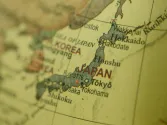
The Middle East conflict is driving Japan and South Korea to accelerate structural shifts toward nuclear expansion, according to a Wood Mackenzie report.
Whilst Japan (70%) and South Korea (>100%) can use coal to offset most of their gas needs, the report suggests the crisis will have long-lasting effects on their energy policies.
In response to this, Japan’s transition from post-Fukushima nuclear minimisation to expansion is now firmly established.
“This policy shift is expected to provide stable electricity to meet rising demand, particularly from data centres, and reduce reliance on fossil fuel imports,” the report said.
Similarly, South Korea has identified nuclear as critical to meeting future electricity demand, with the potential for additional capacity beyond current plans.
The report noted that decisions on lifetime extensions for approximately 7.8 gigawatts of reactors due to reach design limits by 2030 will be key to the country’s energy mix.













 Read Here
 Advertise
 Sign Up