
Malaysia’s energy workforce is upskilling, but to what standard?
By Stephen Marcos JonesThe country focuses not just on the quantity, but the standardisation of that training.
Malaysia’s National Energy Transition Roadmap forecasts 310,000 new energy jobs by 2050. The Energy Commission’s ST-ECE initiative calls for 62,000 competent persons across electricity, gas, and energy efficiency-related fields. Meanwhile, PETRONAS found simultaneous expansion across upstream oil and gas, carbon capture, and storage, hydrogen, and renewable energy infrastructure.
The national conversation so far has focused on the training gap, producing more graduates, expanding Technical and Vocational Education and Training (TVET) access, and channeling more funding into reskilling. These are necessary steps, which address a real shortage, but there is an even larger opportunity to futureproof Malaysia’s energy workforce.
By focusing not just on the quantity but the standardisation of that training, Malaysia will drive the creation of a highly flexible, evolving workforce that will fill roles across all safety-critical sectors as demand shifts.
The opportunity in parallel expansion
Countries that joined the energy transition early are part way through a shift, which sees skilled oil and gas workers increasingly moving into the renewables sector. Malaysia is doing something more complex, expanding hydrocarbon operations, and building renewable capacity simultaneously.
For example, PETRONAS needs an estimated 25,000 workers in 2026 and 2027 just to service turnarounds, shutdowns, and decommissioning across its existing offshore portfolio. It has also signed several memoranda of understanding to cultivate a highly skilled local workforce across Malaysia’s oil and gas services and equipment sector, strengthening skills across trades including rigging, welding, and seafaring.
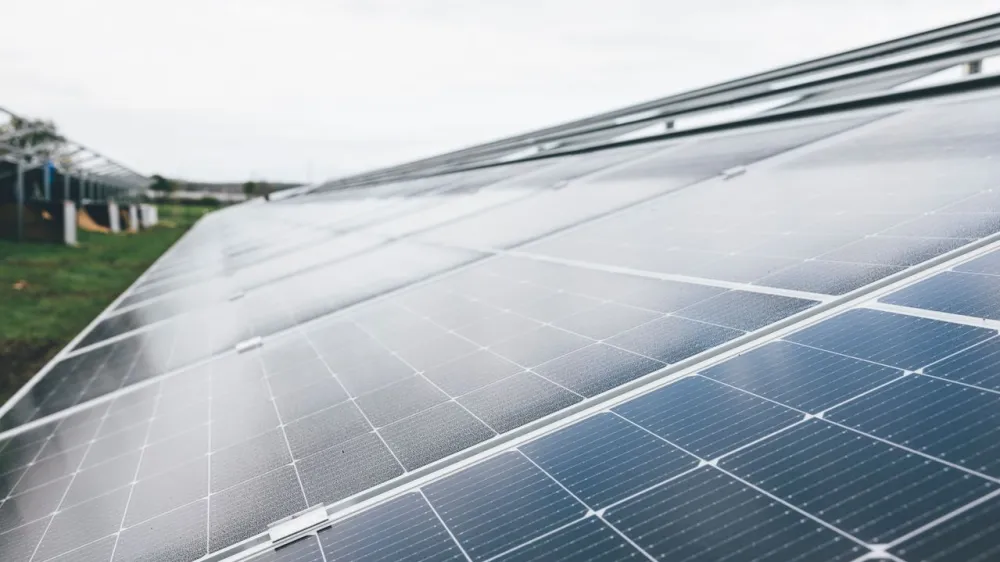
Meanwhile, Malaysia is scaling large-scale solar projects, floating solar, battery energy storage systems, and laying the groundwork for offshore wind.
This is a multi-pathway expansion, and it creates a category of operational risk that Malaysia has not had to manage before. The workforce that services Malaysia’s oil and gas operations today is the same talent pool that its emerging energy sectors will draw from. As these sectors scale in parallel, workers and contractors will increasingly be expected to operate across offshore platforms, Carbon Capture and Storage (CCS) projects, and renewable installations.
The training gap and the standards gap are two different hurdles
Whilst Malaysia’s TVET system has seen significant reform investment, there are further opportunities to coordinate training across providers and align curricula with the evolving industry requirements. Though each energy environment has differing operational conditions and hazards, there are also many similarities. From working at height to fire training, many skills can be transferred between worksites if taught with diversity of application in mind.
By creating a unified competence standards and assurance framework, Malaysia will continue to create a highly-skilled talent pool whose skills can be consistently verified by employers across sectors and borders.
However, at present, a standards gap exists. When a Malaysian worker completes safety training for offshore oil and gas, that certification will not necessarily be recognised if they move to an offshore wind project, which is managed by a different operator, with different contractor requirements.
The risk compounds when you multiply this across CCS, hydrogen, and alternative fuels. If each emerging energy sector develops its own training expectations and regimes in silo, it will create a patchwork of competencies that may not deliver the agile and adaptable workforce that Malaysia needs.
Europe has learned this the hard way. As the region’s offshore wind sector scaled, operators and training providers discovered that without harmonised competence standards, workforce mobility between projects and regions became difficult to manage, with duplicated training requirements and uneven safety expectations. This added unnecessary cost, time, and complexity.
Globally, the development of cross-sector competence frameworks that make safety training portable and verifiable across employers, sectors, and borders has begun. This will create a baseline for safety standards and competencies that will support the energy transition. This can be further combined with specialist qualifications in areas like high-voltage systems, depending on individual requirements.
Malaysia could set the ASEAN benchmark
For Malaysia, the good news is that it already has a foundation to build on. With the country’s institutional relationships, regulatory maturity, and the scale of activity across multiple energy sectors, Malaysia could pilot a truly harmonised, cross-sector competence framework for the region. To do so requires a shift in how policy-makers, operators, and training institutions think about and come together to build workforce readiness.
The metric cannot only be how many workers we produce, but also: The competencies, standards and validations that will transcend sectors and borders.








 Read Here
 Advertise
 Sign Up