Cambodia beats long-term solar goals with 1.5 GW installed
It surpassed its tagets nearly a decade early.
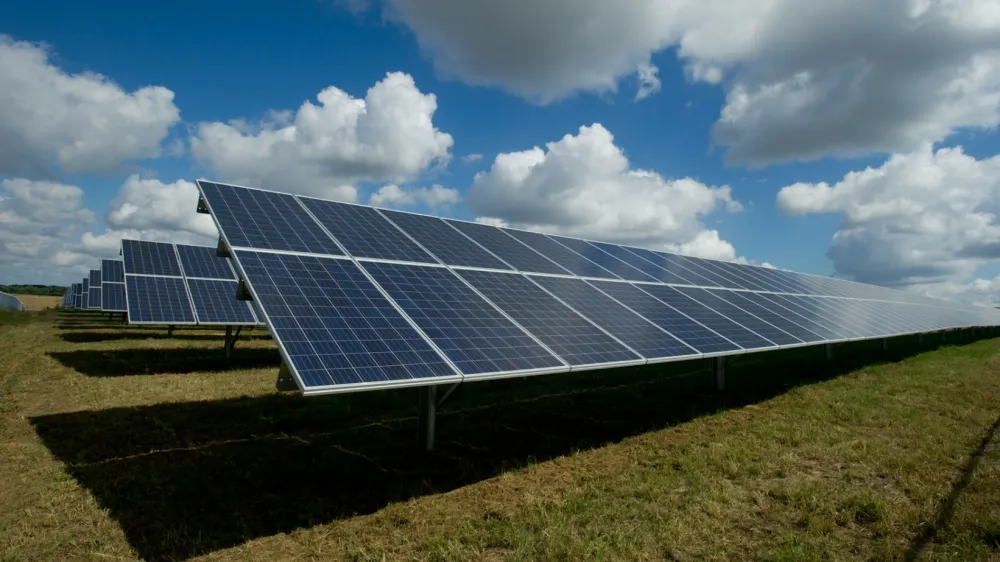
Cambodia’s solar buildout has surpassed its 2030 and 2035 planning targets nearly a decade early, driven by utility-scale projects, despite hindered rooftop solar deployment, an Institute for Energy Economics and Financial Analysis (IEEFA) briefing note said.
Installed solar capacity reached almost 1.5 gigawatts (GW) in 2025, exceeding levels set out in the country’s Power Development Master Plan 2022-2040.
The plan targeted 705 megawatts (MW) by 2025, 1GW by 2030 and 1.3GW by 2035.
Solar now accounts for more than 10% of its electricity generation, with the Electricity Authority of Cambodia expecting the share to rise above 12% following further capacity additions.
Growth has been driven almost entirely by utility-scale projects, with several projects expected in 2026 that could add almost 400MW of capacity, taking total installed solar to around 1.87GW by year-end.
A 930-MW facility scheduled for commissioning in March 2026 could further increase capacity and push the system above 2GW.
Rooftop solar deployment remains constrained by a 30-MW annual quota, as well as a compensation tariff structure.
IEEFA said the tariff exceeds estimated grid impact costs by three to four times and extends payback periods for medium and large systems by almost two years.
“These restrictive rooftop solar policies remain at odds with the needs of Cambodia’s export-oriented manufacturers. Rooftop solar can lower production costs, improve industrial competitiveness, and attract investment from corporations with supply chain decarbonization targets,” IEEFA said.
Cambodia’s planned liquefied natural gas-to-power project, scheduled for commissioning in 2027, could increase electricity prices and raise the carbon intensity of the grid, strengthening the case for expanded rooftop solar deployment.
The country imported around 1GW of solar panels from China in 2025, according to Ember data cited in the report, with imports peaking at 422MW in March 2026.
Its government reduced import duties on solar power and energy storage equipment from 15% to zero in April 2026.
“One solar manufacturer estimates that this tax reduction could lower installation costs by up to 30%. Even under more conservative assumptions … total costs could be reduced by approximately 7.4%,” IEEFA said.
The Asian Development Bank estimated Cambodia’s solar potential at 8.1GW in 2016, whilst a 2021 technical assessment placed potential at up to 44GW.



















 Read Here
 Advertise
 Sign Up