APAC
Global onshore wind market to double, hit $321b by 2035
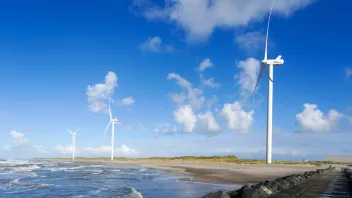
Global onshore wind market to double, hit $321b by 2035
Turbines above 5 MW will record the fastest segment growth through 2035.
13 hours ago
China drives Asia's $177b fossil fuel savings as renewables displace imports

Over 90% of new renewable capacity in 2025 undercut the cheapest fossil alternative.
3 days ago
Why bigger digesters alone won't solve Asia's renewable energy challenge

Growth will not be achieved by larger digesters, but from better feedstock, improved purification, and higher energy recovery.
4 days ago
APAC leads electrification as renewables top global energy growth
Electricity demand rose 3% in 2025 with low-carbon sources meeting all demand growth.
Governments push energy efficiency amidst Strait of Hormuz crisis

A joint statement cited the Middle East energy market disruption as the trigger for faster action.
Asia-Pacific renewable investment outpaces procurement efficiency

Developers cite grid, contracting, and documentation hurdles.
Asia battery storage investment held back by execution risks: DLA Piper
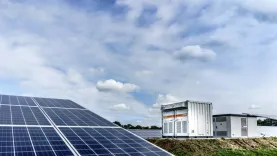
China ranks amongst the world's top three markets as investors seek greater certainty.
Scaling for resilience: What Asia Pacific’s bioenergy markets can learn from each other
Bioenergy scale requires credible, long-term demand signals.
India renewables face $55b climate loss risk

The study assessed 871 planned clean energy locations across 10 states and territories.
China hydropower surge lifts East APAC capacity past 590GW in 2025

Beijing drives 300GW pipeline as regional buildout hits 40% of global total.
Renewables power 86% of global energy expansion in 2025
Solar, wind, and storage now increasingly cost-competitive with fossil fuels
Middle East energy disruption spurs Asia coal demand surge, Rystad says
The tight gas supply drove higher utilisation of existing coal plants across key markets.
Showcase your excellence at 2026 Asian Power Awards, Asian Oil & Gas Awards, and Asian Water Awards

Be amongst the industry leaders recognised for driving innovation and operational rigour across Asia.
Asia moves to cut $1.1t fossil fuel import bill
The energy system rewired to renewables and electrotech as imported fuels reshape industry strategy.
ADB calls for connected power systems in Asia Pacific
The Pan-Asia Power Grid Initiative is expected to mobilise $50b by 2035.
Global gas power share shrinks to 21.8% as solar dominates growth
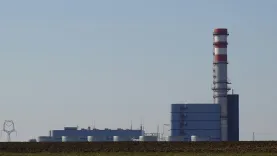
Solar alone met 75% of new electricity demand in 2025 whilst gas covered less than 5%.
Asia’s geothermal boom slows as regulatory risks mount

Installed capacities were up 113% in the 25 years to 2020.
Thought Leadership Centre



Most Read
1. Why bigger digesters alone won't solve Asia's renewable energy challenge 2. New MOUs power Singapore-Indonesia 3.4GW electricity trade goal 3. China drives Asia's $177b fossil fuel savings as renewables displace imports 4. Seatrium starts exporting power from floating LNG-battery lab 5. Philippines pays more for power than most Southeast Asian peersResource Center

 Read Here
 Advertise
 Sign Up
Event News

Be amongst the industry leaders recognised for driving innovation and operational rigour across Asia.











Commentary
Why bigger digesters alone won't solve Asia's renewable energy challenge
Scaling for resilience: What Asia Pacific’s bioenergy markets can learn from each other