Singapore
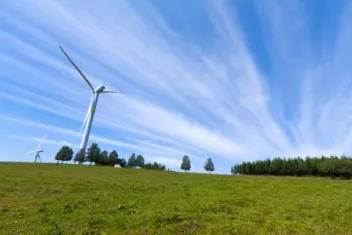
Bangladesh has over 34,000MW of untapped wind power: report
Bangladesh has over 34,000MW of untapped wind power: report
Wind speed ranges from 5-7 mps in some areas.
One Belt, One Road – An opportunity for regional cooperation
China’s reported trillion-dollar One Belt, One Road (OBOR) initiative is something we have all heard a great deal of, over several years now. With certain projects already having been completed, and as others get underway or proceed towards completion, we consider the likely impact of the OBOR initiative on regional cooperation within Asia and the ASEAN region, and the potential diversification of trade routes for traditional energy sources. OBOR presents a tremendous opportunity for fostering regulatory, economic and legal cooperation amongst ASEAN states and beyond.
Is China Three Gorges' US$10.8b bid for Portugal's EDP Renovaveis falling apart?

Stiff US regulations are a key threat.
When privatisation calls, should Asia's power utilities listen?

The privatisation trend holds promise in the near to mid-term horizon.
3M unveils one of the biggest solar farms in Singapore
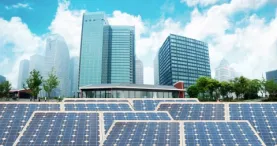
It can generate an average of 2.4 GWh of electricity annually.
Solar Energy Corporation of India tenders 2.5 GW wind and solar hybrid projects
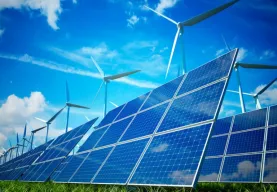
Upper tariff ceiling for the tender is at 4.3 cents per kWh.
Sembcorp to build rooftop solar systems for 848 HDB blocks
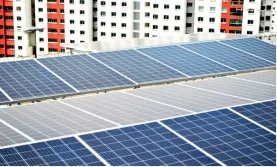
Construction will begin Q3 of 2018.
Why Southeast Asia's slow solar regulatory reform is frustrating

Improvement can be "painstakingly slow"--how should countries improve?
Southeast Asia's solar industry thrives amidst dimming market expectations

The solar boom may be fizzling out in some countries, but definitely not in Southeast Asia.
Does the feed-in tariff still fit for Asian solar PV?

Tender and auction schemes may be winning.
Join the first global nuclear energy community
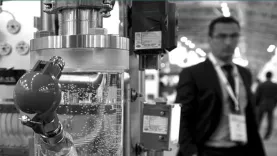
Only one month left before WNE 2018.
Equis Energy changes name to Vena Energy

This is after its acquisition by Global Infrastructure Partners.
Solar policy, programs, and progress in Southeast Asia: Current status and future outlook
Widely known to have vast solar potential, Southeast Asian countries have used a variety of methods to drive solar deployment in the last several years. However, the timing and efficacy of each country’s initiatives have varied considerably, leading to vastly different levels of historical solar growth. Thailand, for example, implemented pioneering programs years ago, generating a considerable number of solar projects, but currently provides very little support for new solar. Vietnam and Malaysia, on the other hand, have just recently ramped up their solar efforts, but are doing so with what appears to be considerable success.
HSBC to stop financing new coal-fired projects

It will stop investing in nuclear projects in conflict with international standards.
A guide to Singapore's recently announced Carbon Tax
Last year, while presenting Singapore’s budget for 2017, the Singapore Finance Minister announced that Singapore will impose a tax on greenhouse gas emissions starting from 2019. At the time, the government announced that the tax would lie in the range of S$ 10 – 20 per tonne of carbon dioxide equivalent emissions.
Nuclear generation in Asia ballooned by 35% over the last five years
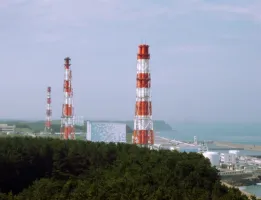
40 of 56 reactors under construction globally are in the region.
Blockchain's potential in solving ASEAN's ‘Energy Conundrum'

Will utilising it prove to be boon or bane?
Thought Leadership Centre



Most Read
1. Fossil fuel use falls as electricity gains share of global energy mix 2. Singapore and ADB renew 3-year pact to back ASEAN power grid projects 3. Philippines overtakes Pakistan as China’s No. 2 solar export market 4. Thailand clean energy push accelerates with GCL SI–Getz Energy MOU 5. South Korea’s Hanwha Power expands Canada push with Pembina low-carbon MOUResource Center
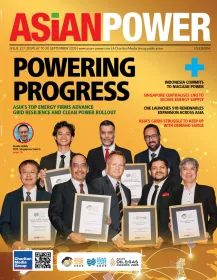
 Read Here
 Advertise
 Sign Up
Event News

Learn how operators can navigate evolving operating conditions, minimise reliability risks, and improve generator performance amidst increasing system demands.
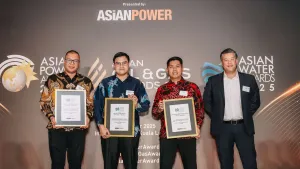









Commentary
Asia’s grid decade: Why transmission will decide the pace of renewable growth
The supply-side blind spot in ASEAN’s data centre boom