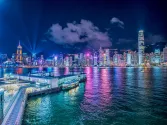
Singapore’s focus areas for a resilient energy grid
New technologies are being developed for a sustainable grid.
Singapore has laid out three areas it is focusing on to ensure a future-proof grid that will fuel the renewable energy transition.
According to Dr. Tan See Leng, minister-in-charge of energy and science & technology in Singapore, the city-state is working on boosting interconnectivity through regional power grids.
“We have taken concrete steps towards realising the vision of an ASEAN Power Grid by 2045. At the 43rd ASEAN Ministers on Energy Meeting two weeks ago, ASEAN leaders endorsed a Terms of Reference for the establishment of a subsea power cable framework,” he said in his speech during the 25th Conference of the Electric Power Supply Industry.
When realised, the framework will facilitate ASEAN member states in carrying out marine surveys, as well as the laying, maintenance, and protection of subsea power cables in the region.
Singapore also aims to enhance grid resilience through various efforts. The Energy Market Authority (EMA), with SP Group, developed the Future Grid Capabilities Roadmap, setting clear directions for capability building in areas such as harnessing the flexibility of distributed energy resources and managing new system needs such as inertia.
Tan said new assets will also be deployed to enhance grid resilience, which include energy storage systems (ESS) for instantaneous response to demand and supply fluctuations from intermittent renewable energy sources.
“This year, EMA and Sembcorp expanded their ESS system on Jurong Island from 285 megawatt-hour to 326 MWh by deploying new batteries that store twice as much energy,” he said.
“We will work with Sembcorp to study the potential of the new system to respond to frequency changes and stabilise the grid during contingency events. The new system also trialled battery stacking, thereby reducing land take,” he added.
The last focus area is grid flexibility, which is being addressed by a Demand-Side Flexibility Roadmap. Introduced by the EMA, this outlines the plans to harness demand-side resources to meet the needs of the power grid caused by supply or demand fluctuations.
The regulator will also explore how underutilised distributed energy resources and loads can play a bigger role in enhancing the stability of the power system.
EMA will also launch a virtual power plant pilot to assess how such technologies can address system needs, such as by consolidating power from smaller energy sources to meet demand.









 Read Here
 Advertise
 Sign Up