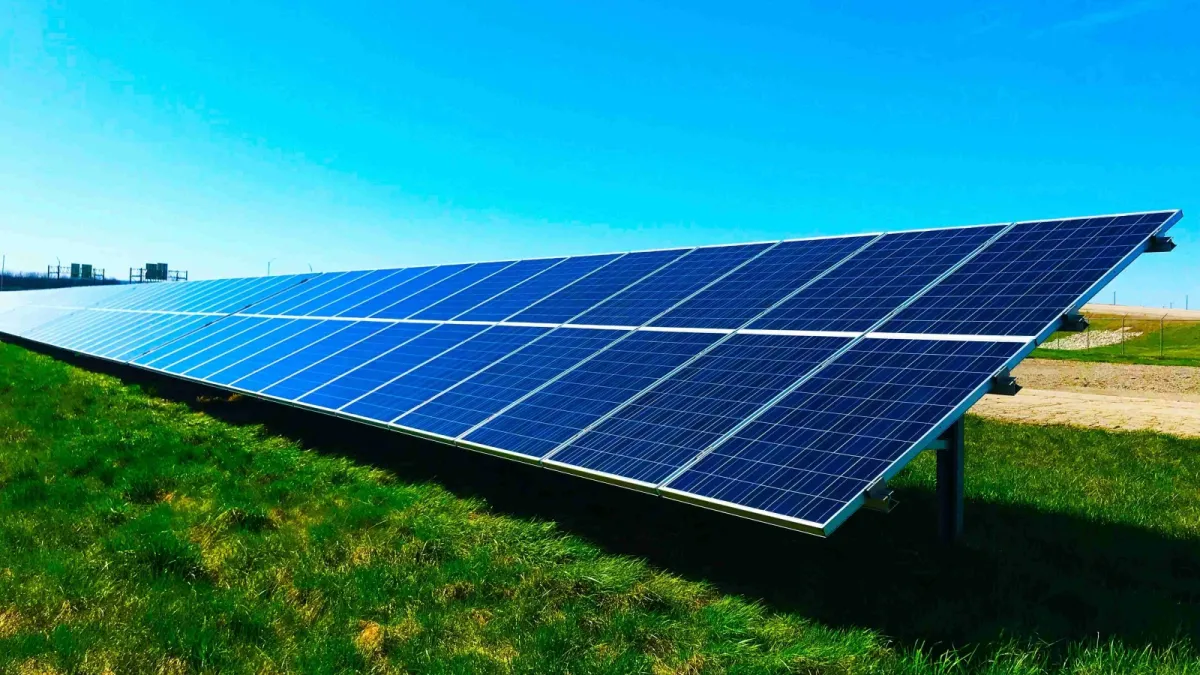
Australia’s business rooftops miss solar potential amidst regulatory barriers
Its grid and tariff systems constrain enterprise solar deployment.
Australia’s commercial and industrial rooftop solar capacity remains far below its technical potential, with uptake constrained by structural and regulatory barriers, according to the Institute for Energy Economics and Financial Analysis (IEEFA).
In a report released on 9 June, it said businesses had installed about 5.6 gigawatts (GW) of rooftop solar across Australia’s main grids despite consuming more electricity than households (~22GW).
The sector is described as the "missing middle" in the country’s renewable energy rollout.
It is estimated that commercial and industrial rooftops could support around 40GW of solar capacity, with total potential exceeding 80GW when agricultural sites are included.
Forecasts cited in the report place installed business solar capacity at 17GW to 32GW by 2050.
The report identifies several constraints on business adoption. “These barriers include distorted investment frameworks, complex and inconsistent network tariffs, and slow and unpredictable grid connection processes,” IEEFA said.
It adds that business-scale solar and storage projects often fall outside both residential and utility-scale incentive frameworks.
Demand charges can account for up to 40% of electricity bills, whilst varying across networks and peak definitions, making investment modelling and battery optimisation more difficult.
It also points to delays and inconsistencies in grid connection processes, which can take months to more than a year and require multiple technical studies and revisions.
“A fragmented, slow and unpredictable grid connection process adds to costs and delays for solar and storage projects in businesses, which can take anywhere from a few months to a year or more, with numerous studies and revisions,” the institute said.
The report recommends standardised tariffs, streamlined grid connection processes, targeted incentives for business uptake, and a review of electricity network regulation to reflect the role of batteries and demand management.





















 Read Here
 Advertise
 Sign Up