Staff Reporter
What you don't know about solar PV projects in China (Part 1)
China has one of the largest markets of renewables in the world and possesses rich solar resources. Although China has been initially slow to develop its own solar energy market, the start of 2010 saw this market start to gather momentum.
Oil demand in China edged up a measly 0.9% in October
Gasoline demand growth rebounded to 14.5%.
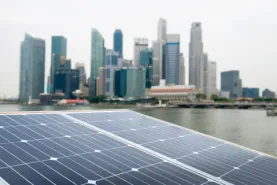
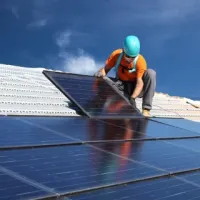
Singapore's largest-ever solar installation to be completed this year
REC to supply the solar panels.
Fitch Ratings puts CLP Power Hong Kong on rating watch negative
Just soon after news of acquisition came out.
Utilisation assumption for China Longyuan Power jumped to 2,125 hours
From just 2,050 hours.
Korea to hike electricity prices by 5.4% on 21 November
What are the domino effects?
China’s power generation surged 10.5% in October
Thermal power generation up 16.1%.
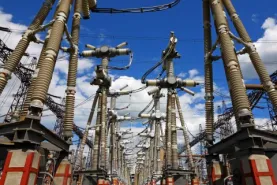
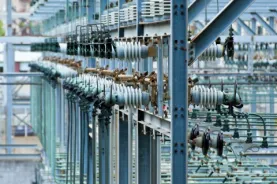
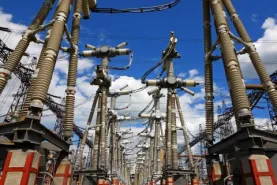
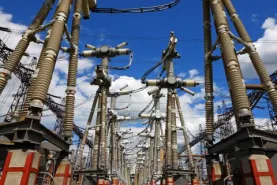
Alstom Grid unveils T155-420 kV gas-insulated substation
Find out more about the latest innovation.
What you don't know about the OWL Group
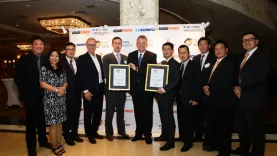
The OWL Group is the only truly ASEAN high end power engineering consultancy company having been established in Thailand and expanded into the Philippines.
Here's what's been bugging ASEAN power industry for so long
The OWL Group is the only truly ASEAN high end power engineering consultancy company having been established in Thailand and expanded into the Philippines. By staff numbers OWL is the third largest company in our sector in ASEAN. OWL is named after the bird of wisdom and provides the wisdom to develop projects in a safe, environmentally friendly and cost effective manner.
Korea needs up to 4GW/year of new CCPP capacity
But here's how this can be acted upon.
What you don't know about microgrids' importance to Asia
Crucial is an understatement.
IEA warns global warming will intensify
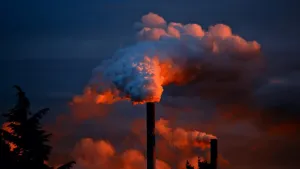
Temperatures could rise to nearly twice the UN targets. The International Energy Agency warns this could come about despite campaigns promoting energy efficiency and international pledges to limit global warming. It said greenhouse gas emissions (GhG) will rise by 20% by 2035, leading to a world temperature increase of 3.6 degrees, well above the United Nations target of 2.0 degrees. IEA said the global energy sector is responsible for two-thirds of global GhG and whatever trends surface in the coming years will be key to determining if climate change commitments are met. IEA has said the world temperature would jump by six degrees if all efforts to limit human-based emissions were abandoned. It has, however, praised recent initiatives in many of the world’s largest economies to limit carbon emissions. But despite best efforts, climate-changing energy consumption is still on a sharp rise. IEA forecast that global demand for oil could hit 101 million barrels per day, a rise of 14 mbd in less than a quarter of a century. This total is the equivalent to about 16.1 billion liters of oil being burned every 24 hours. Coal use will rise by 17% from today until 2035, primarily because coal remains far cheaper than cleaner natural gas. Any prospect of reversing the continuing increase in the use of coal depends mostly on China, the world’s biggest energy consumer, which burns as much coal every year as the rest of the world combined.
Korea, Russia look into integrating their national power systems
Sign agreement to research and investigate plan. Korea Electric Power Corporation, En+ Group and the Skolkovo Institute of Science and Technology have signed a Memorandum of Understanding to do joint research into the integration of power systems of the Russian Federation and the Republic of Korea. Kepco is the largest electricity producer in South Korea. En+ is Russia's leading mining, metals and energy group while Skoltech is a new Moscow-based international university of science and technology created in partnership with the Massachusetts Institute of Technology. The research, which will be conducted at Skoltech, will focus on possible routes and volumes of electricity to be supplied from Russia to South Korea, and the options to exchange power flows for day/night and seasonal phases. The research should take two years. It is a part of the NEAREST project (North East Asian Region Electrical System Ties), an APEC initiative to integrate power systems of North East Asia countries including China, Japan, Mongolia, Russia, South Korea and some other economies. NEAREST aims to secure a more reliable power supply, lower electricity costs and reduce environmental impact of the energy sector. This initiative was announced at APEC Energy working group in November 2012 and supported by the governments of China, Russia, South Korea, Singapore and USA.
South Korean biomass-fueled power plant moves ahead with expansion
Plant is a joint venture with Oman. GS EPS Company has officially inaugurated phase three of its expansion plan, taking the total production capacity of its biomass-fueled power plant at Dangjin to 1,500 MW. The firm is a JV between Oman Oil Company, which holds 30%, and South Korean firm GS Holdings that owns the remaining 70%. Phase 1 of the plant has a capacity of 538 MW and was commissioned in 2001 while Phase 2 (550 MW capacity) was commissioned in 2008. Phase 3 has already begun. The Dangjin plant will become one of Asia’s largest biomass plants and will use a mix of agricultural and associated byproducts. The plant will be capable of generating 2,300 MW of electricity including 100 MW of biomass production to the three existing LNG fired combined cycle power plants. It is expected to be completed in 2015. GS EPS also owns and operates an LNG-fired combined cycle power plant and ancillary facilities in Pyongtaek. The plant sells its electricity to state-owned electricity utility Korea Electric Power Company.
South Korean nuclear reactor comes online again
Hanul No. 1 began supplying power this week. The reactor, located in Uljin county southeast of Seoul, is one of South Korea’s 23 nuclear reactors. It restarted after a scheduled maintenance shutdown. Five other reactors remain offline, leading to concerns about blackouts this winter. Tests conducted by the Nuclear Safety and Security Commission during the maintenance show that the performance and operation of the reactor and its related facilities were satisfactory. The reactor is operated by state-run utility Korea Hydro and Nuclear Power that operates all South Korea's nuclear reactors. These reactors supply a third of South Korea’s electricity. An ongoing scandal about nuclear safety certificates, however, has led to the indictment of 100 people for corruption, and to rising public discontent with nuclear power. A study group commissioned by the Ministry of Trade, Industry and Energy has recommended that nuclear power should be reduced to between 22% and 29% of overall generating capacity by 2035 compared to a government plan for 41% by 2030. The ministry could, however, revise its energy policy next month after public hearings.
India plans five “ultra-mega” solar energy parks
Could have a capacity of 18 GW in the next 10 years. The Indian government is inviting bids for constructing a 1 GW plant by March 2014, the first segment of a 4 GW solar park to be set up in Sambhar, Rajasthan. The Ministry of New and Renewable Energy said the project is the first step in a plan to build five ultra-mega renewable parks generating a total of 18 GW over the next 10 years. The ultra-mega parks, however, will all be built in the desert wastelands of Rajasthan and Gujarat and the cold deserts in the Ladakh region of Jammu and Kashmir.
Commentary
Supply chain efficiency, skilled manpower are key for India’s renewable energy