Staff Reporter
India must inject USD83.35b in renewable energy market until 2022
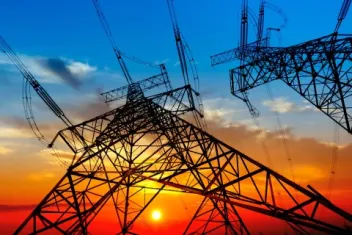
India must inject USD83.35b in renewable energy market until 2022
If it's serious about hitting 72,400MW capacity.
Siemens and POSCO E&C complete the Ansan power plant in South Korea
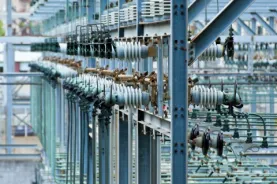
It will provide district heating for Ansan inhabitants.
India slashes floor price for solar-energy credits to 3,500 rupees
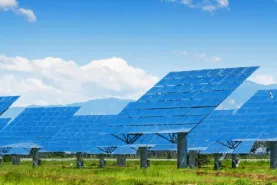
It's eyeing to boost demand.
What you need to know about the announced capped revenue experiment in Shenzhen
In November 2014, China's National Development and Reform Commission (NDRC) announced via a Notice for Transmission and Distribution Rate Reform Pilot in Shenzhen, a first-of-a-kind (FOAK) initiative to induce 'change' in the existing business model.
CGN Power to take over 61.6% of China's nuke power capacity by end-2014

Thanks to strong new capacity pipeline.
Alstom inks deal with Thailand on North Bangkok power plant maintenance

The contract is valued at €80 million.
China State Grid mulls over 13 ultra-high voltage transmission lines in 2015
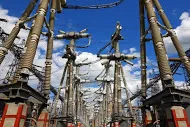
It may cost more than CNY300b.
CGN Power projected to generate 21% net profit CAGR between 2013 and 2016

Overseas expansion could also boost CAGR.
Australia's newest industrial power station finally gets completed

Installed total capacity is around 242MW.
Longyuan Power breezes by November with 7.3% increase in wind power generation

Thanks to strong wind speed recovery.
Here's how the increased use of solar panels affect Australia's power sector

Is a breakaway from traditional sources impending?
Australian solar power generators' profit margins to go down over time

More solar generation is involved in this.
China-based Clenergy to provide mounting system for a solar power plant in Japan

It'll generate 26.1m kWH a year.
Asia's nuclear power dreams threatened by cheaper prices for natural gas
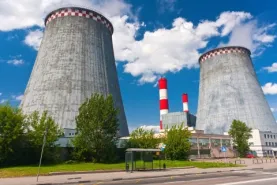
Strong government support may not be enough.
Philippines to get 2 solar plants totalling 41MWp
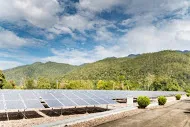
Find out where these will be located.
India's Adani Power to acquire Korba West Power

Is this a good move?.
Trina Solar racks up 7% profit jump to USD11.5m
Thanks to China, Japan, and emerging markets.
Thought Leadership Centre



Most Read
1. SEA green economy to hit $430b by 2030, but grid bottlenecks threaten growth 2. India loses 2.1TWh of renewables as coal hits flexibility limit 3. Japan’s US LNG resales equal output of 17 coal plants, report says 4. Pakistan’s LNG supply hit as Middle East conflict halts Qatar cargoes 5. Philippine renewable projects draw $5.72b in investmentsResource Center

 Read Here
 Advertise
 Sign Up
Event News

Be amongst the industry leaders recognised for driving innovation and operational rigour across Asia.












Commentary
Malaysia’s energy workforce is upskilling, but to what standard?
Asia’s grid decade: Why transmission will decide the pace of renewable growth