Staff Reporter
ASEAN could derive 70% of its energy from green sources
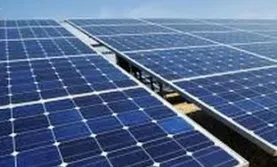
Greenpeace report says this could occur by 2050. Greenpeace believes that by 2050, green energy could account for 70% of the electricity generation for the 10 countries comprising the Association of Southeast Asian Nations. This boost in green energy could also result in US$2.8 trillion worth of investment; US$2.7 trillion in fuel-cost savings and 1.1 million jobs by 2030, said the report entitled “Energy [R]evolution: A Sustainable Asean Energy Outlook.” The report also noted that 28% of the region's total population, or 160 million people, still had no access to electricity. Sven Teske, renewable energies director at Greenpeace International, said ASEAN countries have more than enough natural resources to become a leading player for clean, renewable energies. "Renewable energies are more competitive than coal, utilize indigenous local resources and create more employment," Teske said. "Using more renewables is now an advantage for the economy, not a burden and reduces their dependence on dirty, imported fossil fuels like oil and coal."
Power-Gen Asia opens October 2 in Bangkok
Will focus on power generation and alternative energy. Power-Gen Asia and Renewable Energy World Asia will open at the Impact Exhibition and Conference Center for three days of discussion and debate on the future of Asia's power industry. Some 200 companies will also exhibit their latest technologies, products and solutions. The program includes more than 150 international experts presenting across eight conference tracks. These experts will talk on topics focusing on strategic and technical power issues and challenges and the growth of the renewable and alternative energy sectors Economic growth requires energy as its enabler and the power industry is the provider of this vital lifeblood. Balancing this responsibility with the requirement to protect the environment has put the power industry under the spotlight more than ever before.
Solar firms should start focusing on small, emerging markets
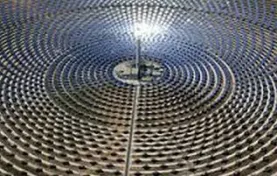
Report says these markets are the future. A new report by IHS estimates that photovoltaic installations in small, emerging markets could rise at about triple the global average during the period from 2012 through 2017. Annual installations in these emerging countries are expected to increase to 10.9 GW in 2017, expanding at a compound annual growth rate of 38% from 2.2 GW in 2012. In contrast, the overall global market will expand at a CAGR of only 13% during the same period. The emerging markets will account for 19% of global solar installations in 2017, up from just 7% in 2012. IHS noted that across the world, new markets for solar PV are emerging, propelled by government incentives, including tenders for large-scale contracts, feed-in-tariff schemes and self-consumption support. Although these markets sometimes have huge hurdles like limited financing, regulatory uncertainty and opaque local regulatory conditions, companies throughout the solar supply chain can benefit from targeting these fast-growing emerging countries. Of the emerging countries IHS analyzed, Thailand and Turkey are expected to become the largest markets in the coming years. Both countries have the potential to install a cumulative total of nearly 3 GW of PV systems during the period from 2013 through 2017.
India to double solar power capacity
Will build a 4 GW solar farm to attain this aim. State-run companies including Bharat Heavy Electricals Ltd., Power Grid Corporation of India Ltd., SJVN Ltd. and the Solar Energy Corporation of India will form a joint venture to complete the first gigawatt by the end of 2016. The farm will be built near Sambhar Lake in Rajasthan state to supply power to government distribution companies through the national grid, said the Department of Heavy Industry.
What you must know about the power of the 2020 Tokyo Olympics
Sunday 8 September was an exciting day in Japan. In the early hours the International Olympic Committee (IOC) announced that Tokyo will host the 2020 Olympic Games for a second time (first time was in 1964).
Toshiba moves into wind energy business
Acquires Japanese wind farm company.
Japan attains solar power milestone
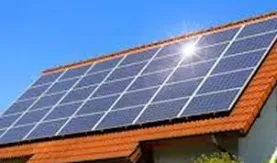
Becomes one of only five countries with 10 GW solar capacity.
Japan to begin building world’s largest storage battery
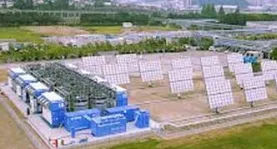
This could begin as early as this autumn.
Coal to power China’s push for more electricity
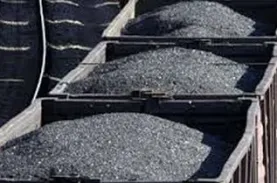
Hydropower will come second.
ISDN pumps more into hydropower with USD1.9m new venture
To be funded by company's reserves.
Geo Energy Resources inked two deals with Indonesian coal-mining firm
Its subsidiary will provide services in 150 hectares of concession area.
China grants subsidies to makers of electric vehicles

Subsidies will be given from 2013 to 2015.
China will limit coal use to curb air pollution
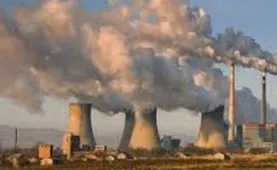
Releases plan to cap coal consumption.
France eager to invest in India’s renewable energy sector
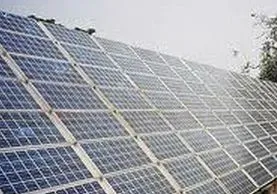
Expands relationship in conventional energy.
India approves rules for shale gas exploration
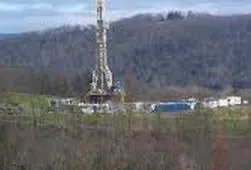
New policy covers shale gas and oil exploration. The U.S. Energy Information Administration estimates show that India could have as much as 96 trillion cubic feet (tcf) of recoverable shale gas reserves equivalent to 26 years of the country's gas demand. Exploration and production of shale gas, however, remains a long way off for India. India is beset by energy shortages that make power outages common and hinders its industrial growth. Energy imports account for a large share of its energy supplies and strains its finances. The Cabinet Committee on Economic Affairs (CCEA) approved the shale gas and oil exploration program to boost domestic output. This policy will allow national oil companies to carry out exploration and exploitation of unconventional hydrocarbon resources particularly shale gas and oil in their already awarded in Petroleum Exploration License/Petroleum Mining Lease (PEL/PML) acreages under the nomination regime. Six basins hold shale gas potential: Cambay (Gujarat); Assam-Arakan (in the northeast); Gondawana (in central India); KG onshore (in Andhra Pradesh); Cauvery onshore and the Indo-Gangetic basins. State-owned Oil and Natural Gas Corp and Oil India Ltd have been permitted to explore and produce shale oil and gas. Of the 356 blocks held by ONGC and Oil India, 176 could hold shale resources. The government will offer shale oil and gas blocks to other companies through an auction planned after this policy is taken to the Cabinet for approval in next few weeks.
India to build 16 pressurized heavy water reactors
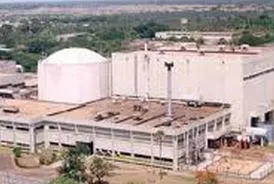
Plans to derive 63,000 MWe from nuclear power by 2032. The Department of Atomic Energy said the average annual availability of Indian nuclear power producers has remained at 90%. Six of the 19 operational reactors have logged continuous operation of over 300 days this year. DAE said Indian pressurized heavy water reactors are some of the most economical in the world. India is ready to sell these reactors and is currently building four: two each at Kakrapar in Gujarat and Rawatbhatta in Rajasthan. It noted that India has brought down the price of a nuclear reactor to among the cheapest in the world. The prototype fast breeder reactor (PFBR) at Kalpakkam is close to completion. PFBR is expected to achieve criticality in about a year.
Thought Leadership Centre



Most Read
1. Annica wins Sarawak solar‑hydrogen project in regional expansion 2. About $165b ASEAN renewable assets face climate risk, Zurich Insurance says 3. Middle East energy disruption spurs Asia coal demand surge, Rystad says 4. SEA green economy to hit $430b by 2030, but grid bottlenecks threaten growth 5. Japan’s US LNG resales equal output of 17 coal plants, report saysResource Center

 Read Here
 Advertise
 Sign Up
Event News

Be amongst the industry leaders recognised for driving innovation and operational rigour across Asia.












Commentary
Malaysia’s energy workforce is upskilling, but to what standard?
Asia’s grid decade: Why transmission will decide the pace of renewable growth