Staff Reporter

Here's the latest updates on Japan's nuclear industry

Here's the latest updates on Japan's nuclear industry

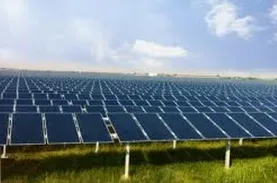
In November, the government announced early elections, funny way of expressing this as all elections in Japan can be considered “early”. The government also created the NRA (Nuclear Regulation Authority), which has the task of defining the new safety regulations for the Japanese Nuclear Industry as well as making assessments of its implementation. In short, NRA needs to approve any reactor startup. Within weeks of establishing this entity with “enhanced independence” it was revealed most of its senior management are or very recently have received contributions from the same Nuclear Industry they are supposed to assess. The lack of Nuclear power being operational is increasingly showing its impact on the financial situation of 9 out of 10 Japanese Utilities, with only Okinawa having no Nuclear power reporting positive results. Utilities are lobbying hard for further tariff increases as well as reactivation of their nuclear cash cows. At the same time hardly any progress has been made in the restructuring of the Utility environment in Japan. The outgoing government intended to implement a new energy policy, but the final document was not endorsed due to strong objections from Utility and Industry representatives. The “Society not dependent on Nuclear power” document was reduced to a policy paper, which can be easily mothballed by the new government. On a positive note, the new FIT implemented in July is potentially proving to be a game changer. From July to October a total of more than 2GW PV FIT applications have been approved, of which mega-solar (>1GW) accounted for about half. To put this into perspective, up to July this year a total of around 5GW of PV was installed in Japan. The PV boom is a clear evidence that the current 42Yen/kW is very attractive, both for domestic as well as overseas players. Even the March 2013 first revision of the rate is not expected to dampen the enthusiasm, as the market forecast still remains in the range of 3GW to 5GW annual for next two years. The government target of 28GW PV power in 2020 seems to be very much in reach. With such an increase in renewables the challenge of the utilities will be to best integrate these highly decentralized and intermittent resources in a cost efficient way. Considering the lack of restructuring in the utility industry, this will become one of the bottlenecks to achieve a higher renewable portion in the overall energy mix. Competition in the transmission market is one critical element to reduce cost for the consumer. Procurement is another element. So far only Tokyo Electric (TEPCO) has prepared a number of public tenders in a bid to reduce procurement cost. Behind the scene driver is the fact that TEPCO is now under control of the government, who injected huge amount of cash in the company to prevent it from going bankrupt, and as such must comply with the World Trade Organization (WTO) guidelines. It makes more than common sense other Utilities follow suit to do their part to reduce cost. A new 300MW HVDC connection that is being planned in the near future can provide some indication. The respective Utility is not TEPCO and international market prices for such a link are substantially lower than what is available by Japanese manufacturers. In the interest of the consumers this can be the next game changer, let’s keep our fingers crossed. The views expressed are mine alone and do not necessarily reflect the views of my employer.  

Rumored legislation could block foreign manufacturers from entering Japan

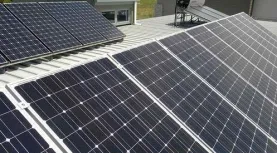
After Japan announced a generous feed-in-tariff (FIT), Japan has become one of the hottest new PV markets in the world. Like all significant PV markets where there is also domestic manufacturing, the issue of protecting that fragile manufacturing base in a hostile solar market is bound to come up. The U.S. and Europe have to take on competing countries head-on by proposing – or implementing, in the U.S. – import tariffs on Chinese cells and/or modules and China is retaliating. Rumors from manufacturers in Taiwan suggest that Japan will announce more stringent efficiency standards on imported modules: reportedly increasing minimum monocrystalline (c-Si) module efficiencies to 18.2%, and multicrystalline (mc-Si) to 17.4%. Other examples of indirectly incentivizing domestic content are present – for example, wind projects in Brazil can only access low-cost financing from state banks if they contain 60% domestic content.

India will double renewable energy capacity

Goal is to have a total capacity of 56,267 MW by 2017.

China to pay renewable energy subsidies

Payments will only cover seven months, however.

NGCP’s Panay Assets Acquisition Hangs

Ty-led Global Business Power Corporation has set on record that the industry regulator has not yet decided on

3 areas distribution companies in India must focus on

Since the beginning of the power sector reform in India, several initiatives have been taken for commercial performance improvements of distribution companies; however, the desired results have not been achieved even after significant investment in the sector during last ten years. Situation is unlikely to go for a rapid change until there is a strong regulatory enforcement, effective project management and accountability at all levels. Our recent experience with government utilities portray that key challenges in the sector during pre-reform was lack of investments and smart technological solutions, which has been shifted over time to the lack of commercial process acumen, project management skills, inefficient asset and technology utilization and ineffective monitoring tools during post reform era.

China and Israel to work together on renewable energy

Israel looks to more cooperation in solar, wind and methanol technology.

SunPower inks Chinese JV agreement

The joint venture will produce and deploy SunPower C7 Tracker systems in Inner Mongolia and other regions in

Thermax bags Rs 503 crore EPC order for captive power plant

Thermax has won a Rs 503 crore EPC order from a leading public sector firm for setting up a captive