Staff Reporter
Is Asia ready for new nuclear power plants?

Is Asia ready for new nuclear power plants?
The future of nuclear power generation is in Asia.
China's nuclear power potential

In devising policies, and pursuing its nuclear energy industry, China will strive for all of: 1) National independence for nuclear power technology; 2) Control and independent management of the fuel cycle; 3) Fuel diversity in the electrical power generation industry; 4) Significant source for electric power; 5) Reduction in emissions of air pollutants and CO2; and, 5) Commercialization of an indigenous reactor design, including high temperature gas cooled reactors – pebble bed module (HTR-PM) reactor technology. The current efforts to arrive at up to 40 GWe of nuclear generation capacity by 2020 will only have a limited impact on the current shape of China’s electricity industry.
Is there enough land supply for power plant projects?

Energy is an integral part of economic activity. An adequate energy supply is essential to support industrial activities, fuel the mobility needs for both freight and passengers, and ensure convenience and comfort in life. To facilitate such economic activities, large-scale investment in energy supply infrastructure is necessary, including the upstream oil, gas, and coal; midstream transformation facilities for electric power generation, oil refinery, and gas processing; and distribution networks that can deliver energy to customers. To meet the rapid energy demand growth of 2.4% per year until 2030, the Asian Development Bank estimates that Asia and the Pacific will require a cumulative investment of between $7.0 trillion and $9.7 trillion in the energy sector. Most of the total investment in the energy sector will be concentrated in China, India and Japan and dedicated to electricity generation, transmission and distribution.
India on the move towards solar energy

India has made impressive progress in the field of electricity generation since Independence in 1947. In terms of generation, while new capacity has been added, the gap between demand and supply has, by and large, increased.
Will Smart Grid Utility space continue to expand?

The Smart Grid Utility space is quickly evolving and is a market that will start to accelerate.
Asia coal power development now and beyond

The growth in the use of private finance to fund major public infrastructure projects throughout Asia continues unabated. Yet the Asian power sector faces the hurdle of trying to balance industrial and consumer demand with a sound environmental sustainability strategy.
What you need to know about geothermal energy

What is Geothermal Energy? As the world takes measures to move towards lower carbon energy production, many forms of renewable energy technology have been developed. Geothermal energy is heat (thermal energy) that is generated and stored within the core of planet Earth. It is generated from the difference in temperature between the inner core and the surface of the Earth. When compared to other formed of renewable energy production geothermal is considered one of the most promising forms of production. To harness geothermal power involves drilling up to five kilometres below the Earth’s surface and pumping water into the Earth’s core where it is naturally heated before returning to the surface where the heat energy can be used through transfer to generate electricity and/or heat. Mitigating Geothermal Development Risks Whilst the concept is simple, construction of the required infrastructure requires significant development cost both in terms of drilling works and uncertainty over the volume of water that can be efficiently pumped and what temperature increase it will achieve. This often constitutes a major barrier to investment for the sector. For a project to have good chances of success a thorough sub-ground analysis is required, which can cost up to several million dollars. Only once this analysis is completed can actual success of a project be estimated. Should the sub-ground analysis work only identify a thermal capacity which is not sufficient to allow economic operation of a geothermal power plant, all investment made in the analysis work will be lost. Historically there has been no ability to insure risks inherent wit development of geothermal power; however Marsh in Germany has now developed a service that can assess project specific risks before the commencement of any drilling works and significant capital expenditure being incurred. The team is working to expand availability of the geothermal power risk assessment so the service can be made available for all Geothermal Power plants globally.
Global clean energy investments for 2011 and 2012 barely flat: Bloomberg New Energy Finance

Global investment in low-carbon energy could just probably go up to $270 billion at most this year from a record $243 billion in 2010.
What Google and Stanford can teach Asia about electricity management
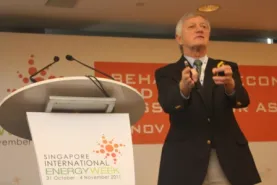
Smart meters that show consumers’ energy consumption won’t be enough to reduce use, studies show.
Malaysia admits neglecting renewable energy in the last five years
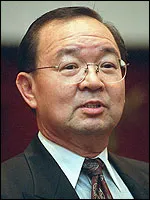
Dismal interest in renewable energy resulted in only 18% of its 350MW installed capacity target achieved for 2005-2010, says the Malaysian government.
Alstom partners with China Electric Power Equipment and Technology
The agreement is for the development of Ultra High Voltage Direct Current power transmission systems in China.
Australia CO2 scheme must be scrapped, opposition says
Australia's main opposition party vowed on Monday to repeal a carbon pricing scheme expected to become law next month as a key plank for polls due by 2013, threatening to prolong uncertainty in energy investments. "We will absolutely deliver on our mandate. So the first thing we'll do is we'll seek a mandate for repeal," Greg Hunt, opposition climate change minister, said in an interview. Labor Party Prime Minister Julia Gillard, who lags the opposition Liberal Party in opinion polls, has staked her minority government's future on sweeping economic reform such as taxes on mining and carbon. But voters have been concerned over industry fears the plan to tax carbon emissions will lead to higher costs and job losses, prompting Liberal Party leader Tony Abbott to announce a "blood oath" to repeal the scheme should his party and partners win the next election. The government on Monday labeled the repeal pledge absurd, underscoring the divisive nature of plans to fight climate change by pricing carbon emissions in Australia, the United States and elsewhere. "Of all the blatantly absurd claims we have heard from Abbott in recent months, this 'blood oath' on carbon pricing is the least credible and the most hysterical," Climate Change Minister Greg Combet wrote in a commentary in The Australian newspaper on Monday. "The investment community knows that if Abbott's threat were ever realized it would increase sovereign risk. Consequently, Australia would suffer as an investment destination." The program will impose a carbon tax on around 500 of the country's biggest polluters from July 2012, before moving to a carbon trade scheme in 2015. It also includes more than A$13 billion in support for green energy investments, compensation for households against higher prices and firms that export goods to countries without carbon costs. The Senate began discussing the package of bills on Monday. A vote is expected by late next week and the government, backed by the Greens, has a majority in the Senate. PROFOUND CONCERN Hunt said the opposition would fight on with their own scheme, despite failing to scuttle the government's program. "I deal with Australian business each day and there is a huge body of deep profound concern about the impact of the tax, particularly since it is an electricity tax," Hunt said in a telephone interview from Canberra. "It's not difficult to repeal. All that happens is that people stop paying the tax." The opposition backs a scheme that rewards polluters for low-cost steps to cut emissions from business-as-usual levels but the government and some policy analysts say a national cost on carbon is needed to drive change in investment. Combet labeled the opposition policy a fantasy but the ongoing bickering and uncertainty could delay investment decisions needed to achieve a 5 percent cut in emissions by 2020 from 2000 levels. "Everyone is just keeping their options open while all this political uncertainty plays outs," said Tony Wood, leader of the energy program at the Grattan Institute in Melbourne, an independent think tank. He said a stable outlook for carbon prices could trigger investment in high-efficiency gas power plants. "In the absence of that, other things happen, which are almost certainly either higher costs or more of a threat to security to supply and I think it most likely to be a threat to cost," he told Reuters. Reuters
Fitch afrms Datang International Power at 'BB'/stable
Fitch Ratings has affirmed Datang International Power Generation Co. Limited's (DIPG) Long-Term Foreign and Local Currency Issuer Default Ratings (IDRs) at 'BB' with a Stable Outlook. The agency has simultaneously affirmed its senior unsecured ratings at 'BB' and Short-Term Foreign and Local Currency IDRs at 'B'. "The affirmation of the ratings reflects the stable position of DIPG and the parent China Datang Corporation in the face of continued disparity between high coal prices and artificially low electricity tariffs," notes Steve Cox, Director in Fitch's Asia-Pacific Energy and Utilities team. Both DIPG and China Datang Corporation remain a notch above their standalone credit profiles, reflecting potential state support. Fitch applies its parent and subsidiary rating linkage methodology to assess the links between DIPG and China Datang Corporation, and between China Datang Corporation and the sovereign. The standalone credit profile of DIPG and the consolidated profile of its parent are assessed as equivalent to 'BB-' before any assessment of state support provides the single-notch uplift. The Stable Outlook reflects Fitch's expectation that the Chinese government will take adequate steps to support Chinese independent power producers such as DIPG - as evidenced in the retrospective tariff rises for 2010 production in some plants, and April 2010 tariff rises in certain provinces. The Outlook, however, also incorporates Fitch's view that the disparity between coal prices and tariffs will continue and the burden will be primarily born by power producers. Fitch expects DIPG's total adjusted debt/operating EBITDAR to remain above 8.5x over the medium term. However, DIPG and the parent remain exposed to financial deterioration due to a weak thermal power industry and lack of a transparent pass-through mechanism for rising coal prices. However, the risk is partly mitigated by the group's own coal production business. Fitch may take negative rating action if the financial profile of either DIPG or China Datang Corporation deteriorates. Reuters
Fitch cuts Huadian Power International to 'BB-'
Fitch Ratings has downgraded Huadian Power International Limited's (HDPI) Long-Term Foreign and Local Currency Issuer Default Ratings (IDRs) to 'BB-' from 'BB'. The Outlook is Stable. The agency has simultaneously affirmed its Short-Term Foreign and Local Currency IDRs at 'B'. "The downgrade reflects the weakened financial profile of Huadian Power International and its parent, China Huadian Group, in the face of continued disparity between high coal prices and artificially low electricity tariffs. The impact from slow tariff adjustments is highest for Huadian among Fitch-rated Chinese thermal power producers," notes Steve Cox, Director in Fitch's Asia-Pacific Energy and Utilities team. HDPI and China Huadian Group have, overall, worse interest coverage and leverage profile compared with their respective peers in China, as well as a heavy debt-funded capex programme. Based on Fitch's parent and subsidiary rating linkage methodology, HDPI continues to be notched one level above its standalone credit profile, reflecting potential state support through China Huadian Group. The same methodology is being applied to China Huadian Group, which assesses its links to the sovereign. On a standalone basis, both the credit profiles of HDPI and China Huadian Group have been downgraded to 'B+' from 'BB-', before any assessment of state support. Under current market conditions, the group's asset portfolio has greater exposure to the fundamental problems affecting all thermal power producers in China: a combination of tariff controls, rising coal prices, exposure to non-fulfilment of contract coal, and volatility in the non-contract coal spot market. The company's interest coverage is also negatively affected by the impact of base rate rises on floating-rate loans, and high borrowing costs in the CNY bond market. In FY10, HDPI's funds from operations (FFO) interest coverage fell below 2.0x from 3.0x in FY09. Fitch continues to expect HDPI's total adjusted debt/operating EBITDAR to remain above 10x in the medium term. The Stable Outlook reflects Fitch's expectation that the Chinese government will take adequate steps to support Chinese independent power producers such as HPDI - as evidenced in the retrospective tariff rises for 2010 production in some plants, and April 2010 tariff rises in certain provinces. The Outlook, however, also incorporates Fitch's view that the disparity between coal prices and tariffs will continue and the burden will be primarily born by power producers Reuters
Fitch affirms China Power International at 'BB'/stable
Fitch Ratings has affirmed China Power International Development Limited's (CPI) Long-term foreign and local currency Issuer Default Ratings (IDRs) at 'BB' with a Stable Outlook. The agency simultaneously affirmed its Short-term foreign and local currency IDRs at 'B'. "The ratings reflect CPI's strategy of investment in the hydro-power segment to reduce its exposure to the fundamental problems facing the thermal power segment," says Steve Cox, Director in Fitch's Asia-Pacific energy and utilities team. CPI reported an EBITDA margin of 27.5% for H111, and for H110 its EBITDA margin was the highest among Fitch-rated Chinese thermal independent power producers (IPPs). The company has also mitigated some of the disparity between high coal prices and government controlled on-grid tariffs by high levels of contract fulfilment - around 90% of coal supply - and tying in coal supply with two thermal stations by offering minority equity stakes to the coal producer. Fitch applies its parent and subsidiary rating linkage methodology to assess the linkages between CPI and its parent China Power Investment Group (CPI Group). CPI Group benefits from an investment portfolio vertically integrating coal, power and aluminium business units. The parent's consolidated credit profile is weaker than CPI's stand-alone 'BB' rating by one notch. Due to the lack of ring fencing of CPI from its parent, CPI 's rating, before any consideration of state support, is constrained by the credit profile of its parent. However in view of CPI Group and CPI's strategic importance to China, Fitch has applied a one-notch uplift in arriving at CPI's final rating of 'BB'. The agency notes that CPI's capex plans, although still aggressive and partly debt financed, are weighted toward hydro power and will further increase the company's protection against low margins or losses in the thermal power segment. These projects include the Baishi and Tuokou hydro projects which will add installed capacity of 1.85GW upon completion. However, CPI is exposed to hydrological risk from concentration of its assets on the Yuanjiang river. The Stable Outlook reflects Fitch's expectation that the Chinese government will take adequate steps to support the Chinese IPPs, as evidenced in the retrospective tariff rises against 2010 production in some plants, and April 2010 tariff rises in some provinces. But it also incorporates Fitch's view that the disparity between coal prices and tariffs will continue and the burden will be primarily born by power producers. Reuters
Kansai faces most severe winter power shortage -Nikkei
Kansai Electric Power Co is facing the most severe power shortage this winter among the nine Japanese utilities that operate nuclear plants, as opposition to restarting idled reactors limits its power generation, the Nikkei business daily said on Monday. The government's National Policy unit is expected to compile utilities' winter power supply/demand outlook as early as Tuesday, projecting a 9.5 percent power shortage in areas served by Kansai Electric in February, the report said. A July estimate by the central government showed Kansai would have an 8.4 percent shortfall this winter. Kansai, which has the highest reliance on nuclear power among Japan's power providers, has yet to announce its winter supply/demand outlook because of uncertainty over reactor restarts. The government is expected to ask Kansai's customers to curb power use by around 10 percent this winter, compared with cuts of 15 percent sought in the summer. Kansai has only four of its 11 reactors running, with three of them set to be closed for maintenance by the year-end, which would limit its ability to genera Reuters
Thai power companies unaffected by floods
Standard & Poor's Ratings Services said today that its ratings on Thailand-based power companies Electricity Generating Authority of Thailand (EGAT; BBB+/Stable/--, axA+/axA-1) and Ratchaburi Electricity Generating Holding Public Co. Ltd. (RATCH; BBB+/Stable/--; axA+/--) are unaffected by large-scale flooding in the country. We understand that the flooding has not significantly affected EGAT's power generation plants and transmission networks. Nevertheless, we expect the company's sales will decline in the last quarter of 2011. The flood-related shutdown of several factories and warehouses will lower electricity demand from the industrial segment in the last quarter. RATCH's power generation plants are primarily located in Ratchaburi province, which has not been affected by the floods. In addition, the company's cash flows are protected from any demand-side risk because its power purchase agreements with EGAT ensure steady capacity payments against agreed levels of electricity availability and heat rate. Reuters
Thought Leadership Centre



Most Read
1. Annica wins Sarawak solar‑hydrogen project in regional expansion 2. About $165b ASEAN renewable assets face climate risk, Zurich Insurance says 3. Middle East energy disruption spurs Asia coal demand surge, Rystad says 4. SEA green economy to hit $430b by 2030, but grid bottlenecks threaten growth 5. Japan’s US LNG resales equal output of 17 coal plants, report saysResource Center
 Read Here
 Advertise
 Sign Up
Event News
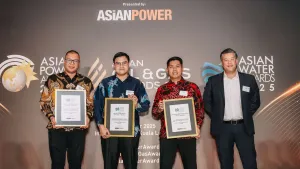
Be amongst the industry leaders recognised for driving innovation and operational rigour across Asia.









Commentary
Malaysia’s energy workforce is upskilling, but to what standard?
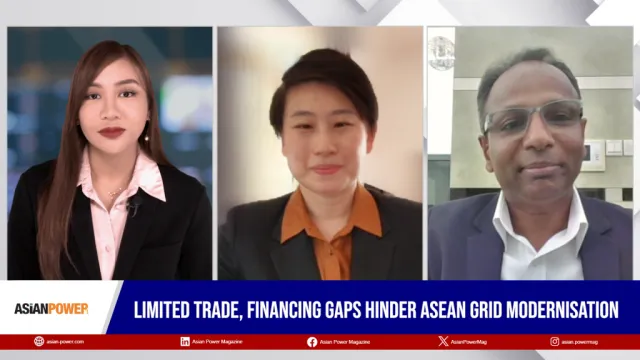
Asia’s grid decade: Why transmission will decide the pace of renewable growth
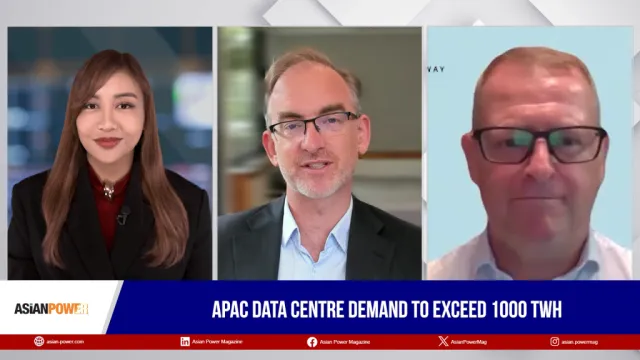
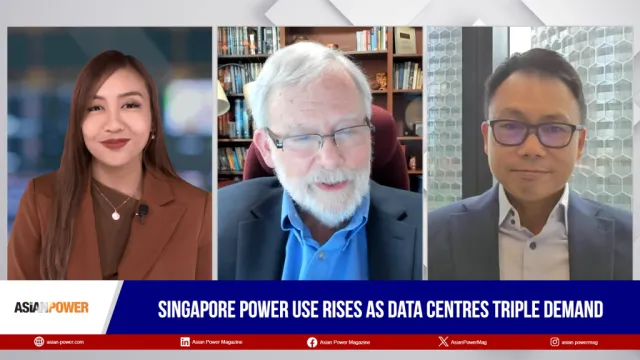
The supply-side blind spot in ASEAN’s data centre boom