
China’s coal power to peak by 2030
Coal capacity projected to fall 75% by 2060.
China’s coal-fired power capacity is expected to peak by 2030 before declining sharply as renewable energy expands, according to a report by Asia Research & Engagement (ARE).
The country's electricity demand is forecast to rise from 10,443 terawatt-hours (TWh) in 2025 to 13,113 TWh by 2030, and reach 21,800 TWh by 2060, driven by digital infrastructure such as cloud computing, big data, 5G, and artificial intelligence.
Coal capacity will increase in the short term to ensure grid stability as renewable energy grows. Capacity is projected to rise from 1,230 gigawatts (GW) in 2025 to about 1,580 GW by 2030, marking the peak.
After 2030, coal capacity is expected to decline to 1,520 GW by 2035, 1,270 GW by 2045, and about 400 GW by 2060, a drop of roughly 75% from peak levels. Coal’s share of total power capacity will fall from 31.8% in 2025 to 4.1% by 2060.
Coal generation will also decline over time, even as electricity demand rises. Its share of total power generation is projected to fall from 49.2% in 2025 to 41.9% by 2030, and about 2% by 2060.
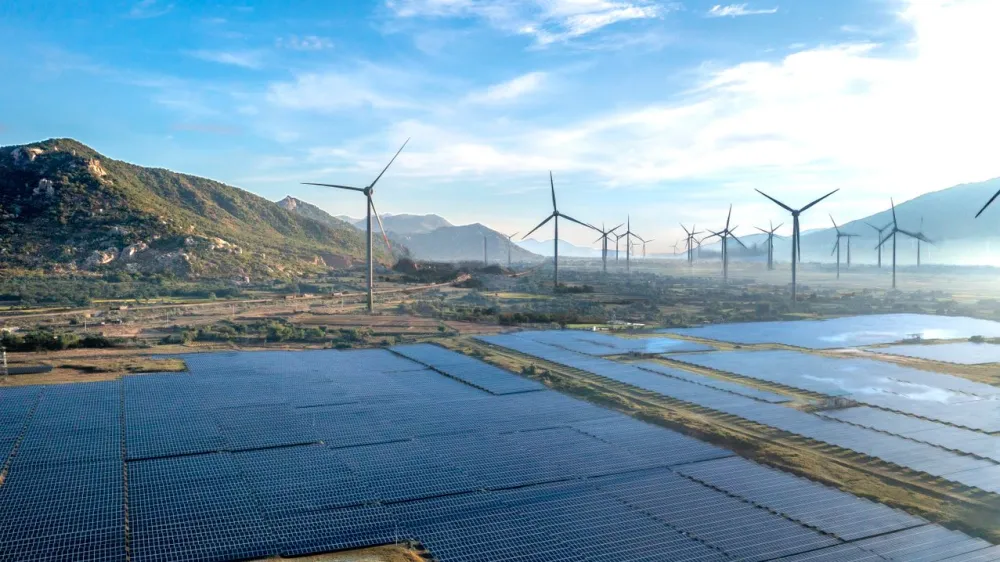
Wind and solar energy will drive most of the growth in power supply. Wind capacity is expected to increase from 620 GW in 2025 to 890 GW by 2030, reaching 3,198 GW by 2060. Solar capacity is projected to grow from 1,310 GW in 2025 to 1,870 GW in 2030, and to 4,723 GW by 2060.
Combined wind and solar capacity will expand from 1,940 GW in 2025 to 7,921 GW by 2060.
Energy storage will also expand rapidly to support variable renewable power. New storage capacity is projected to increase from 91 GW in 2025 to more than 1,300 GW by 2060, while pumped hydro storage will rise from 70 GW to 360 GW.
Other low-carbon sources will also grow. Nuclear capacity is expected to increase from 61 GW in 2025 to 420 GW by 2060, potentially making China the world’s largest nuclear power producer after 2030. Hydropower capacity will expand from 383 GW to 540 GW.
By 2060, renewable energy sources — wind, solar, hydropower, and biomass — are projected to supply about 80% of China’s electricity, up from 39% in 2025.
Coal plants will gradually shift from providing baseload electricity to acting mainly as backup power during periods when renewable generation is insufficient.



















 Read Here
 Advertise
 Sign Up